Part I, detailing the evacuated, Venusian-menaced Bunker Hill of 1954 in Target Earth, is here.
People who own Marsak’s Guide to Bunker Hill have sometimes asked how did you get all those shots of Bunker Hill devoid of any sign of life?
In my years of architectural photography I have worked to shoot structures with as few cars and people in frame as possible, striving to depict buildings as standing alone, à la sculpture in a museum. That activity takes no small amount of patience and timing, but it produced some great shots for Marsak’s Guide:
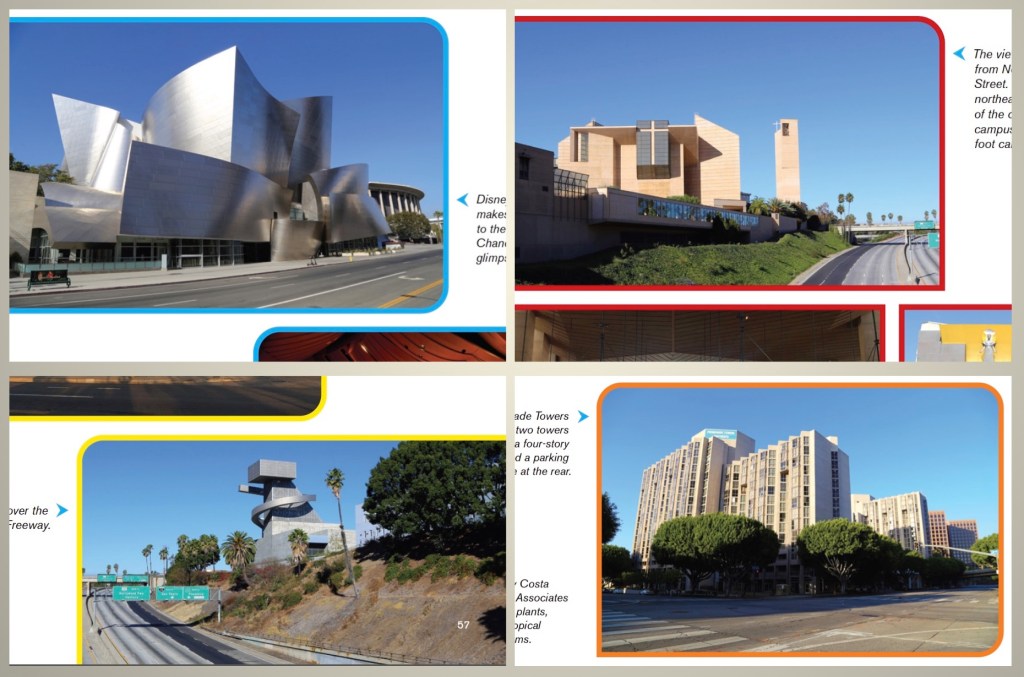
That said, above and beyond the whole “patience and timing” business, the production of these images benefited greatly from a little thing called The Pandemic. Covid locked down the world, and told everyone to go inside; I, of course, did nothing but go outside, and revel in the newly-depopulated universe.
This is my roundabout way of saying pandemics are really useful for going outside, shooting architecture, or, shooting at pandemic-zombies with your S&W M76 (while wearing a safari jacket and driving a red 1970 Ford XL convertible).
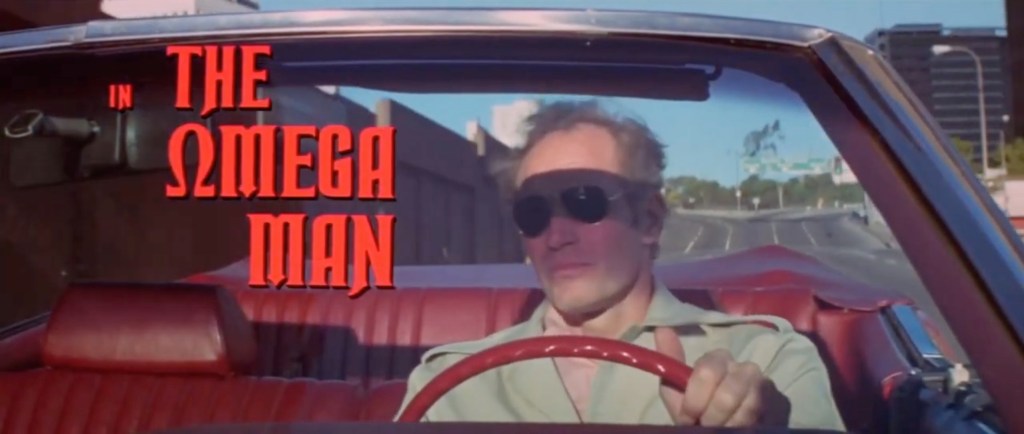
The Omega Man
In Richard Matheson’s 1954 novel I Am Legend, a plague ravages earth courtesy of bats (not unlike, say, a certain earth-ravaging plague five years ago) at which point a guy named Robert Neville battles vampires, in Gardena of all places. The 1971 film The Omega Man, based on Matheson’s book, made the plague a result of biological warfare via some Sino-Soviet war, whereby Neville drives around greater Los Angeles, battling vampires (but fleshed out into “The Family,” a cult of mutant albinos bent on destroying technological prowess, like a bunch of freaky-deaky Ted Kaczynskis).
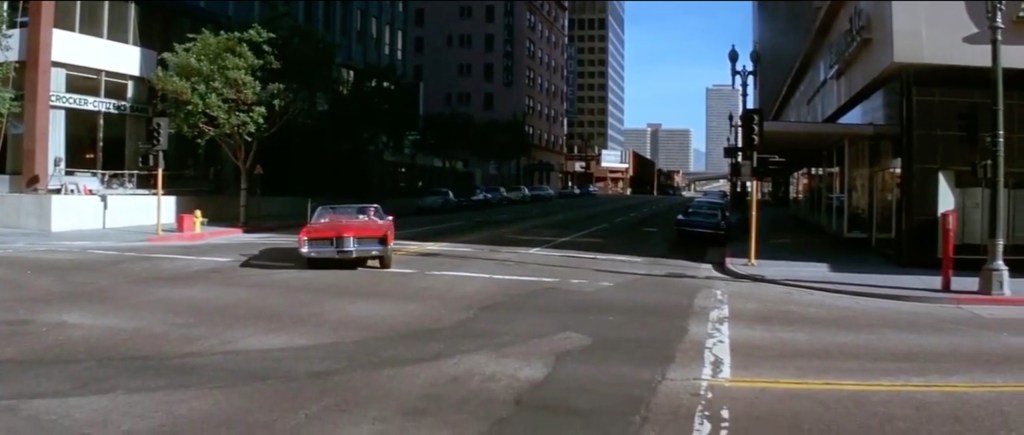
The opening few minutes of the picture are a marvel to behold. Omega Man‘s film crew took to Los Angeles’s empty Sunday morning streets in late 1970, filming Neville (Charlton Heston) driving around a sunlit downtown, while the photophobic zombie horde cowered in darkness. The first shot of the film, Heston heads east on Fifth Street, through the intersection of Figueroa:
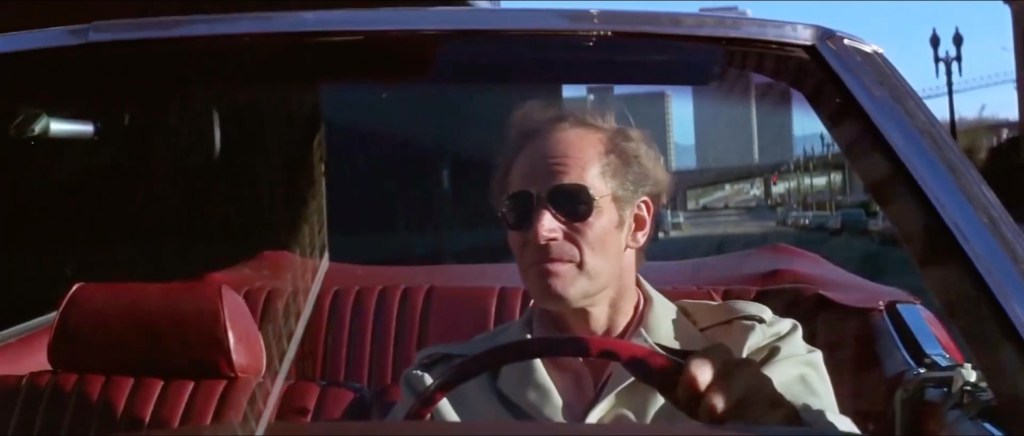
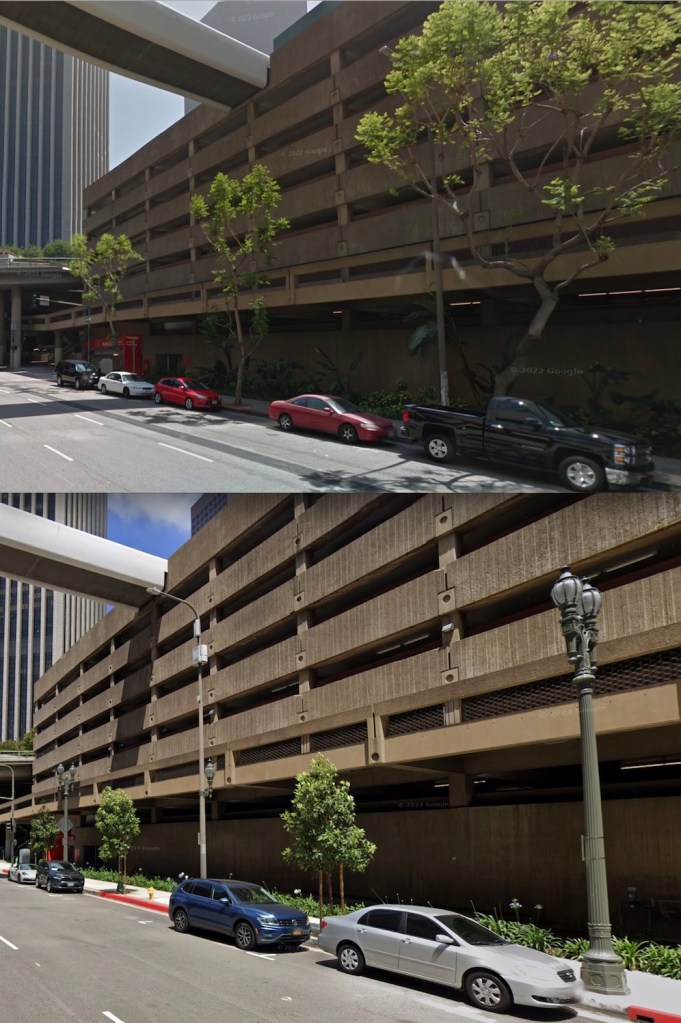
In the image above, note the streetlights lining Flower between Fifth and Fourth—those are “Downtown Double” Model 1906 electroliers, custom designed for Los Angeles by Union Metal of Canton, Ohio. They were, of course, ripped out during the area’s redevelopment. But in late 2021 there were brought BACK—
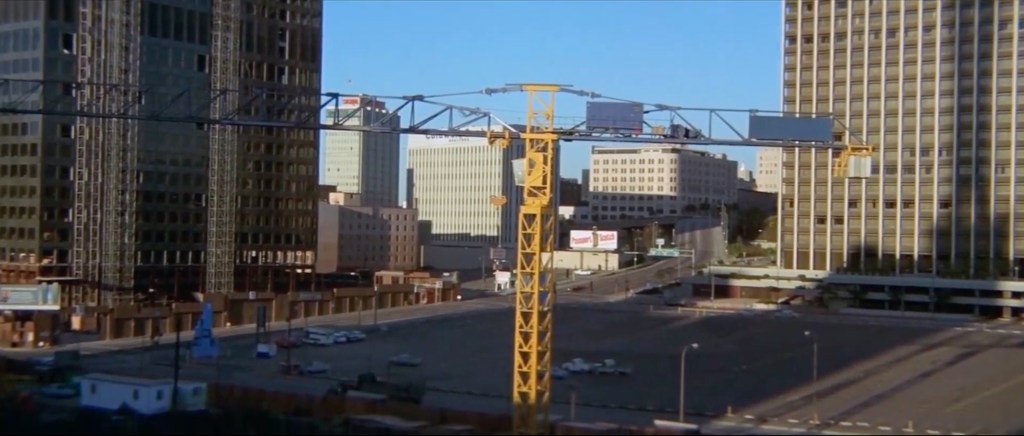
Note this cool construction sign he drives past, with a rendering of the ARCO towers—

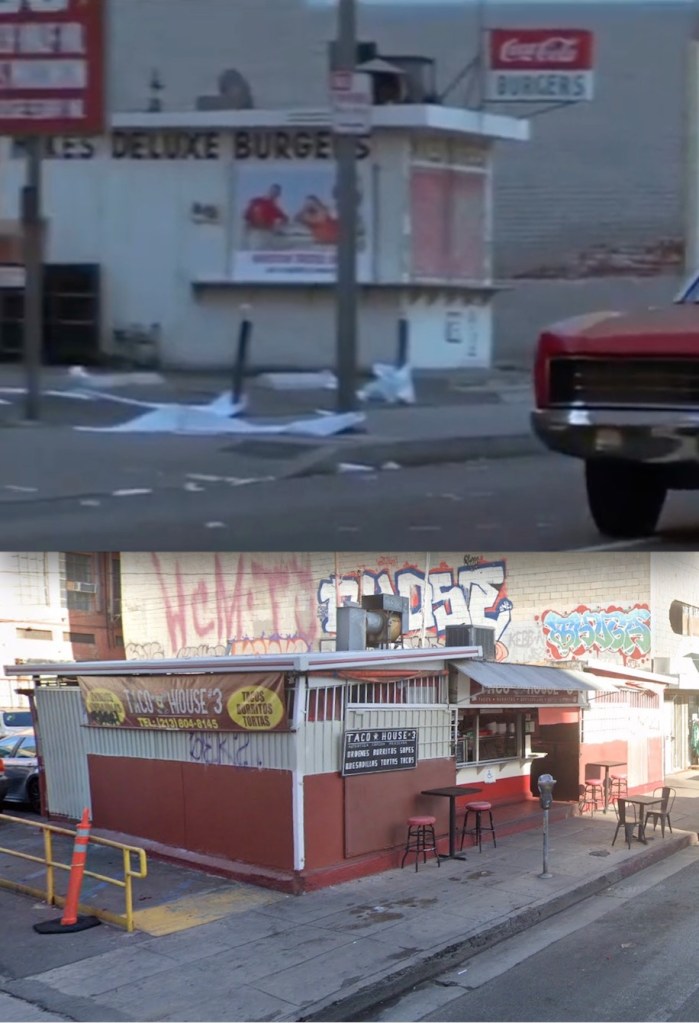
Then at about a 0:40 in there’s the most incredible thirty-second sequence of Heston blowing through three Wilshire intersections, shot from the top of One Wilshire. But since this is a Bunker blog and not an “L.A. locations” blog, you’ll just have to take that in on your own. And, again, I’m not going to go into all the other places Heston drives by (the movie is oft-noted for its inclusion of The Olympic theater), but I will point out that “Mikes Deluxe Burgers”—which is a 1946 lunch stand at 827 Santee built by one Alvin Jaines—is still extant, albeit enlarged by additions, and reborn as “Taco House #3.”
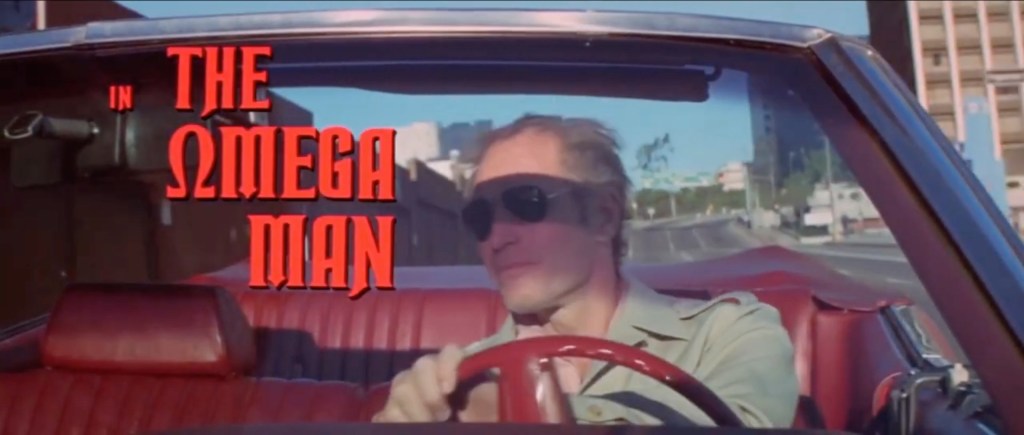
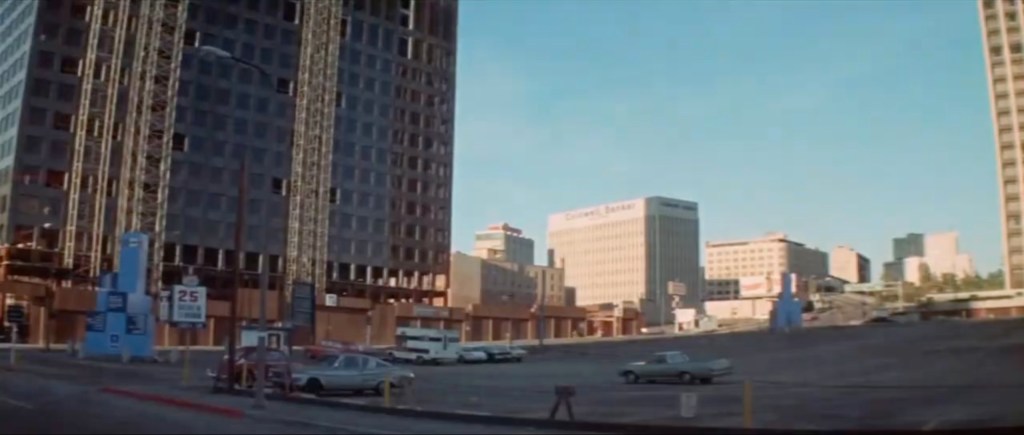
Then the credits come up and he’s back driving down Fifth Street, between the Union Bank and the under-construction ARCO towers—
Then, Heston’s all alone at the DWP building (which should remind you of this shot from here).
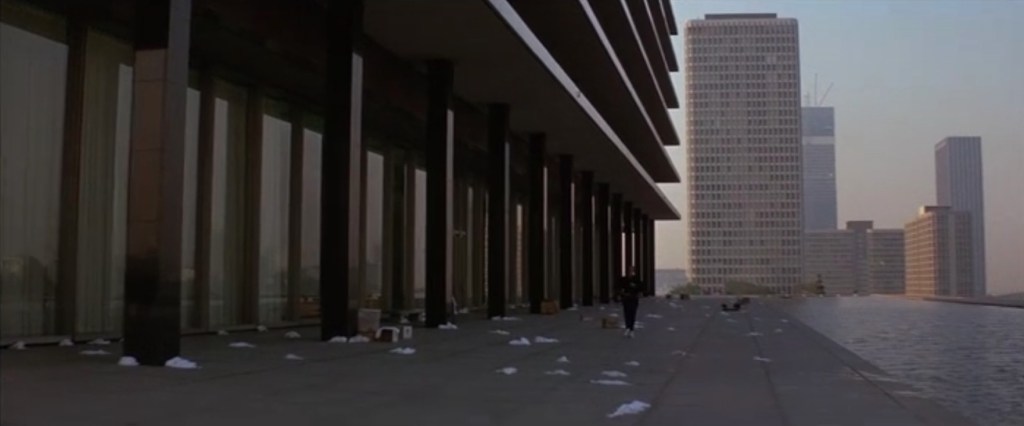
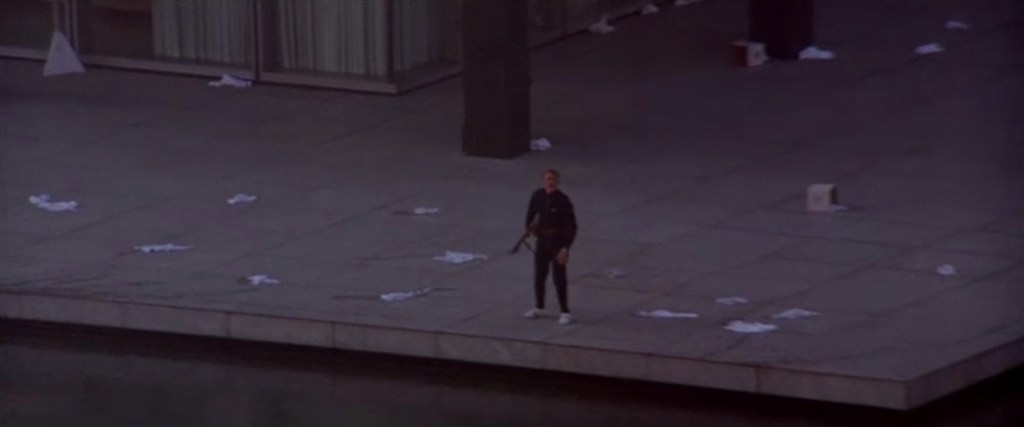
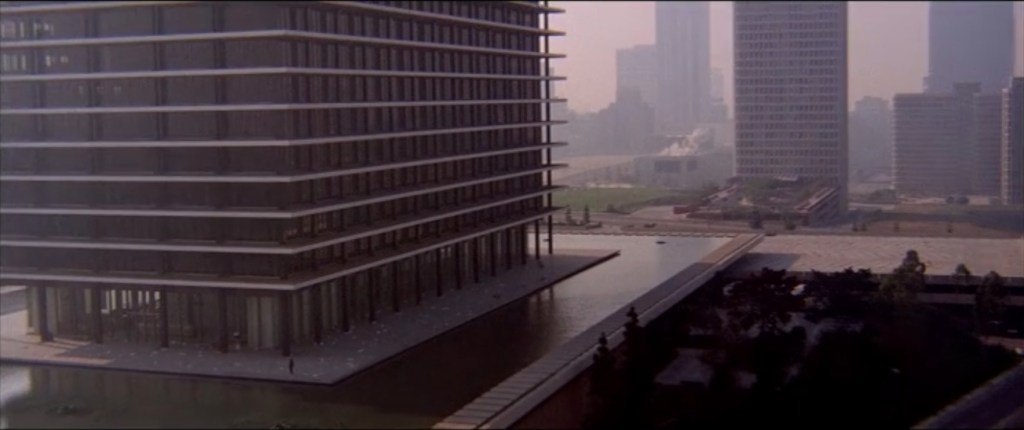
Lastly, there’s a collection of still images, showing a silent and empty city, among them being these two:
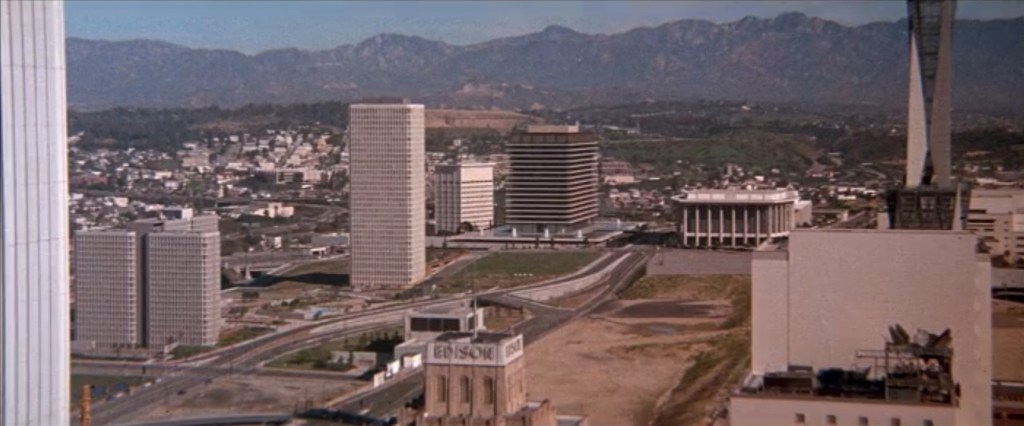
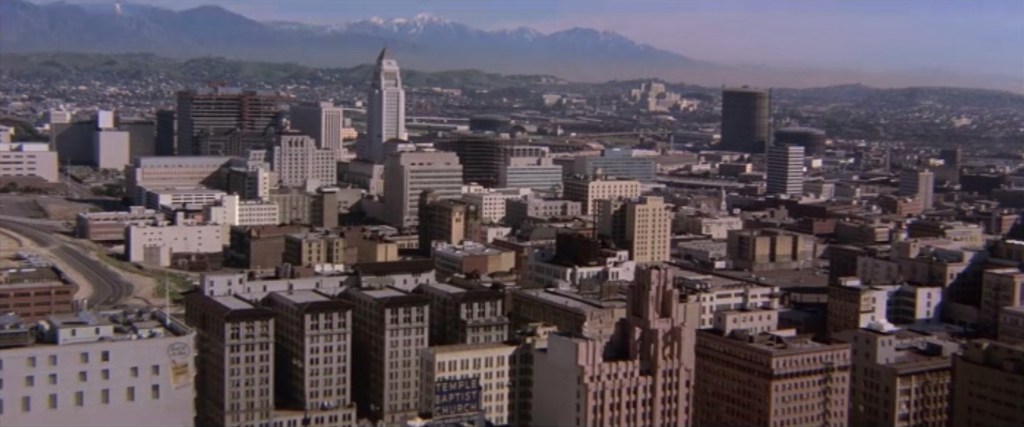
The opening scene of The Omega Man (Heston’s amazing 8-track music, btw, is Theme from A Summer Place as performed by the Ron Grainer Orchestra) is here, though you should really watch the whole movie; the trailer will convince you of that!
***************
Tune in next week, when I cover the post-comet Bunker Hill of valley girls and office towers in 1984’s Night of the Comet.
 Bunker Hill, Los Angeles
Wow as an Omega Man and someone who appreciates mid-century downtown architecture I really enjoyed your article. Well done!!!
LikeLike