One of the benefits of loving Bunker Hill is seeing the area depicted on screen. Bunker Hill appeared in early comedies, and later, in television programs, but the Hill is best known for its supporting role in all those moody postwar films noir. Bunker Hill-in-the-movies is of course covered in Bunker Hill, Los Angeles, and in Bunker Noir! and also this post, featuring my compendium of Angels Flight in cinema. The definitive work on the subject is, of course, Jim Dawson’s Los Angeles’s Bunker Hill: Pulp Fiction’s Mean Streets and Film Noir’s Ground Zero! available here (check out Jim’s related website here).
For the next couple posts, though, I want to dig into Bunker Hill’s use, specifically, as a barren post-apocalyptic hellscape, as portrayed in three films: Target Earth (1954), The Omega Man (1971), and Night of the Comet (1984).
TARGET EARTH

Old Bunker Hill was, of course, no stranger to cinematic depictions playing up its empty streets. Consider Van Helfin’s mad dash through the deserted Hill in Act of Violence, or Jack Palance nefariously piloting his Oldsmobile through its desolate streets in Sudden Fear:

For example, Bunker Hill’s quiet community of live-and-let-live older folk allowed Roger Corman to shoot quick and cheap (and without permits) on the hill in December 1959 for his Little Shop of Horrors.
But only one film utilized Bunker Hill’s quiet neighborhood as the perfect setting for a deserted city menaced by sometimes-invisible death-ray-wielding Venusian space robots: Target Earth. It’s a cheapie made by indie outfit Abtcon Pictures in 1954, on the heels of successful 1953 alien invasion pictures like War of the Worlds and Invaders from Mars.

Granted, Target Earth‘s uninhabited Hill and empty LA wasn’t, I will admit, “post-apocalyptic” in the strict sense, as much as the city was voluntarily deserted…eh, so sue me. It was empty and spooky and that’s the point. Target Earth‘s film crew shot on the Hill on a Sunday morning in late July, when the city was still sleeping it off.

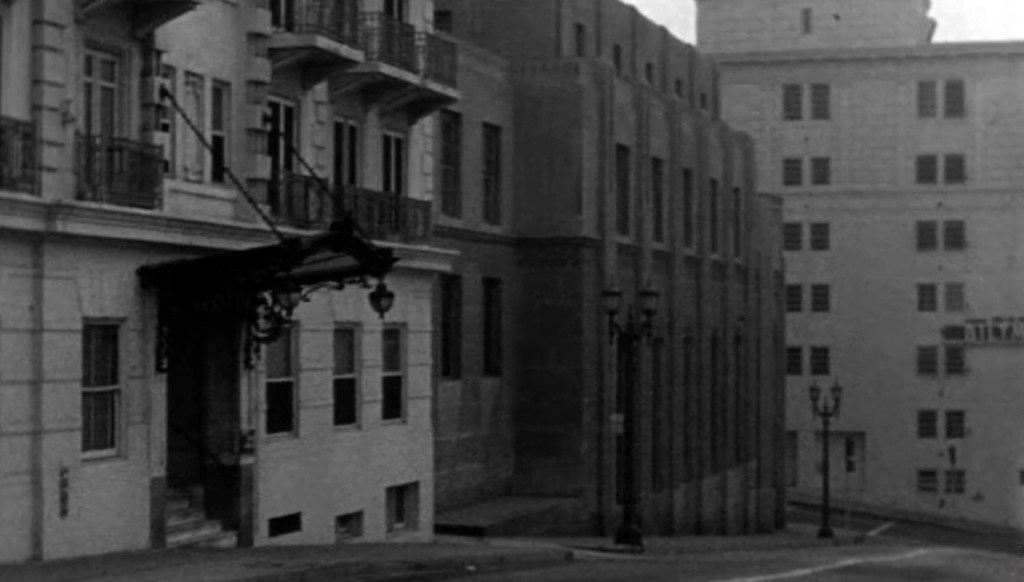
Target Earth begins with Kathleen Crowley (whom you might remember from seminal vampire western Curse of the Undead) waking from her failed suicide attempt to find the city abandoned; she opens her blinds and peers out the window to an empty world, specifically, upper Fifth Street looking toward Grand—
She then exits her pad at 109 South Flower Street:
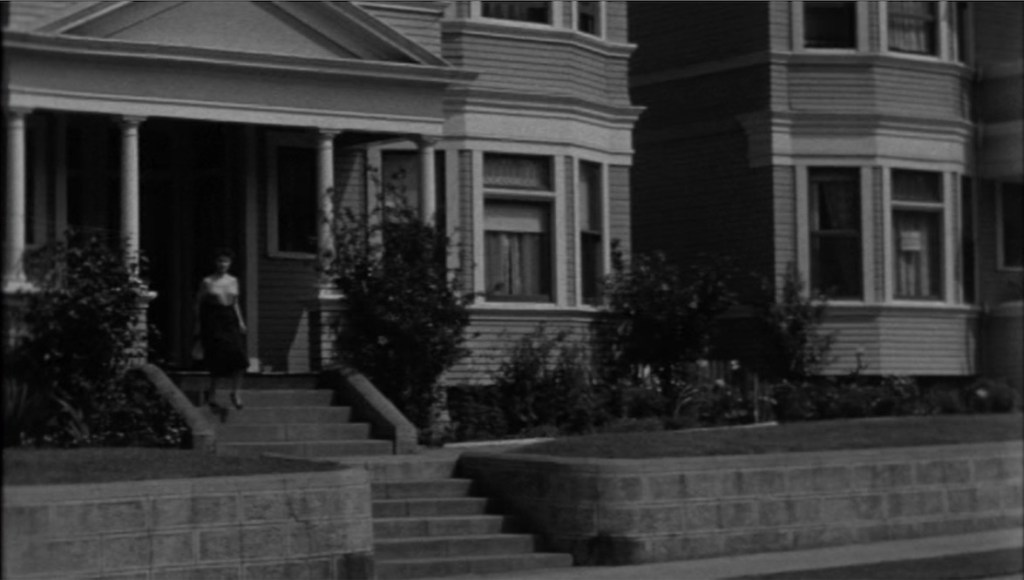

Then Crowley looks down at the empty street she saw from her window:
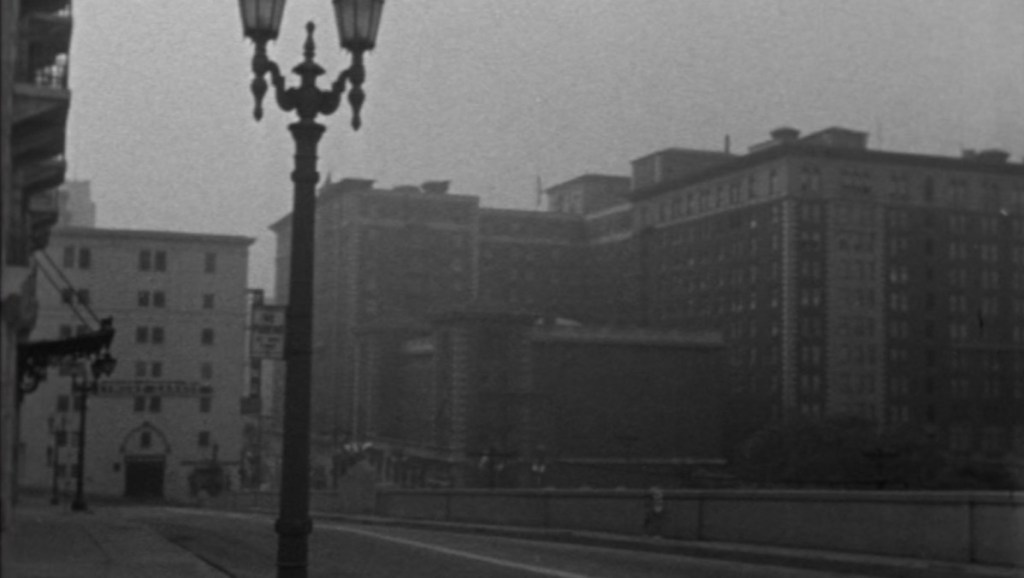
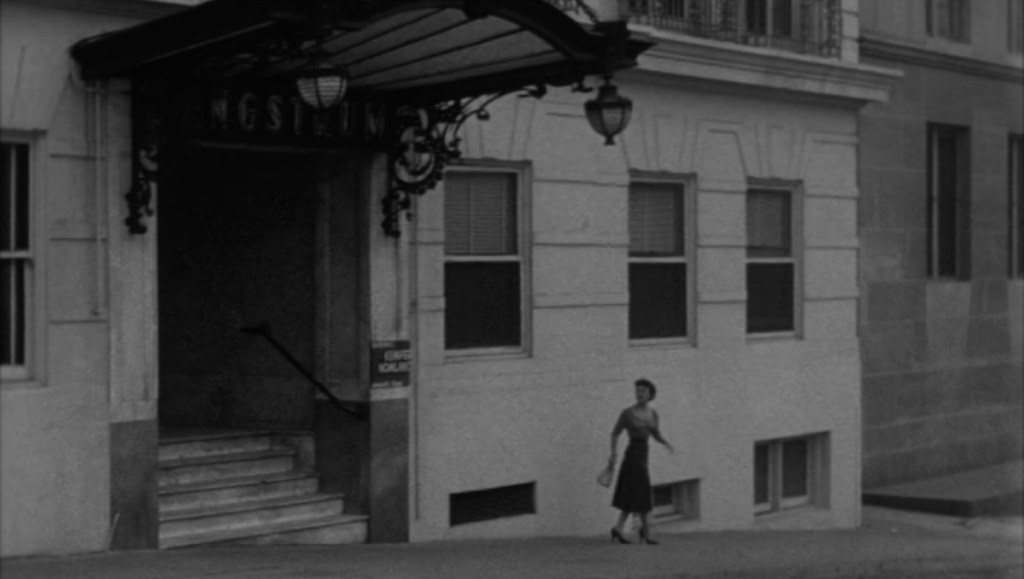
Then, on upper Fifth, she walks past the Engstrum:

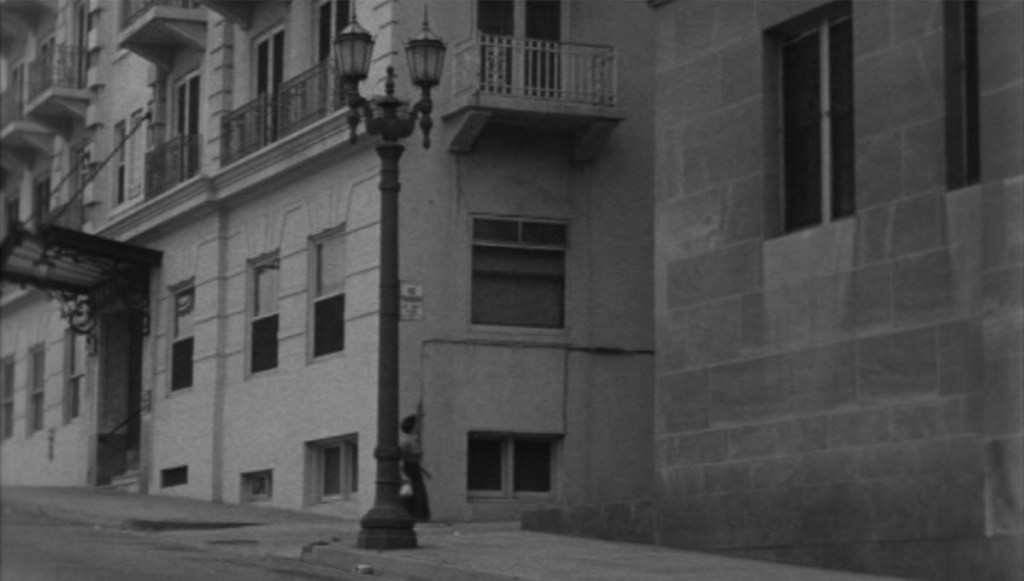

Still wandering about, wondering where everyone’s gone off to, on Third Street just the other side of the tunnel:


Next, she heads south on Grand toward Fifth, adjacent the Edison:

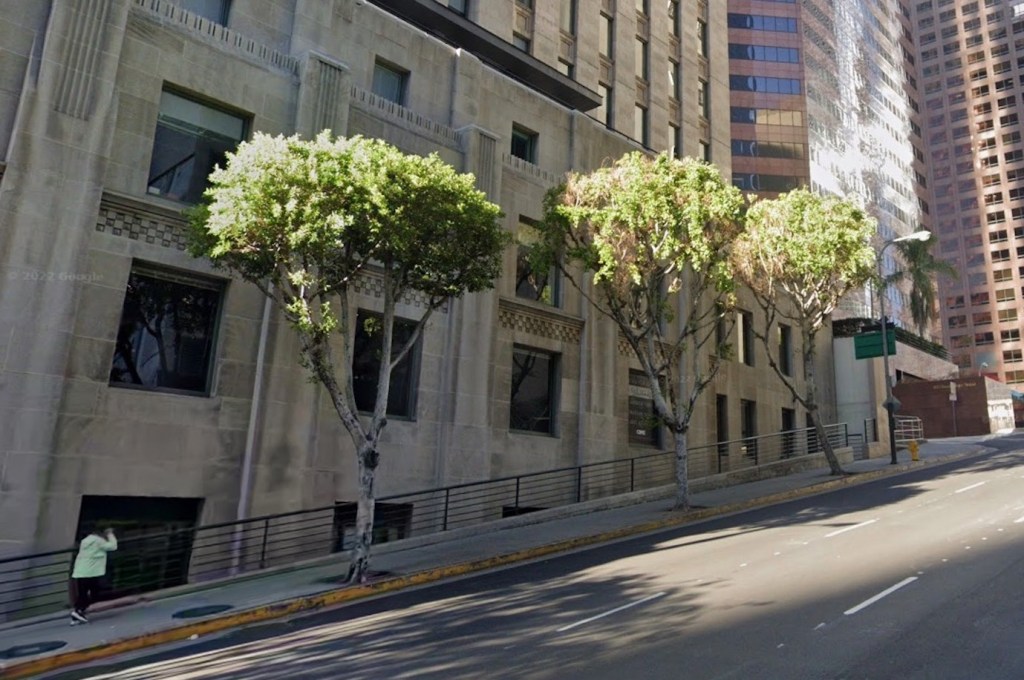
Lastly, at about 13:30, there’s this shot looking west on Fifth Street from atop the aforementioned retaining wall—
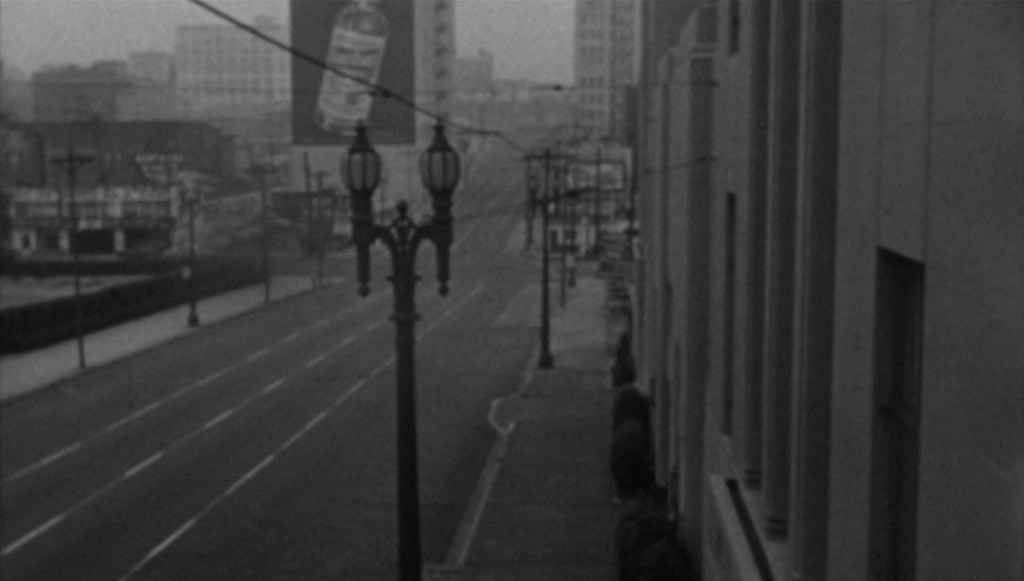

Want to watch Target Earth? Do so here (and, if you so like, colorized here). At 8:03 there’s a shot looking north on Flower across Wilshire, and immediately after, Crowley is seen running past the barber shop at 704 West 6th, at the southeast corner of Sixth and Hope. Around the 13:40 point was shot at the Dominguez-Wilshire and at the corner of Wilshire and Cloverdale; at 14:00 there’s a nice shot looking south on Beverly from Temple. Everything else seems like backlot, although the alien-shadow at 24:40 is against the Statler.
***************
Tune in next week, when I cover post-pandemic Bunker Hill (the cool 1970s pandemic, not the dumb 2020s one) in The Omega Man, and a post-comet Bunker Hill of valley girls and office towers in Night of the Comet.
 Bunker Hill, Los Angeles
Thank you for this, Nathan. And thank you for the deep and labyrinthine rabbit holes in several of the links you provided, especially the ones about the LA Theaters and the Statler Hotel.
LikeLiked by 1 person