My buddy Bryan is a cool guy. He sculpts busts of Edgar Allen Poe and Bram Stoker and H. P. Lovecraft, and then makes Lovecraftian films. Plus he has a giant African sulcata. Oh, and drives a 1961 hearse (the mark of greatness indeed! …or so says the man who drove one himself). Should you ever wish to theorize on the intersection of noir and the Luciferian ethos, buy Bryan a gimlet at Musso’s and he’ll bend your ear. Like I said, he’s a cool guy.
So it was no surprise when he wrote and told me you know, my great aunt lived on Bunker Hill during World War Two, want me to send you pictures of her there? Coolness is apparently set in DNA, because she lived not only on Bunker Hill, but in one of the coolest places on the Hill.
I don’t mean any of the great Victorian mansions cut up into apartments, or one of the Edwardian-era Corinthian-column’d apartment houses, which would be cool enough. No, she bucked Bunker convention and lived in some brand-new Streamline flats!
At which point you interject, that’s impossible, the very essence of Bunker Hill is that it was a place lost to time and frozen in place, where nothing new was built for decades on end, descending into a genteel and cinematic decrepitude!
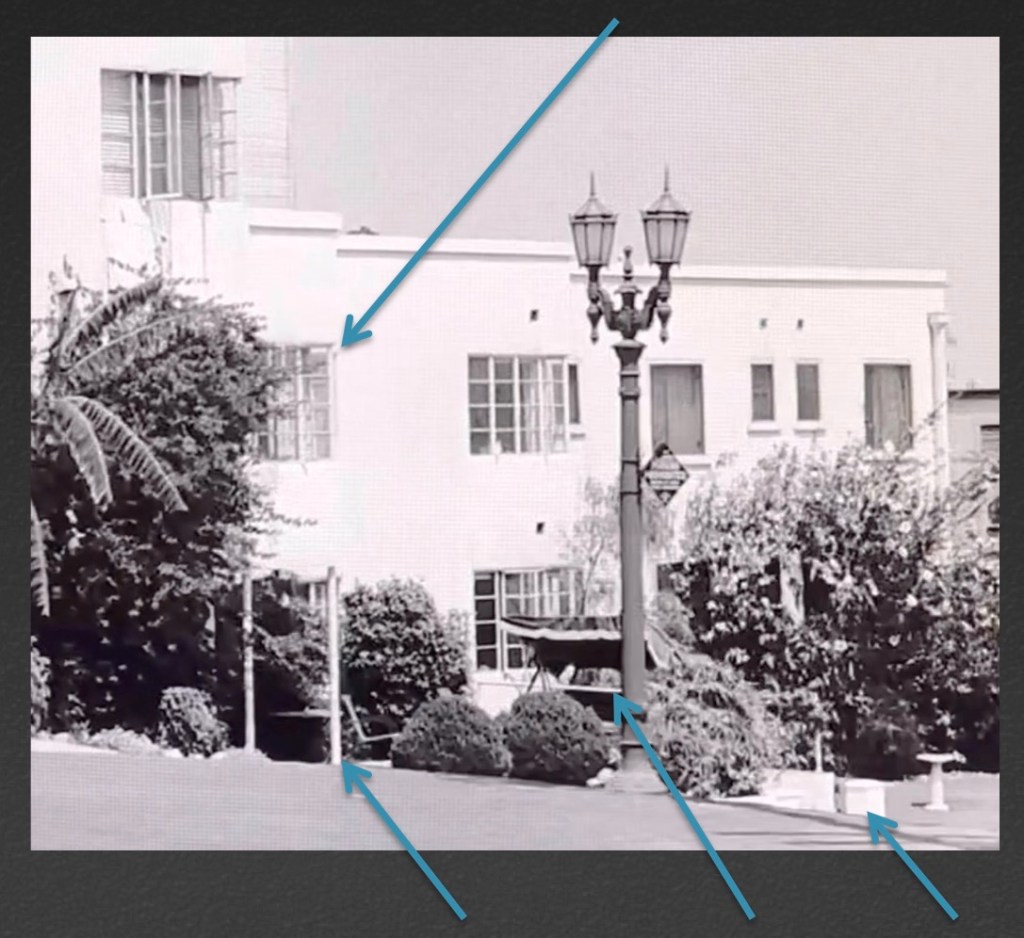
Which I appreciate you saying, although that’s not entirely the case. You might recall the “Modern on the Hill” section of Bunker Hill, Los Angeles (pp. 146-53) wherein I dispense with the idea that all of Bunker Hill was absolutely antediluvian. And in that section, I devote an entire page (151) to the remarkable Avalon Apartments, built in 1938-39.

Thus, let me tell you all about the Avalon, and the awesome pirate who lived there.
I. The Avalon Apartments
The northeast corner of Second and Grand was laid out as part of the Mott Tract, lots 9 and 10 of Section G, back when Grand was still called Charity. Nathan Wilson Stowell, to whom we owe the growth of Los Angeles as much as anyone, bought the corner of Second and Charity and built a house there in 1884 (Charity Street became Grand Avenue in February 1887) . Nathan Stowell also married Florence N. Rivers in 1884. Florence’s uncle was Ernest Bradford Rivers, who worked for Stowell; EB Rivers worked with Stowell when Stowell sold part of his Second and Charity property to Robert Larkins, so that Larkins could build his magnificent Richelieu.
Los Angeles was scandalized when in 1905 Nathan Stowell, 53, abandoned his wife for a 22-year-old. Florence was awarded the house in the divorce, and it remained in Rivers hands, specifically, in the hands of Florence’s nephew Henry Edmund Rivers, son of her uncle Ernest.
Henry Rivers was in the real estate game, especially so after 1917, when he wed Mildred Strong, daughter of realty mogul Frank Raleigh Strong, who had subdivided dozens of residential areas in Los Angeles, including Silver Lake. (Frank Strong was known to go get drinking with Warren Harding at the Newport Yacht Club, and ironically, Newport Beach plays a large role in the latter part of our story.)
Henry Rivers — who was at the time president of real estate concern Rivers & Parmelee, Inc. at 510 West Sixth Street — had ownership of the old Stowell place, and approached the Department of Building and Safety with some plans in to add rooms to the thing in September 1938. Those plans came to naught, and a demo permit was pulled in November. Rivers had no architect proper, but used licensed engineer John H. Wilke to do the work for the new 24-room structure, built throughout 1938; it opened in late 1938 or early 1939.
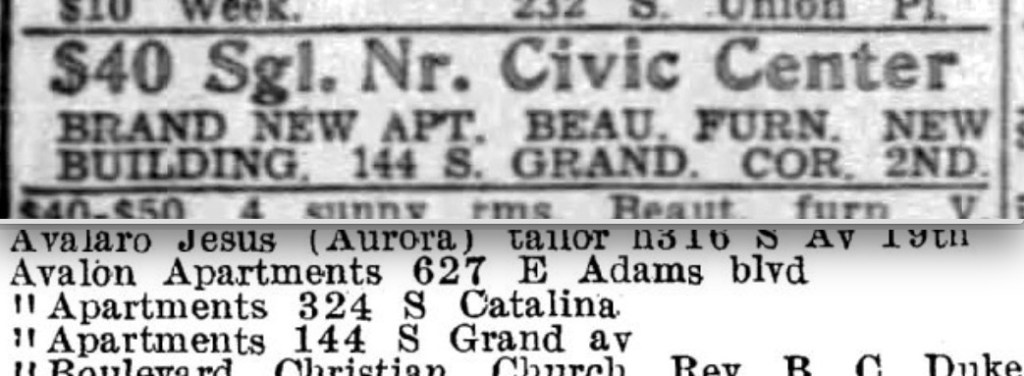
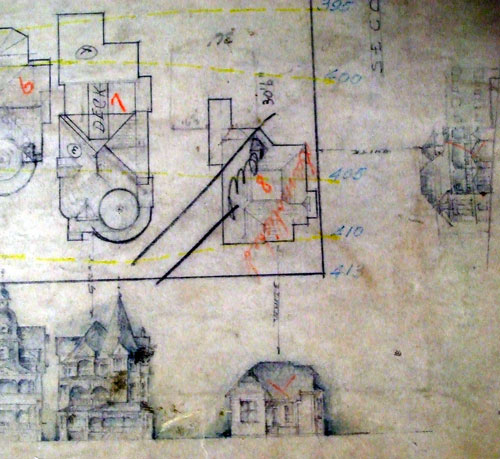


We’re lucky to have any images of the Avalon. Nobody was going to go to Bunker Hill, as the looming shadow of death stretched over the charming old Victorians, to shoot something modern. The Avalon’s neighbors the Richelieu and Melrose were shot regularly, or a photographer would turn his back on the Avalon to shoot The Dome, on the opposite corner.
That said, we have a couple incredible captures from two motion pictures. One is via the process plate background film shot for the 1948 picture Shockproof — the car turns south on Grand from Second and we are rewarded with this:
And then there’s this excerpt, from Kent Mackenzie’s short Bunker Hill 1956, which he made as a USC undergrad before work on The Exiles.
So now you get it, right? That there as this amazing Modern apartment building on Bunker Hill at Second and Grand? Ok, well now let’s meet the crazy pirate that lived there!
II. Sally Brown
Sally Christine Glover was born to James Luther and Edna Ethel (née Lynn) Glover in Eula, Texas — a small community smack dab in the middle of the state — on May 8, 1914. Her people came to the colonies from England mostly as 17th century Virginia settlers, with some Ulster Scots emigrating to the Carolinas in the 18th. A number served in the Revolution, and through the 19th century they dispersed west, into Mississippi and Alabama, with some relocating to Texas.
James and Edna had twelve children (including Dorothy Louise “Dot” Glover, grandmother of the aforementioned Bryan, about whom I began this post). James and Edna move the family to Riverside in the early 1920s, and by 1930 are in Anaheim.
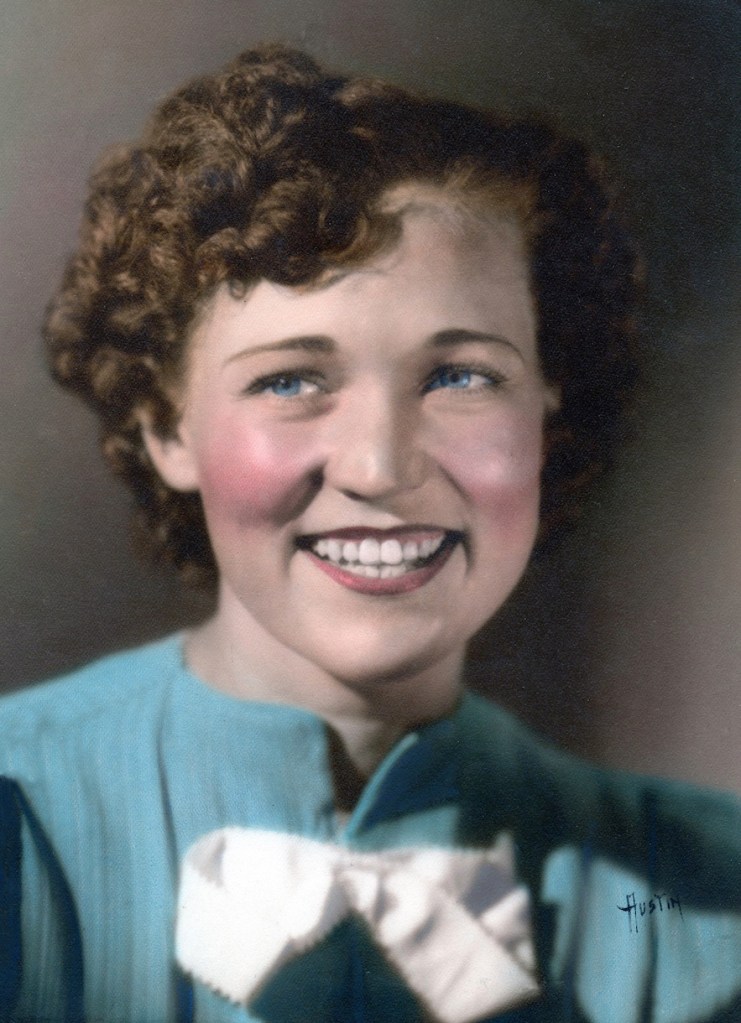
Sally meets Robert Leslie Brown, a Colorado boy who’d moved himself to Newport Beach. They get married in Yuma — Yuma being, like Vegas back in the day, a great place for a quick and easy wedding — on September 28, 1939:
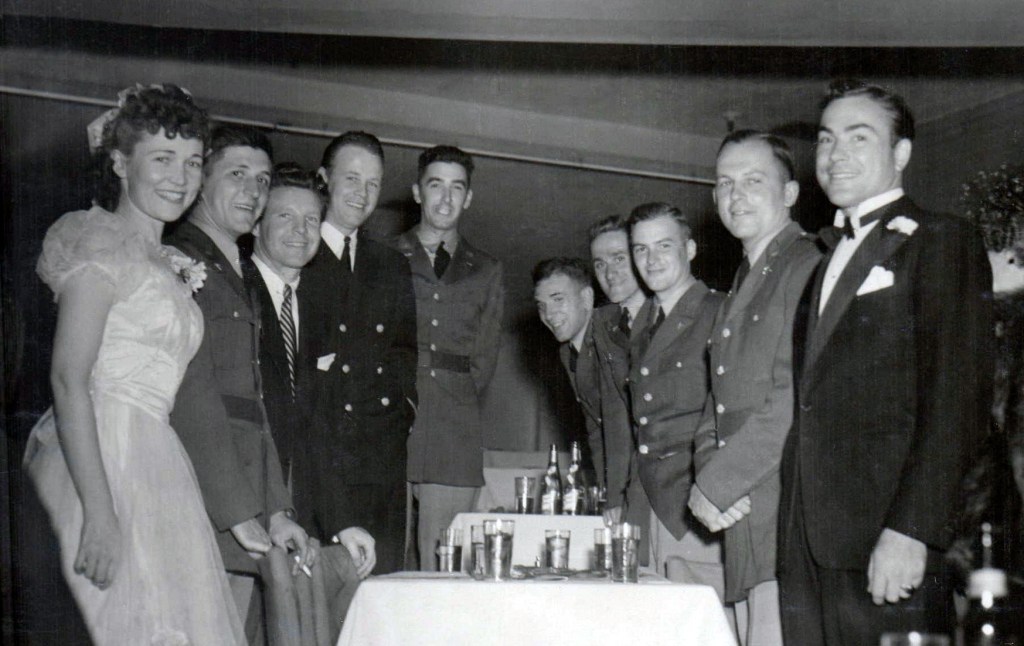
In 1940 they lived at 1569 Miramar Dr. in Newport Beach; he was a clerk at the Balboa Fun Zone, and she worked as a switchboard operator for the telephone company.
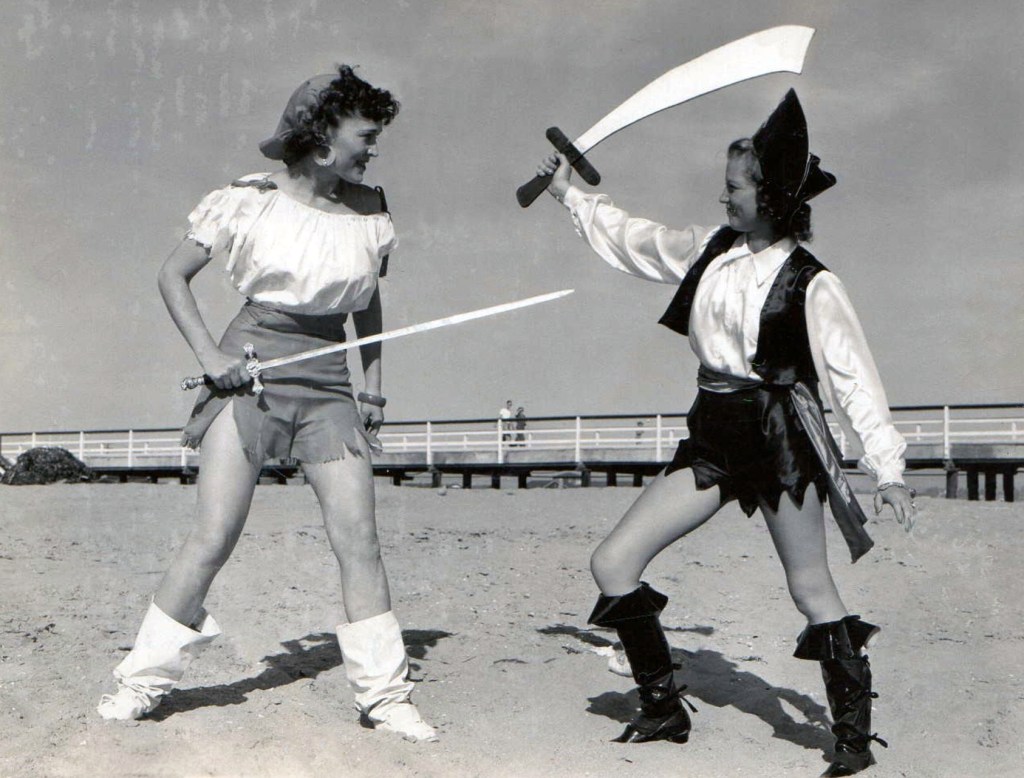
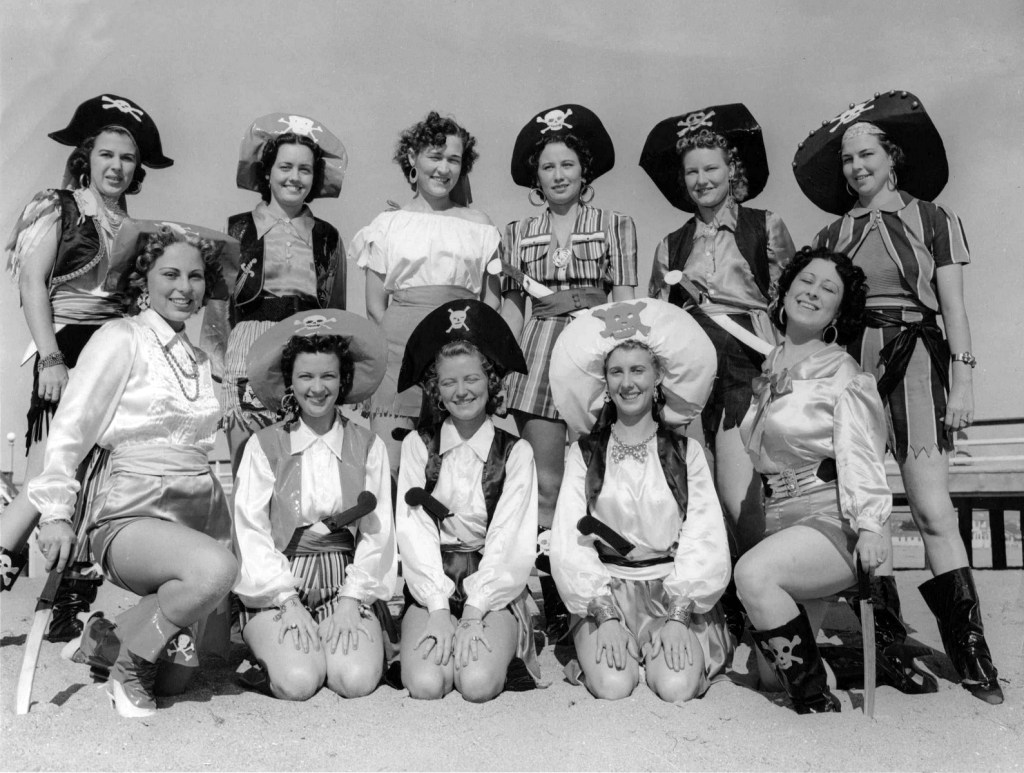
One of the things they liked to do is be pirates.
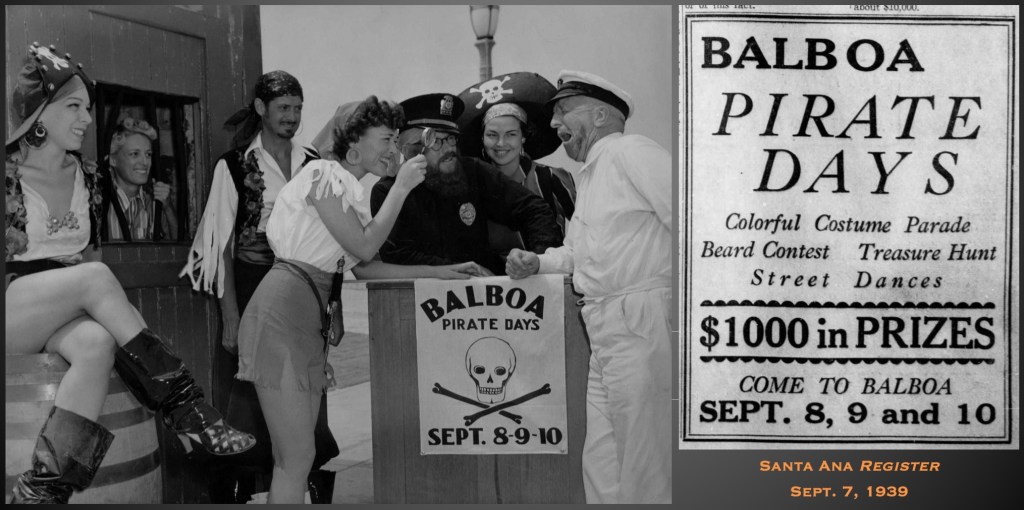
Balboa Pirate Days was conceived of by the Junior Chamber of Commerce in 1935 as a way to bring business to town, and it was glorious. Tall ship battles, a boat landing and invasion, music and street dances, and a ball in the famed Rendezvous Ballroom where the Pirate Queen and her court were crowned. Residents who refused to dress like pirates were put on trial in a kangaroo court, thrown in a brig at the base of the pier (note the imprisoned gal, above), forced to walk the plank (or were just tossed into the bay), and fined (which went to charity).


The war began soon after, with Bob assigned to Lockheed in Northern Ireland, attached to Langford Lodge airfield in Belfast.
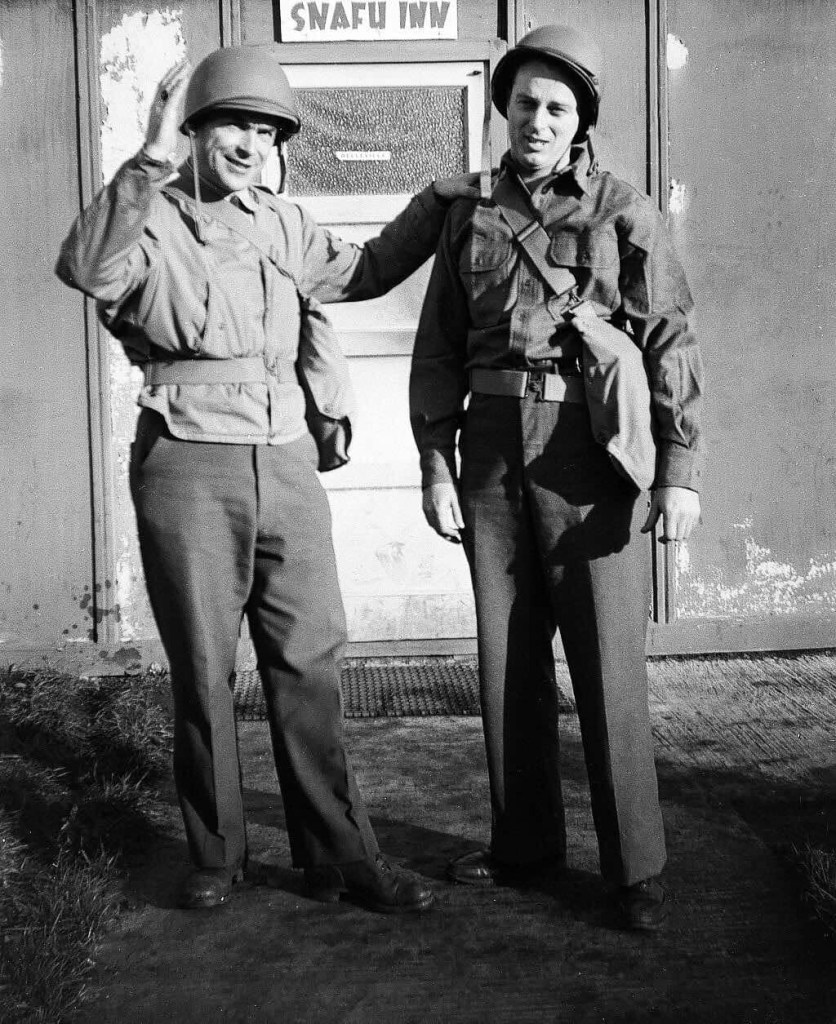
With Bob overseas, Sally moved from Orange County to downtown Los Angeles, now promoted to supervisor in the telephone company offices (either in the Pacific Telephone & Telegraph Southern California Telephone Company offices at 740 South Olive St., or its other offices, on Bunker Hill, at 433 South Olive).
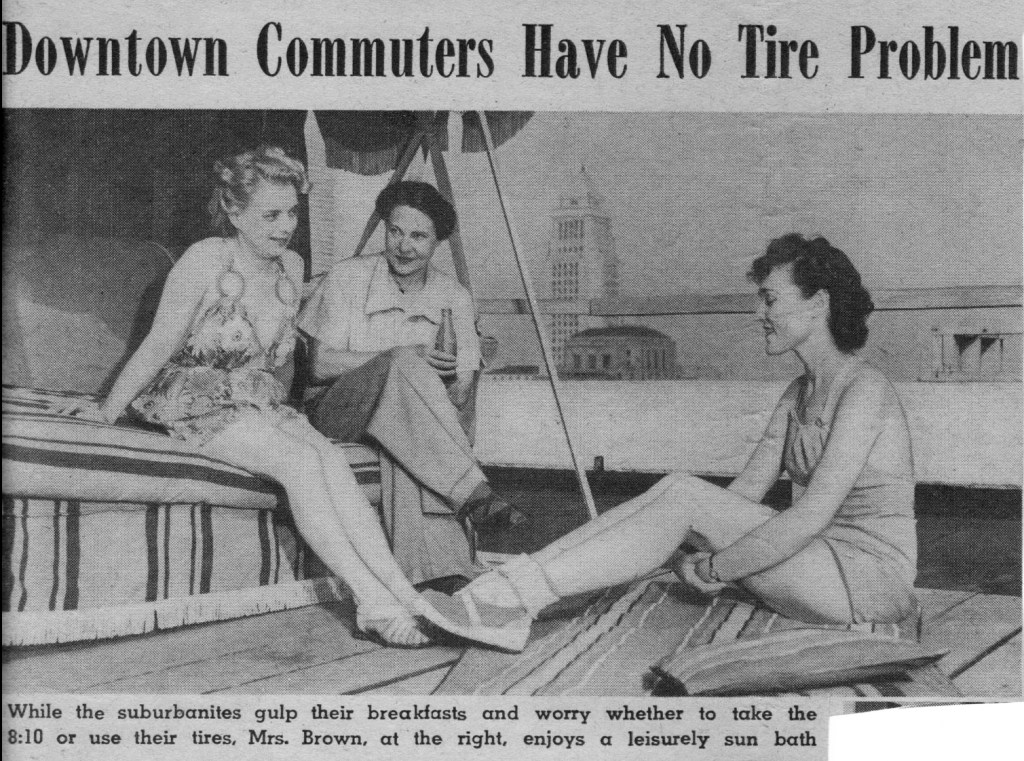
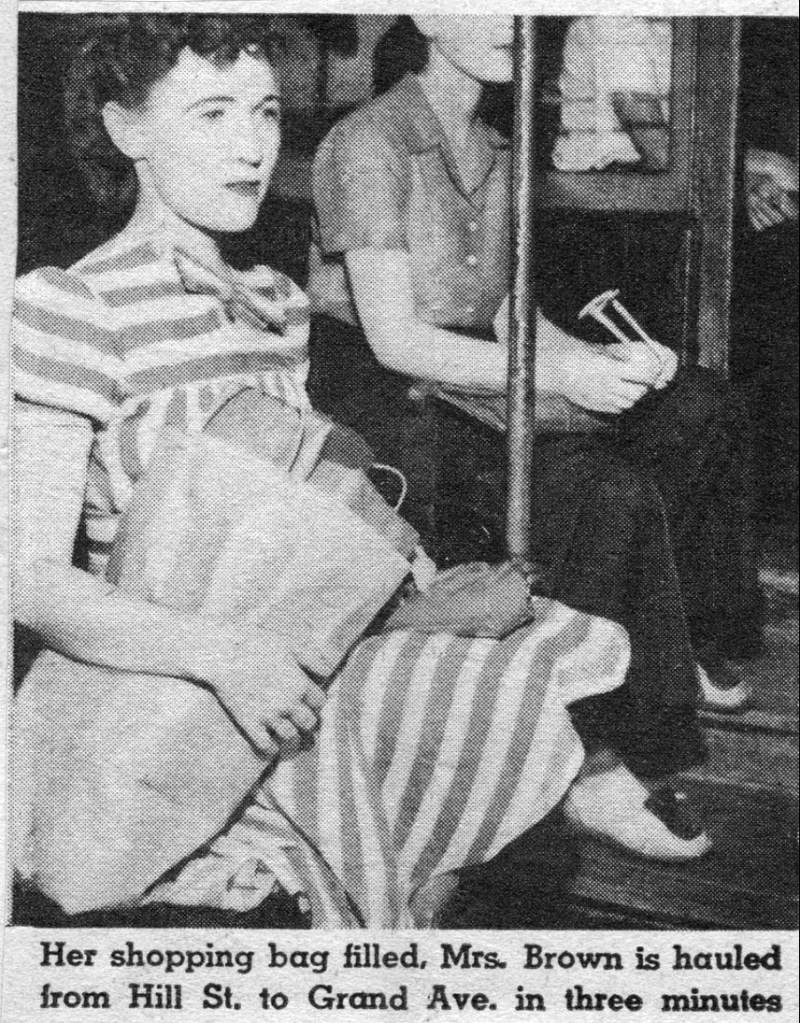
As such, she moves into a place on Bunker Hill, said place being the Avalon Apartments. In August 1942, the Los Angeles Times supplement “Home Magazine” ran this piece —
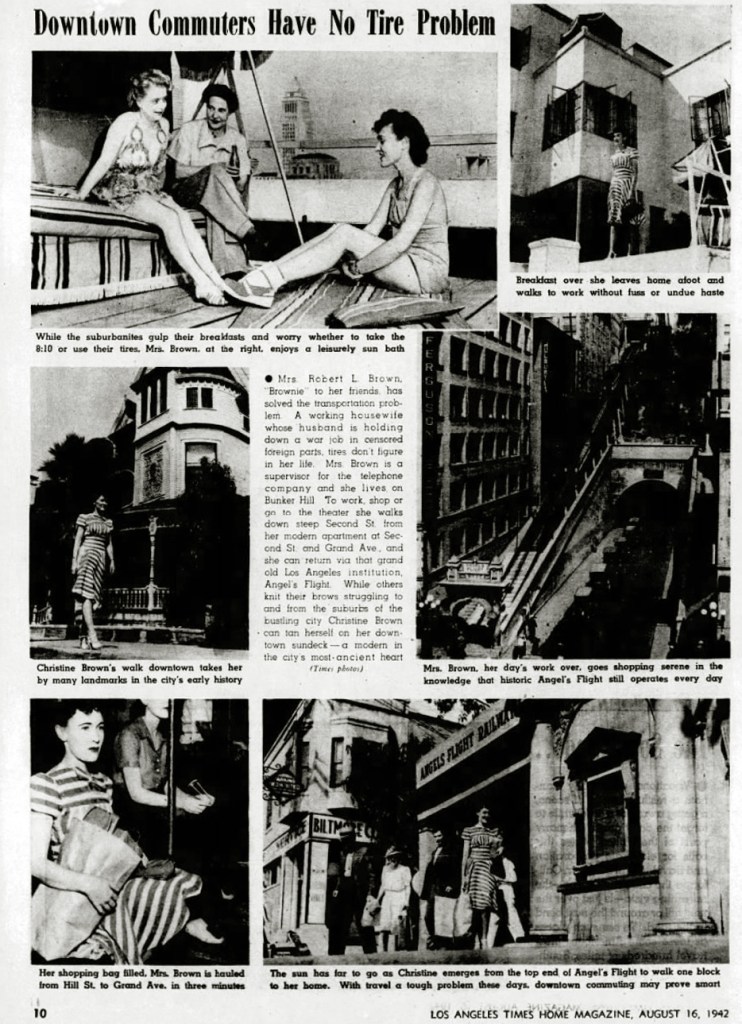
— about how War Production Board orders regarding rubber rationing means nothing to the plucky, patriotic gal who lives and works downtown! It reads as a sort of proto-green, New Urbanist treatise on neighborhood live/work accommodations.






III. Postwar
Fighting ended, and Bob returned home. The Browns had daughter Barbara and son Robert Jr. in short order, and lived at 304 E. Oceanfront, then 211 East Central (now Balboa Blvd.) in Balboa.
The Balboa Pirate Days returned; here’s an image of Sally leaping ashore, in a news item from 1946:

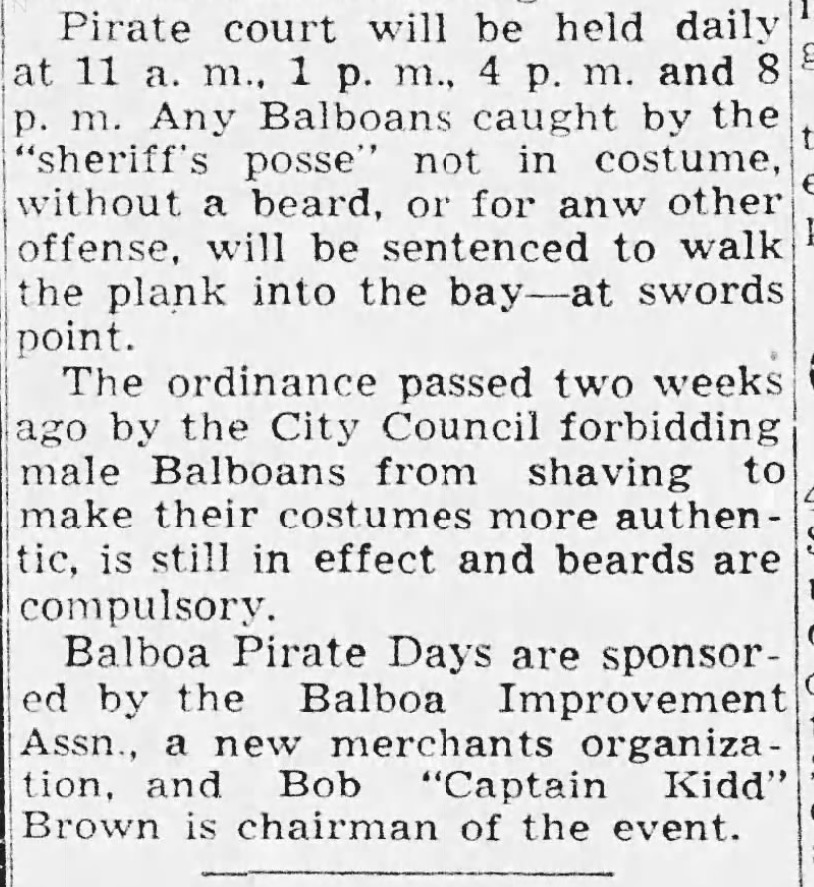
But the pirate days would not last much longer. After the 1947 season, city fathers had grown tired of the drunken rowdiness and put a kibosh on the whole affair.
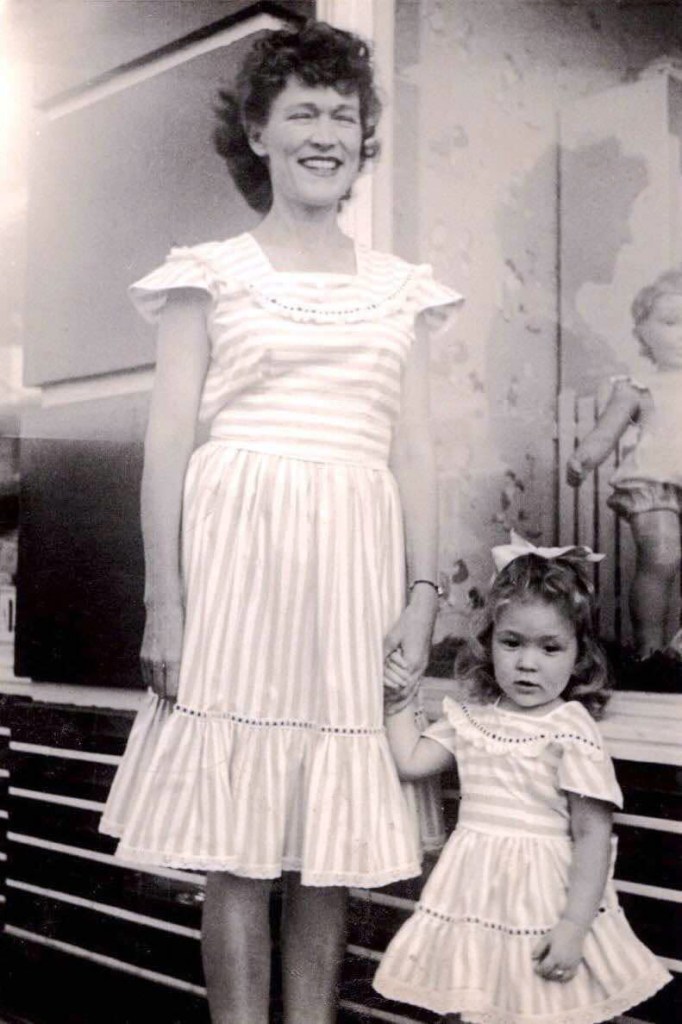
Sally gave up the telephone company and became a realtor, working many years in Newport and on Balboa. Here’s Sally and Bryan’s grandmother Dot on their Balboan bikes:
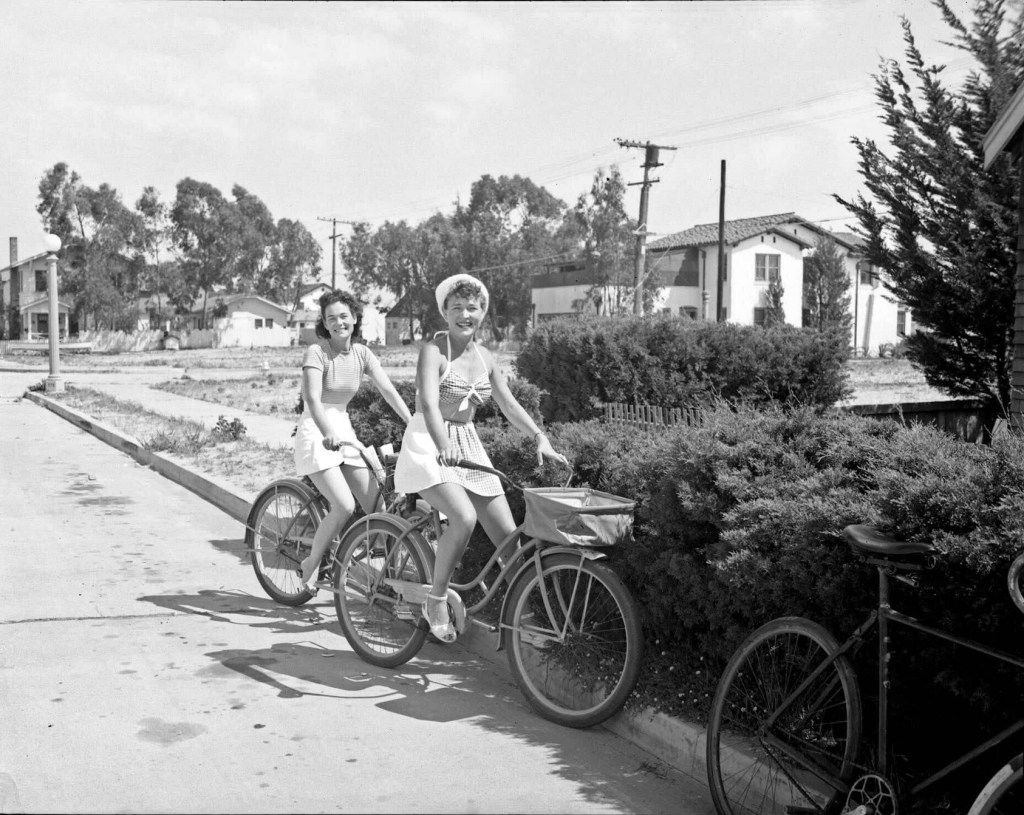
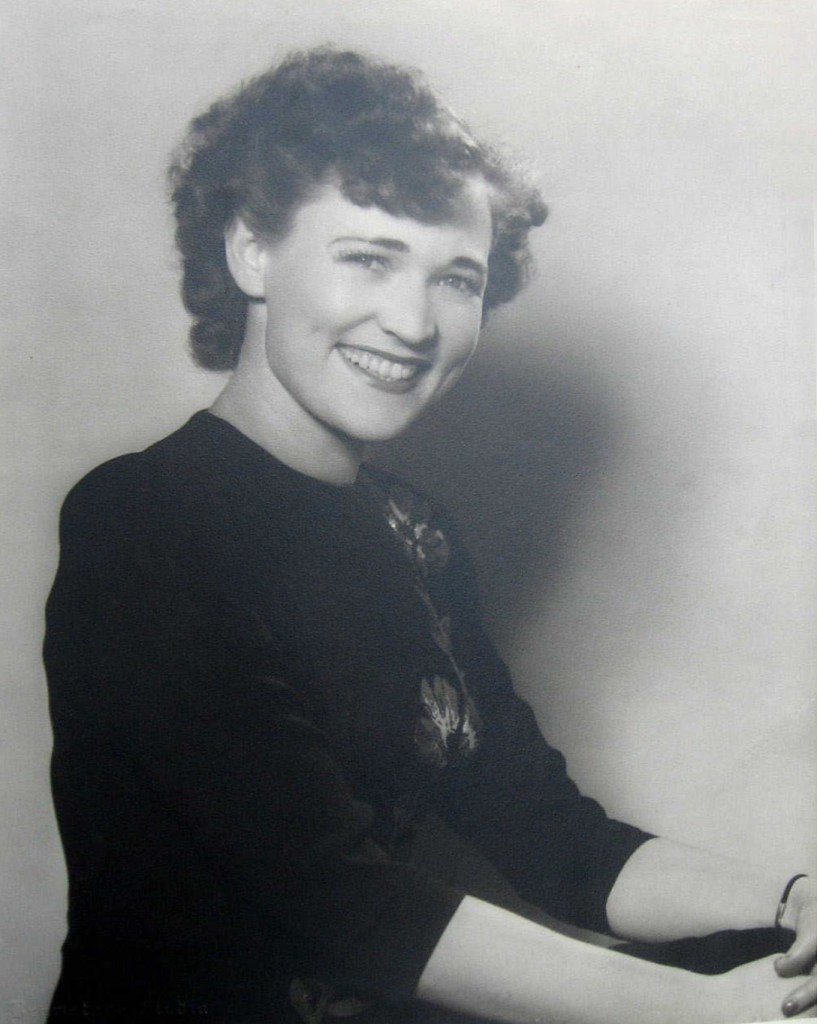
Sally’s daughter Barbara recounts how, in the 1950s, her mother would still go out for drinks with pals Pinkie and Renie (Irene) with whom she’d lived on Bunker Hill back in the day. I am deeply indebted to Barbara for the wonderful images of her mother! And of course to Bryan Moore who alerted me to the existence of his great-aunt and her amazing time on Bunker Hill.
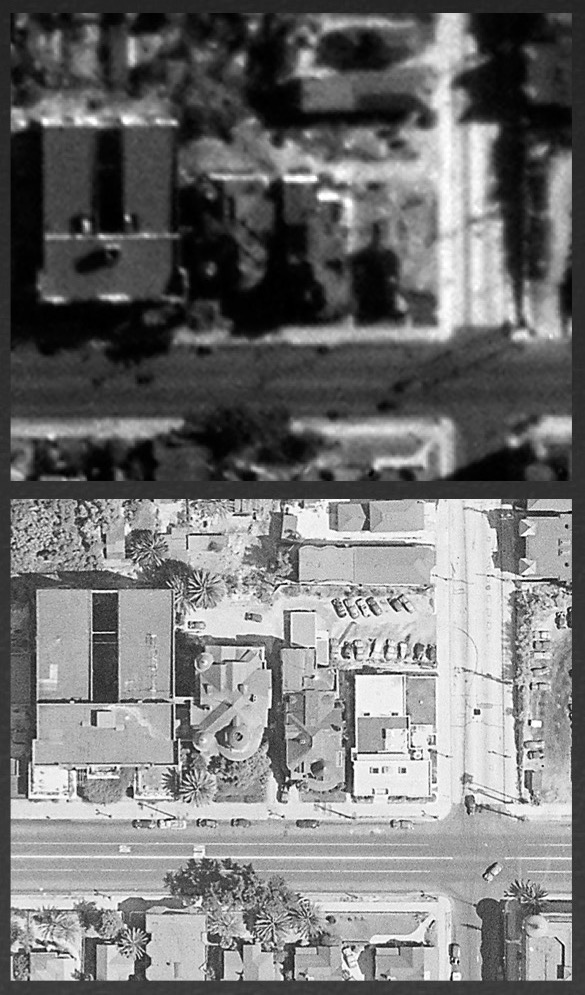
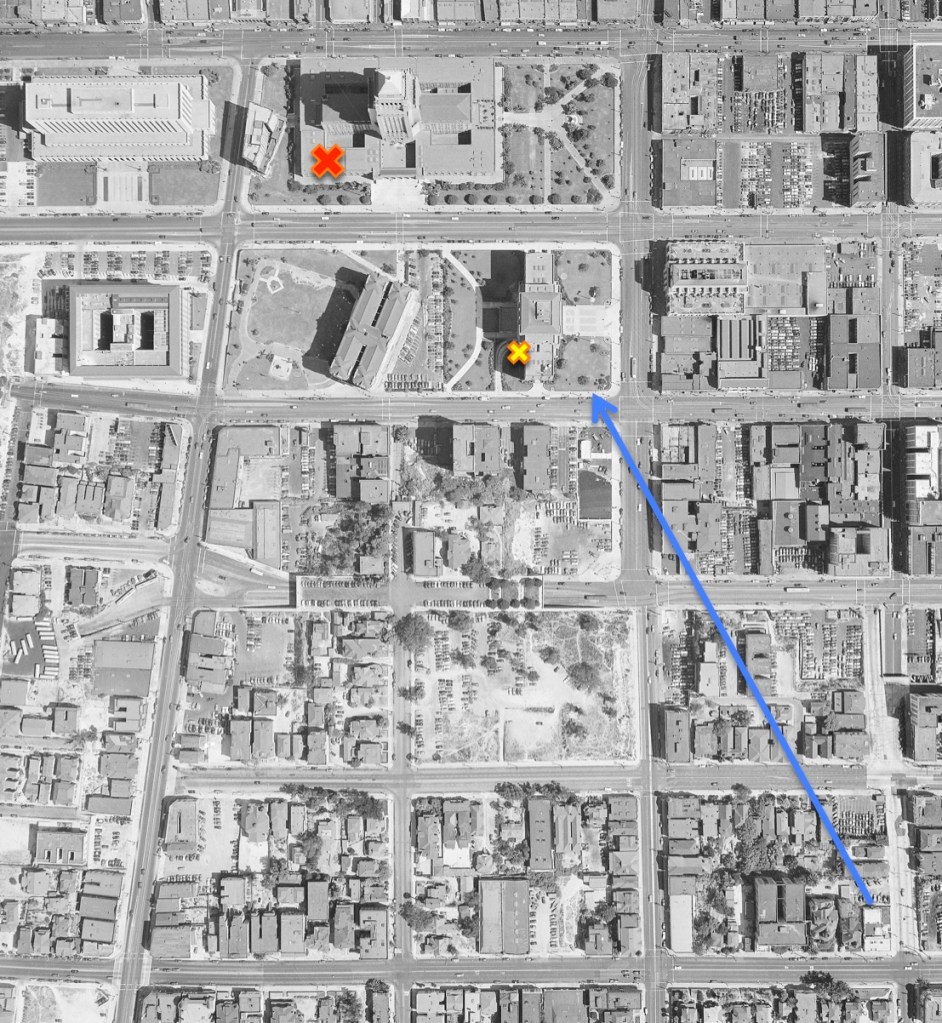
And what happened to the Avalon? It had only just turned eighteen when the County came for the entire block bounded by First, Second, Olive and Grand, to be a parking lot for the new Courthouse and Hall of Administration project.
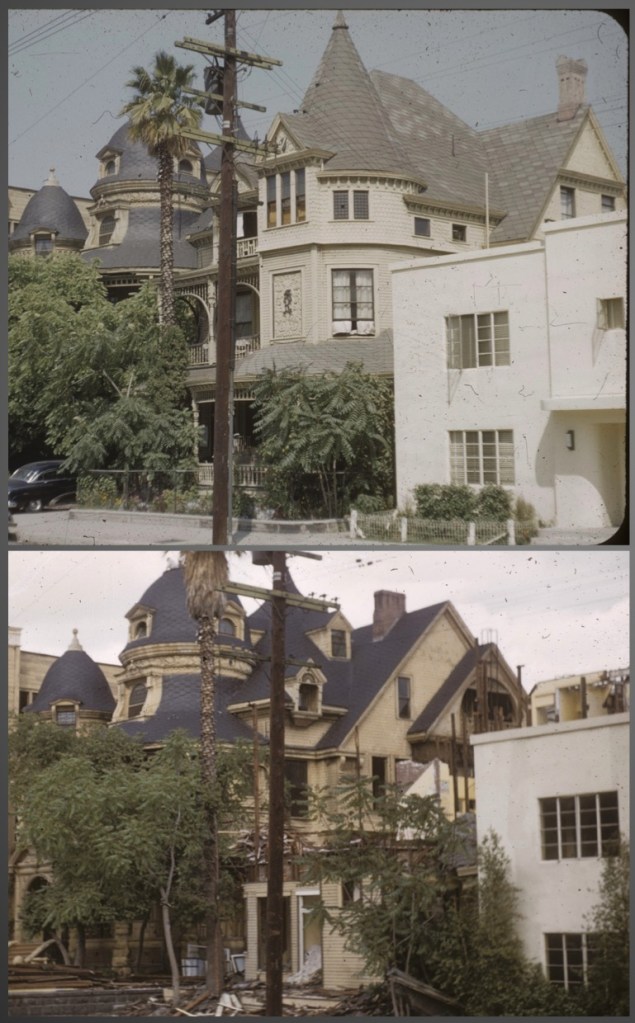
X marks the spot where the Avalon once stood, replaced by a parking garage:


If you have a relative who’s lived on Bunker Hill, don’t hesitate to contact me! See the “Contact” link at the upper right of this page. Thank you!
 Bunker Hill, Los Angeles
Excellent, as usual.
LikeLike
Nathan,
On behalf of your loyal readers, I want to thank you for your undying attention to Old Bunker Hill. This installment in particular brings it to life through the story of a former resident, Sally Brown, who was one of thousands who, like me, once lived there. We went about our daily lives like people did anywhere: working, shopping, enjoying entertainment and recreation, all withing walking distance of home.
I also enjoy your many references to other material. Each of these leads me down interesting paths. One in particular took me to an Army AFB in Northern Ireland which I did not know about and to numerous photos of WW II aircraft, one of my passions.
All in all, I had a very pleasant afternoon with this material. I look forward to the next installment. Keep up the good work.
Gordon Pattison
LikeLike
What a story – thanks. I had a chance to see some WPA maps and photos of the models in person, but I didn’t know the sketchbooks have been scanned https://thedustyarchive.substack.com/p/the-city-of-los-angeles-wpa-sketchbook
LikeLike
My mom (b. 1956) spent a lot of time on the Balboa Peninsula as a kid and said she had never heard of the Pirate Days.
I enjoyed the incorporation of newspaper articles about the event.
LikeLike