We hold these truths to be self-evident, that all movies with Bunker Hill in them are better than others, that they are endowed by their creators to have lots of Bunker Hill in them, that among these include Angels Flight, Bunker Hill Avenue, and some pretty rare stuff once in a while.
************
Let’s look at one of those “rare Bunker stuff in ’em” pictures, specifically, one I had no idea about — it is not, for example, in Jim Dawson’s book — heck, I’d never even heard of this film before Richard Schave sent me a link to it and asked hey, do you know the location of that place about an hour in? Boy, do I…

The movie is The Shadow on the Window.
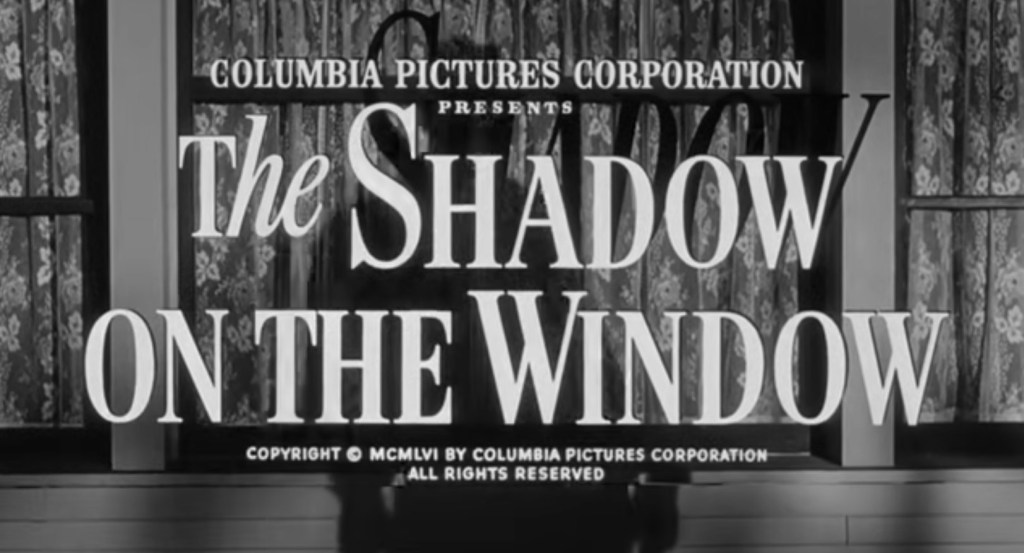
It’s a 1957 picture about young thugs who kidnap a woman and traumatize Jerry Mathers in the process. You may watch the entirety of the movie by clicking here.
For our purposes, go to about fifty-six minutes in. Corey Allen (whom you remember as the gang leader in Rebel Without a Cause) has gone to his mother’s frowzy apartment to snag a gun and a car, but the cops are on his tail. They arrive:

And where is it they arrive, you ask?
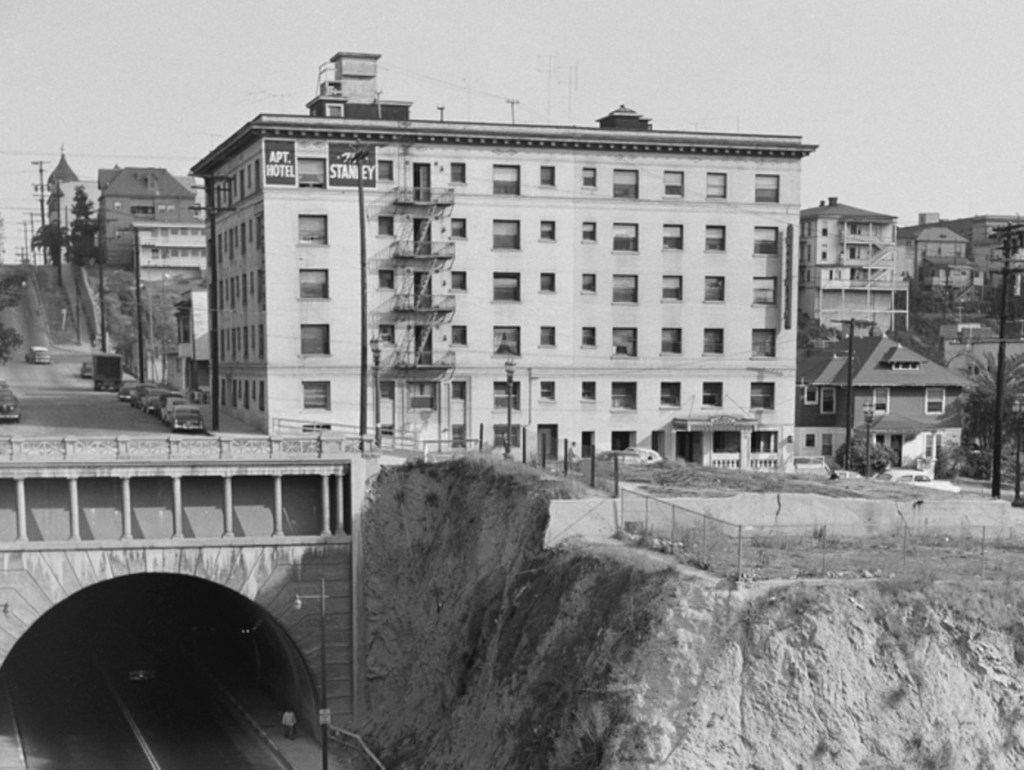
Why it’s the Stanley Apartments, at the southeast corner of Flower and Second streets!

A bit about the Stanley: it began life as the La-Nel Apartments, built in 1913. Designed by Edward John Borgmeyer, it was a project of the Julius R. Smith’s Apartment House Building Company. Borgmeyer specialized in apartment houses, but was known to produce theaters as well (e.g., the Forum).
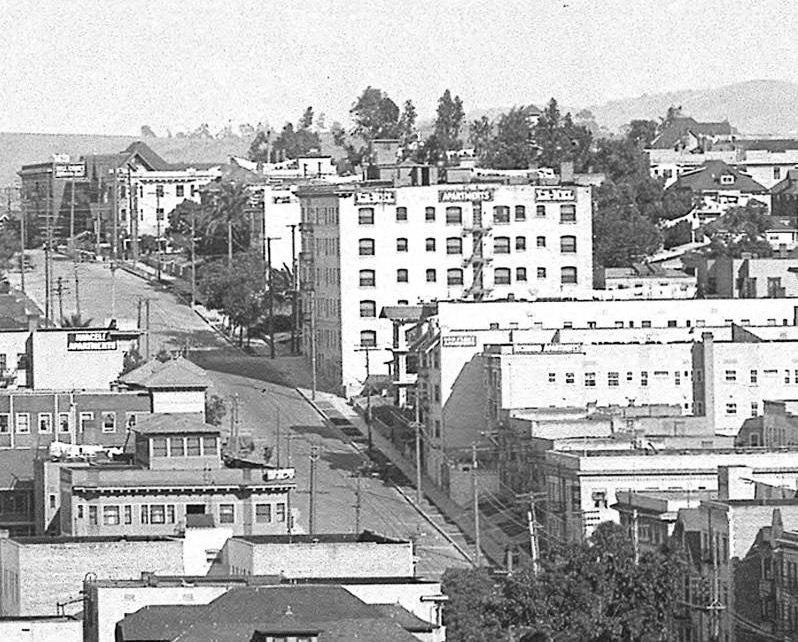
It was renamed The Stanley in 1921, after being purchased by Fullerton’s Charles Stanley Chapman (son of Charles Clarke Chapman, “Orange King of California” and founder of Chapman College). Charles Stanley Chapman kept his newly-monikered Stanley for just two years, giving it away in partial trade for the Commodore; nevertheless, the Stanley name stuck.
So anyway, it’s 1957 and someone on the Columbia lot says “go find us a down-at-heels tenement house to shoot at” and voilà—
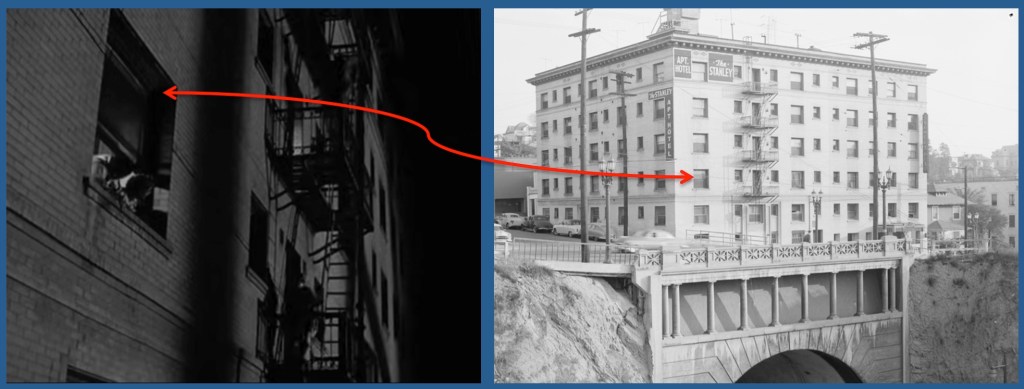

Okay, THEN. Then something absolutely cuckoo-bonkers happens. Corey Allen drops off the fire escape and makes his way into the pedestrian passageway into the Second Street Tunnel. I have never seen a shot of this entrance.

I mean, I knew the railing was there—and I could see the entrance on aerials—
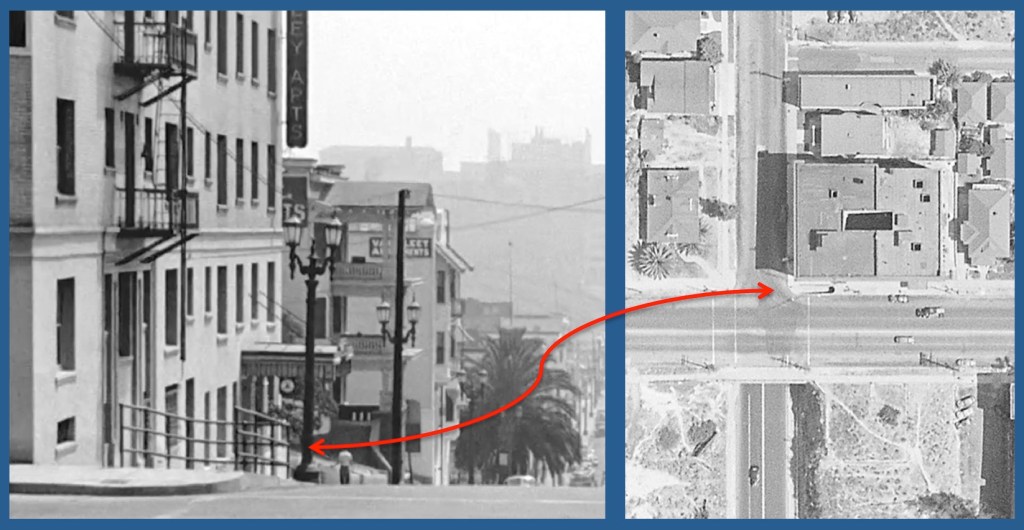
—but I despaired at ever seeing what the heck the tunnel looked like from the sidewalk. Until now. Not only that, they go through the passage where it turns, and emerges into the tunnel, and there’s gunplay! Plus lots of that famed shimmery-white Second Street Tunnel subway tile (imported from Germany, which caused a bit of consternation since we had just battled the Hun to end a War Against Mankind).

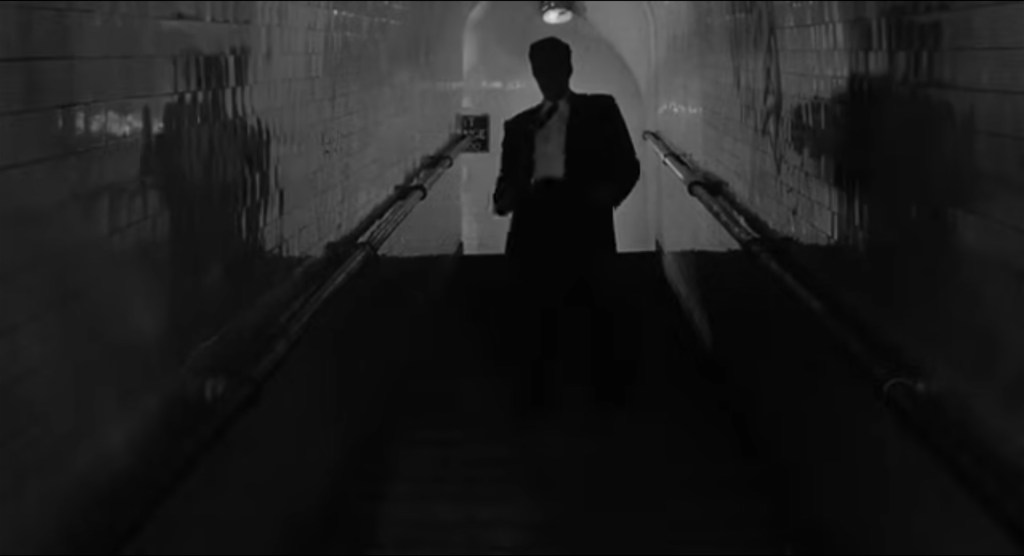

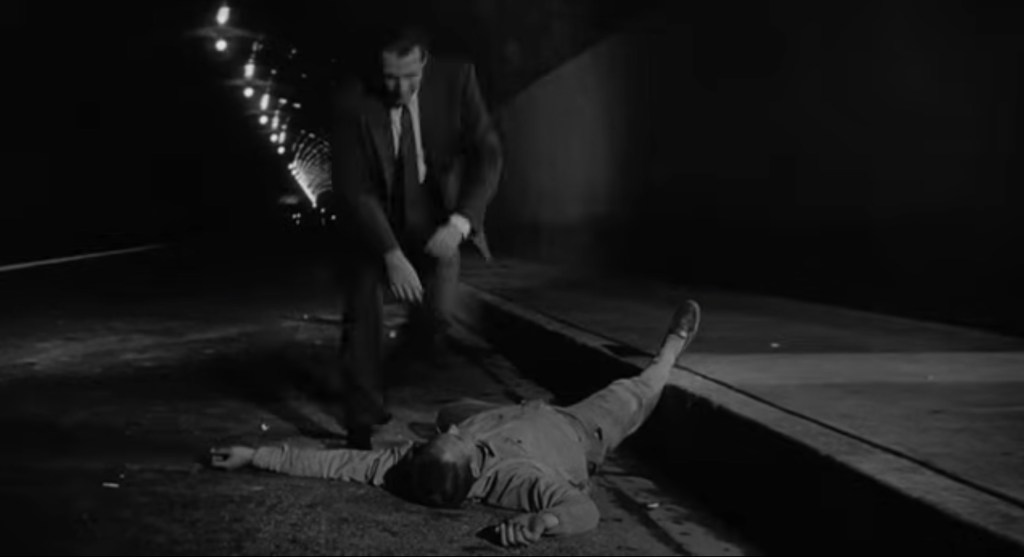
There’s even action on the south façade fire escape:

So much to see! When during the rooftop shootout, you’ll certainly wonder, what are those blinking neon lights in the distance?

And what became of the Stanley? The Community Redevelopment Agency got its demo permit in March 1966, and that was the end of the Stanley.

During the development of the Bunker Hill Towers, Flower Street north of Third was rerouted east toward Hope Street, and the Second Street Tunnel was extended west of Flower, almost to Figueroa; it can therefore be difficult to grasp just where the Stanley, at 210 South Flower Street, once stood…

The Stanley was perhaps not the most exciting structure on the hill, so I’m thrilled to give it and its little-considered architect E. J. Borgmeyer some notice.

Enjoy The Shadow on the Window! (Spoiler alert: the Stanley is the best part of the picture.)
*****
An addition:
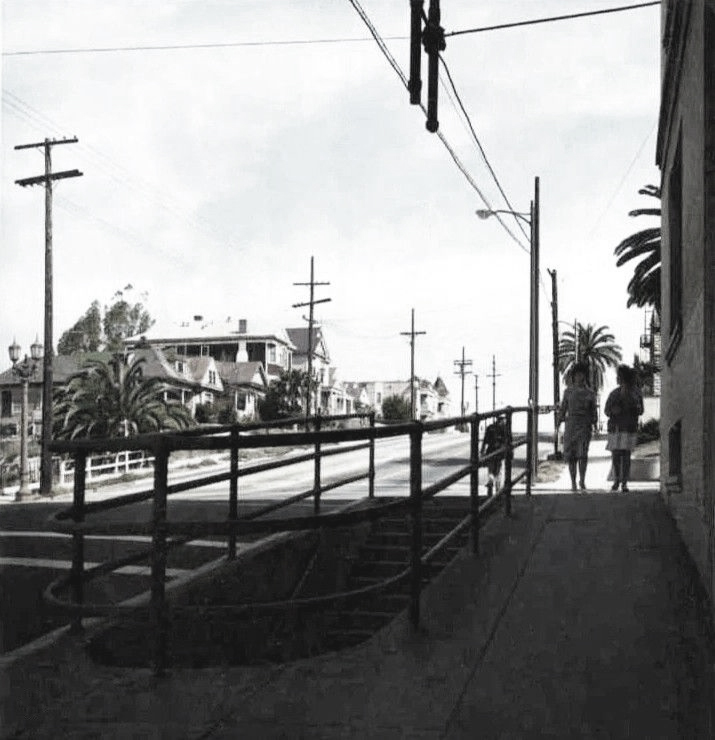


This is simply astounding, especially because I once lived on Bunker Hill and never knew this hidden staircase even existed. I can see its utility, however, because unlike the 3rd Street tunnel where there was a staircase outside the tunnel mouth leading down to 3rd Street from Hope Street above, there was no way to access 2nd Street below Flower Street save for this beautifully conceived hidden stairway. Brilliant!
LikeLiked by 1 person