Ok, I know this is really off the topic of Bunker Hill, and I am well aware there is zero reason to get worked up about something posted in the reeking cesspool that is TikTok. But I write about Chavez Ravine because of Bunker Hill, so now I’ll write about Disneyland because of Chavez Ravine, making Disneyland the dopey, ungainly cousin of Bunker Hill. And away we go:
I began writing about Chavez Ravine (e.g. this/this/this) because the story shared similarities with Bunker Hill (government removes the poor and disenfranchised “for their own good” etc.). I kept at it largely because the Chavez story gatekeepers were so shameless in their continued production and promulgation of lies. The Influencer Class and their agenda-setting, narrative-shaping output factory simultaneously repels and fascinates.
Ergo, I’m going to harp on another Chavez-flavored example related to, of all places, Disneyland. This TikTok —
— has had 150,000 views, with nearly 15,000 likes and 11,000 shares. It got shared on Instagram and garnered another 3,000 likes. It involves the story of how, before Disneyland, a bunch of land in Anaheim was a “thriving Latino neighborhood” until “the city seized the land through eminent domain” after which “entire communities were bulldozed without any compensation.” So yes, I’m here to talk about it today, because it’s the exact same (purported) story as Chavez Ravine.
The Chavez Ravine story, though, at least has a kernel of truth at its core (progressive politicians did, in fact, use eminent domain to extirpate the communities there). But the Disneyland story, as shoehorned into the Chavez narrative, is just stupidly, laughably false.
If you chose not to watch the video, here’s a transcript:
They built the happiest place on earth by destroying someone else’s. Before Disneyland, a thriving Latino neighborhood existed here. It was filled with homes, families, and orange groves. These were passed down through generations. But in the 1950s, the city seized the land through eminent domain. They claimed it was for public use, but then sold it to Walt Disney. Entire communities were bulldozed without any compensation, no memorial, and no plaque in the park. Families who once lived there now buy tickets to walk on the land they lost. Today, millions visit the park, yet almost no one knows what was here before. This story isn’t just about Disneyland; it’s about how American progress continues to erase communities of color. Disneyland calls itself the happiest place on earth, but for the original residents, it marked the day everything changed. Comment if this was never included in your history class. Follow for the stories they attempted to bury. Share if someone needs to hear this.
This is all a con. A fraud. The deceitful contentions are as real as their adjoining images, which were spat out in AI — here for example is a “photo” of the now-destroyed “thriving Latino neighborhood” —

— and again, yes, I know that attempting to counter TikTok’s perfidy-peddling propagandists is a fool’s errand (so I’ll try to make this quick and we can get back to the posting of cool Bunker Hill stuff). Anyway:
Come with me back in time and examine the land through aerials. Here are today’s boundaries of Disneyland, as bordered by Walnut, Ball, Harbor, and Katella —

And here’s Walnut/Ball/Harbor/Katella in 1960, five years after the park opened:

And the same area in 1953, two years before the park opened:

What do you notice? It’s all orange groves. Nothing remotely related to “neighborhoods” and “entire communities” as erasedcalifornia so sternly states.
“But but but,” you say, “the families who owned those orange groves were Latino and they had their land stolen!” Nope. We actually know who the families were who voluntarily sold their land to Disney (selling the land being the exact opposite of erasedcalifornia’s narrative that “the city seized the land through eminent domain. They claimed it was for public use, but then sold it to Walt Disney. Entire communities were bulldozed without any compensation“) and here are their names:
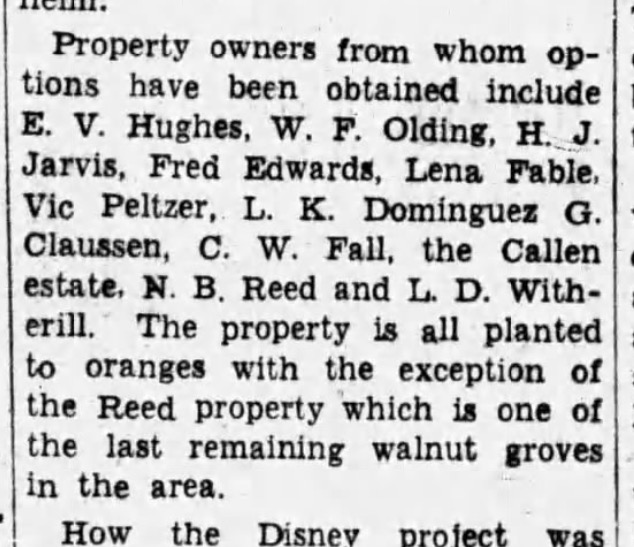
“Ok yeah but” you say, “all the owners were of European descent but LOOK! Dominguez! THERE’S a Mexican name! THEY definitely had their land stolen! Then their farmhouse was bulldozed!” Nope again. The Dominguez family had a ten-acre lot (which is 6.25% of Disney’s 160-acre purchase) and on that lot was a farmhouse:
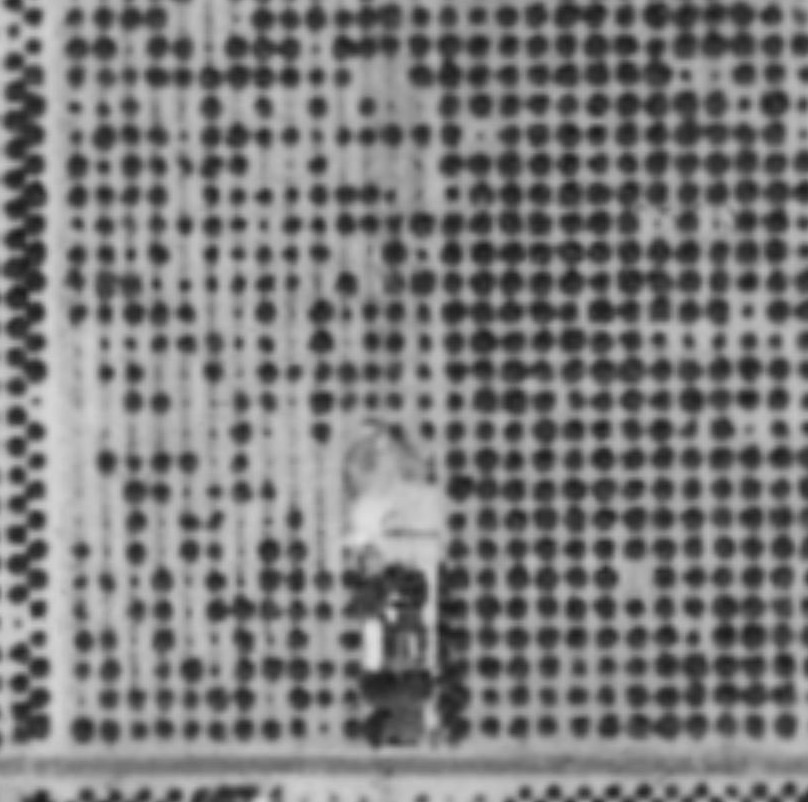
And not only did the Dominguez family sell their land voluntarily, but Walt Disney saved their 1,300 square-foot 1920s farmhouse, where it stands in Disneyland to this day.

Oh, and it gets better. So not only did the sole Latino people involved in Disney’s Anaheim land deal not have their house seized, and not only was it not bulldozed, but their palm tree was saved, too:
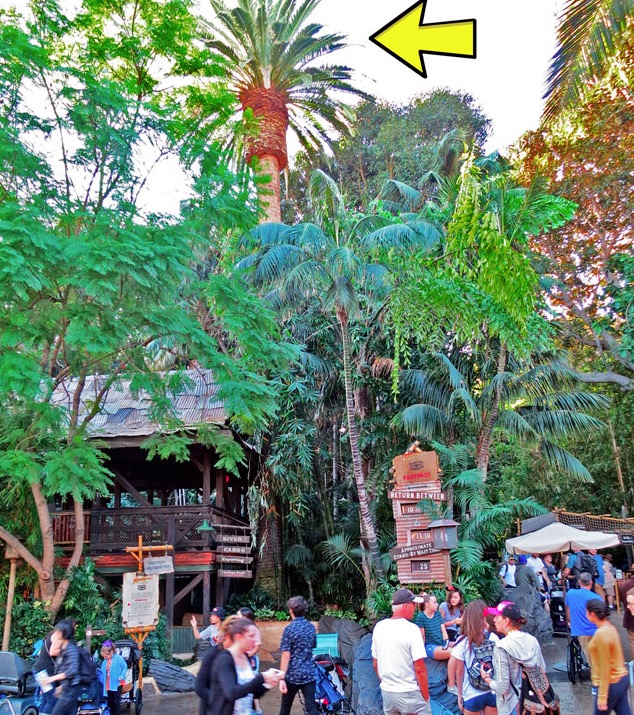
This Canary Island Date Palm was planted in 1896 by Timothy Carroll, Anaheim’s first horticulturalist, for that ten-acre tract’s landowner, Wyran Knowlton. In 1920 Knowlton’s daughter Laura Irene Knowlton married Pablo Vincent Dominguez, which is how the ten acres “became” a Dominguez property. Pablo (who went by Paul) & Laura built the little house in 1925, in which their son Ronald Dominguez was born in 1935.
And it gets better still: not only was the young Ron Dominguez not “run out” of his property in 1954, but after the park opened he walked into the personnel office and applied to be a ticket-taker. Over the course of an illustrious 40-year career there, he was promoted to the position of Executive Vice President of Walt Disney Attractions. So while “erasedcalifornia” insists they are being “erased”… the only Hispanic folk (well, half-Hispanic, since the Knowltons came from England and helped settle the Massachusetts Bay Colony) that could have possibly been erased sold their land to Disney, who kept the Dominguez home, kept the Dominguez tree, AND honored Dominguez with a window on Main Street, when he retired in 1994:

So, if the entirety of erasedcalifornia’s story is such easily disprovable poppycock, why did they put time and energy into making the video? Apparently it was just to fan the flames of racist hatred. Among the thousands of comments on the Instagram and TikTok post are many like these —
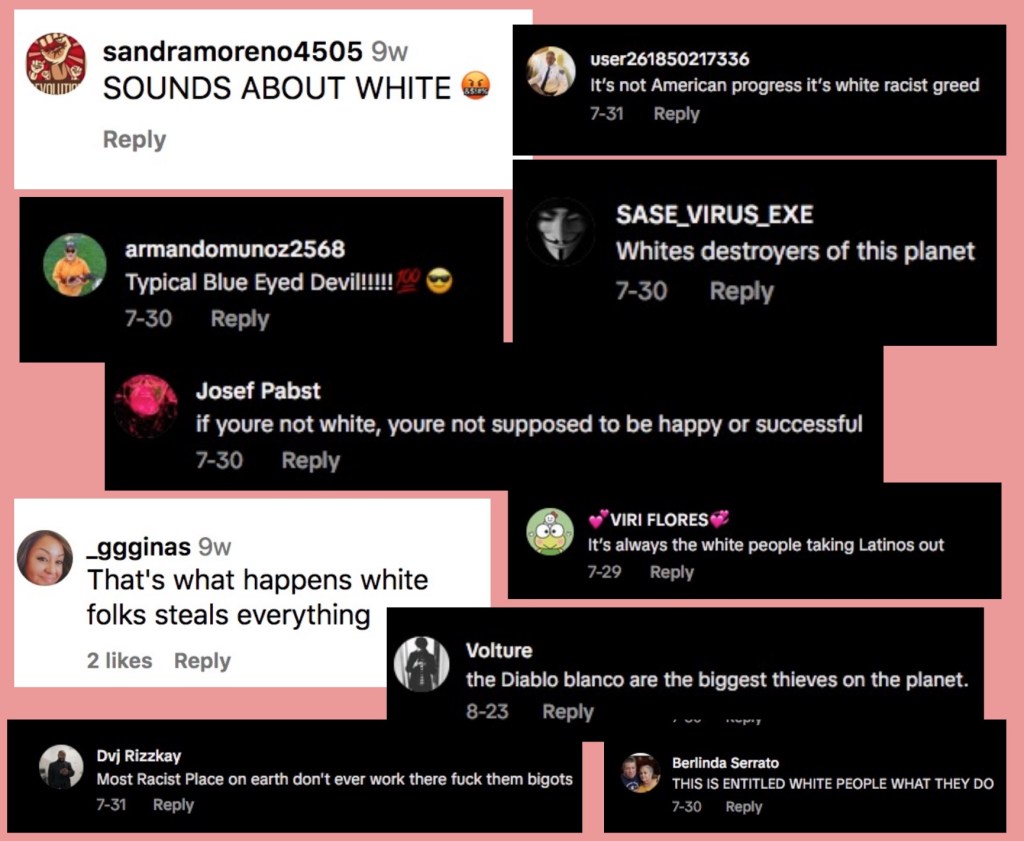
The comments go on an expand from there, into anti-American, anti-capitalist invective. Hey, you wanna be a racist communist that hates America, you do you, baby. Knock yourself out. But piece of advice, try to have an argument that’s at least based in some minuscule semblance of fact.
Perhaps it’s less that people need to be America-hating racists, than it is some people’s need to crap on anything fun. I’m sure that’s enormously psychologically gratifying, though in the end being a toxic gaslighter does one more harm than good. So hey, erasedcalfornia and your ilk, along with finding some stories with truth to them, get some therapy.
 Bunker Hill, Los Angeles
MVP award to Marsak, who knocked another hanging curveball out of the park.
Honestly, I don’t know who to believe. I visited Disneyland in the 1960s, took a jungle cruise and saw for myself that the park was built on top of an African or Amazonian village. I’m going with African village because I remember a ferocious hippopotamus protesting our presence. I think reparations are in order here.
LikeLiked by 1 person
Another massive debunk from Nathan Marsak! I had a younger brother who made his “debut” the same week Disneyland opened. I never ever heard anything negative about the project or the lands. I do remember all of the orange groves with very few houses. The owners sold willingly, and I know Disney paid a better-than-fair price for the land. Eminent Domain was not needed or warranted for a private project.Disneyland had a special place in our family. Not only did we celebrate my brother’s birthday there almost every year, but they employed thousands of locals year round including family friends and classmates. If the land had been “stolen”, we would have heard of it. (I do vividly remember the debacle over Chavez Ravine.) Sadly, it has become way too expensive for normal families to visit. In the early days, it was the exact opposite.
LikeLiked by 1 person
It’s always a good day for a Marsakian debunking. Dig back into this AI slop account erasedcalifornia and in July it spewed the same fake history about Rodeo Drive, claiming the Black and Latino community of “Pico Village” was wiped out for Prada and Gucci. We truly live in hell.
LikeLiked by 1 person