The World Trade Center! Important! Incredible! And…doomed? Well, no, but…sort of?
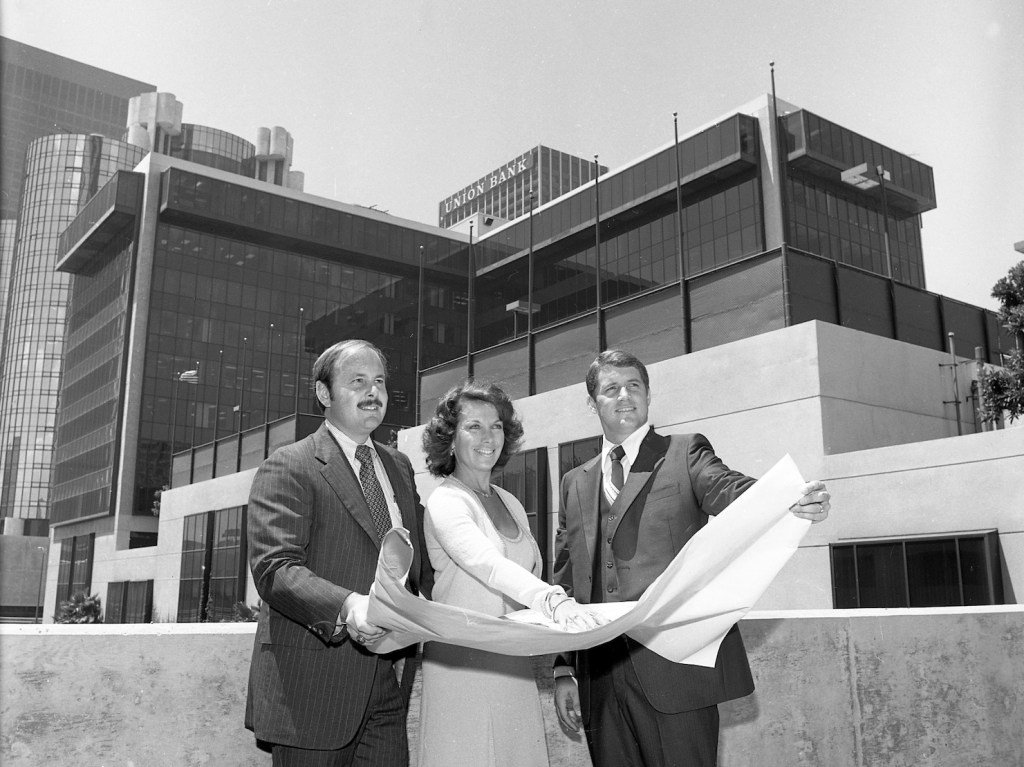
You know about the World Trade Center because you have undoubtedly been there to marvel at its wonders, but if you haven’t, you’ve at least seen it in the book Bunker Hill, Los Angeles…
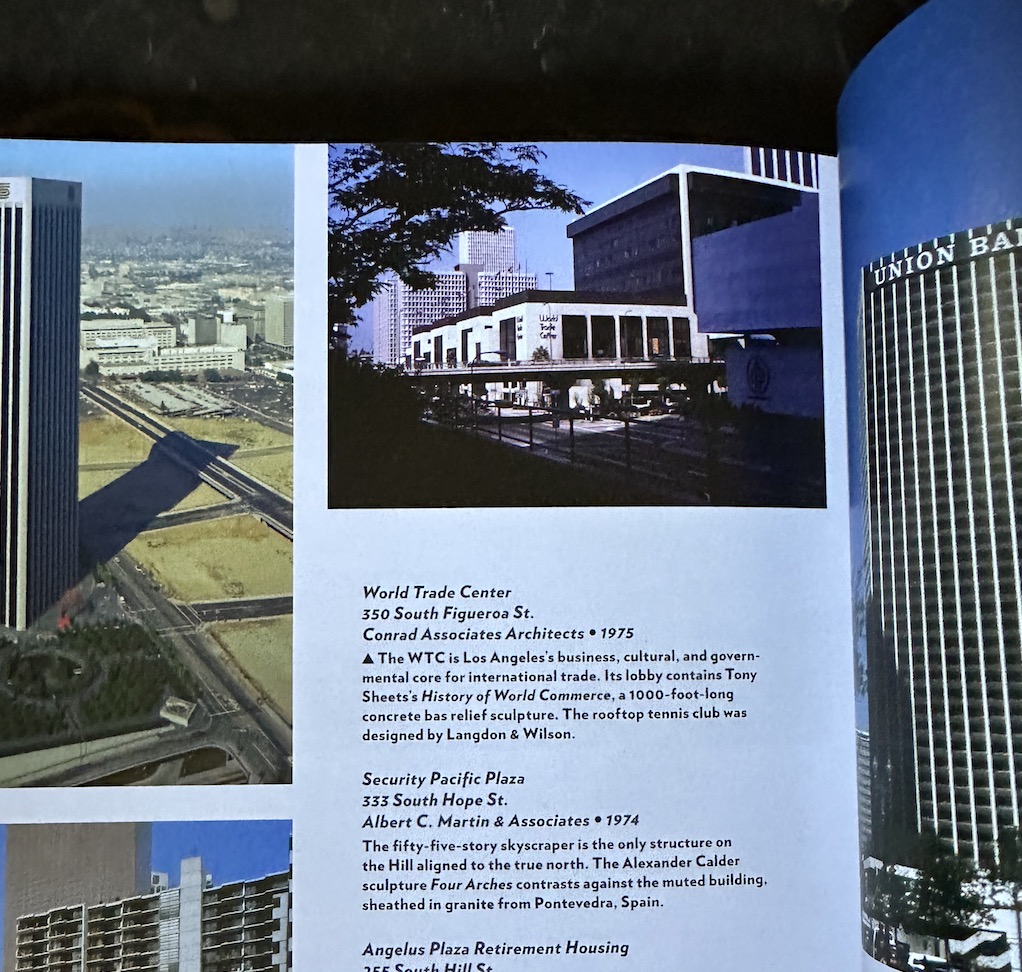
…and in the book Marsak’s Guide to Bunker Hill…
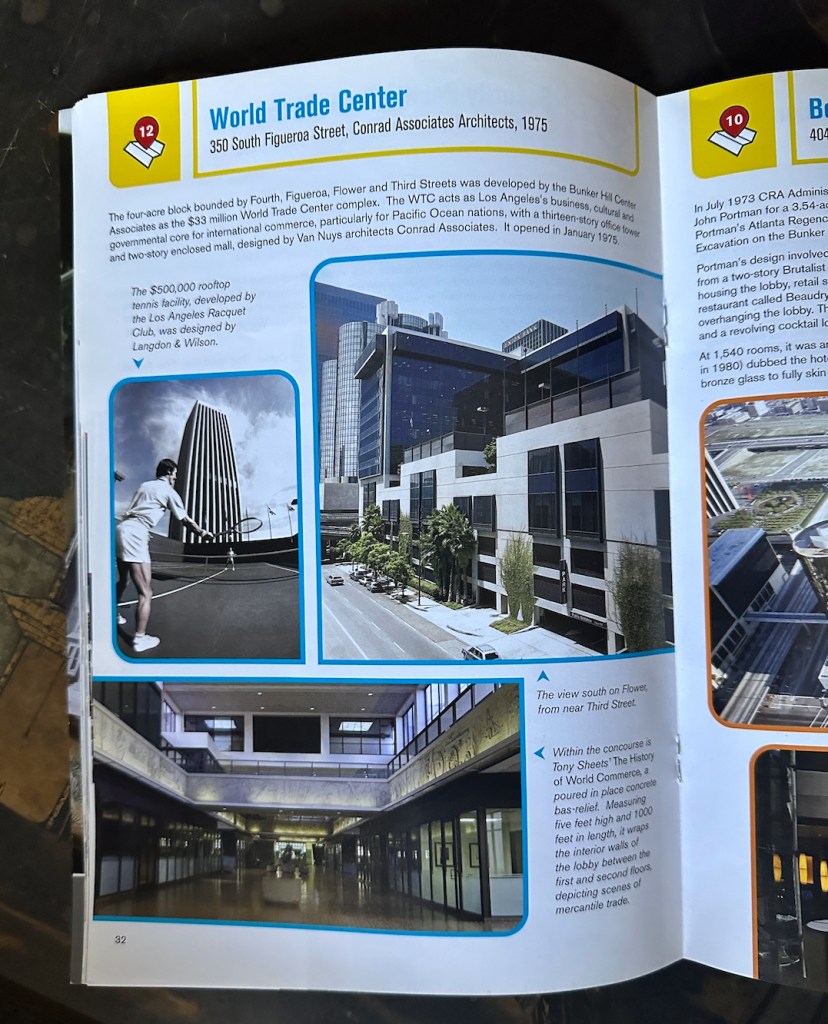
…but should you not be familiar with the wonders of the World Trade Center, let me bring you, quickly, up to speed:
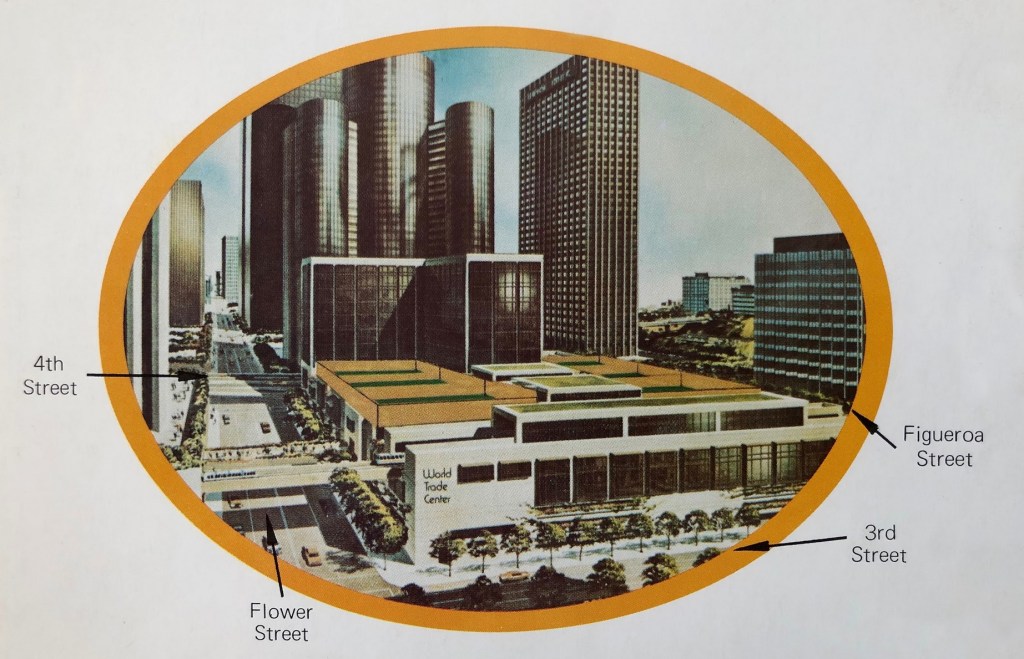
Once upon a time, the Bunker Hill redevelopment area superblock bounded by Third, Fig, Fourth & Flower was slated as site of “The Bunker Hill Center” retail mall, and then the “Los Angeles International Financial Center,” and wound up as The World Trade Center, for reasons I won’t go into here, but you can read all about it in this Instagram post. (While we’re on the subject of Instagram, I would suggest you go to amazing bonaventurehotel fan page, specifically their three recent WTC-related posts here, here, and here.)
Anyway, the World Trade Center opens in January 1975. It is a development by Edward K. Rice, who was chairman of the board of Conrad Associates, the Van Nuys architectural firm who designed the $30-million complex. Rice was an absolute titan when it came to concrete innovation, at least on par with Whittlesey.
Point being, the World Trade Center exists. It is one of the strangest, most wonderful, and sublime spaces in Los Angeles. For now. Check it out:
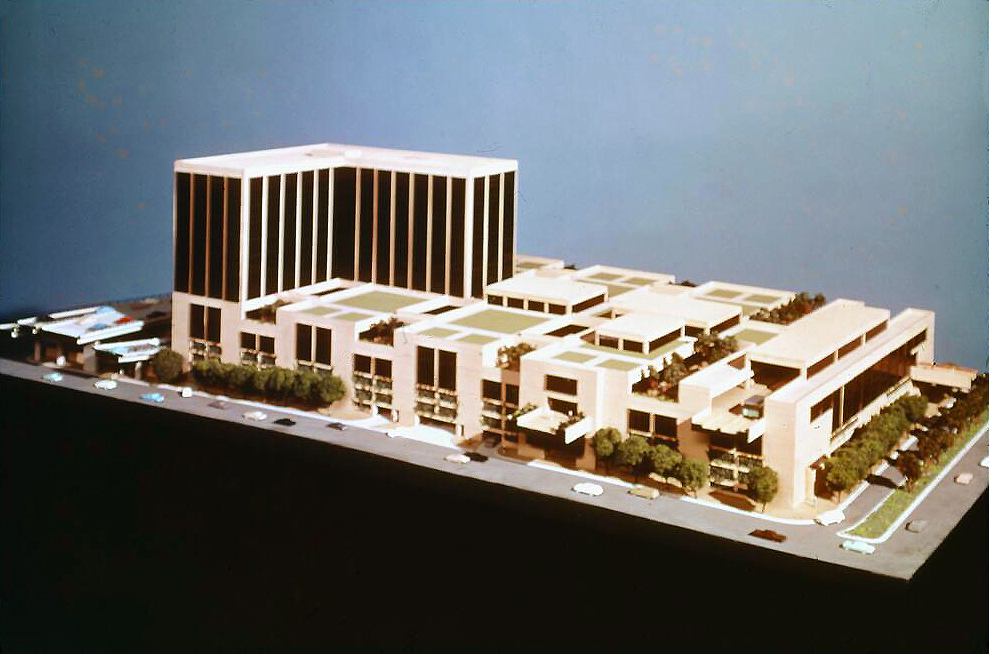
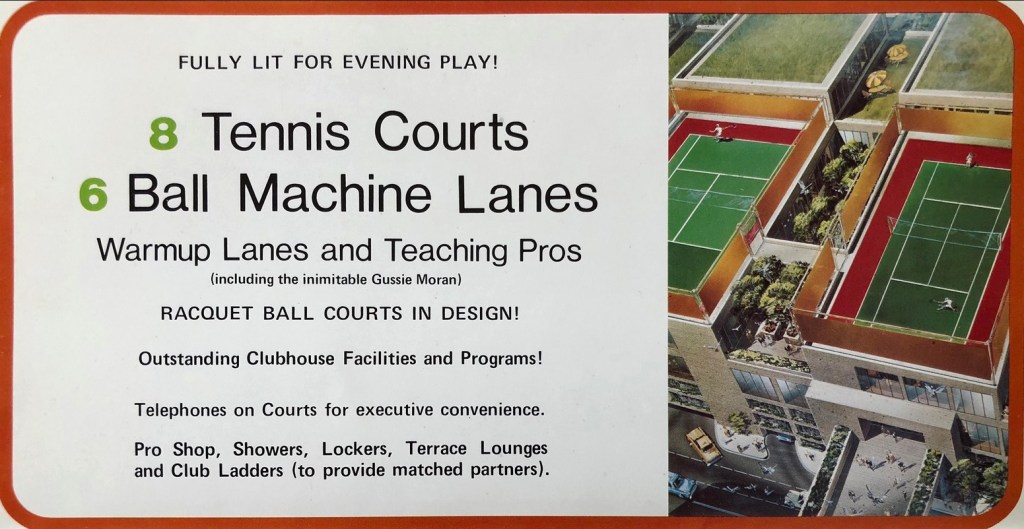
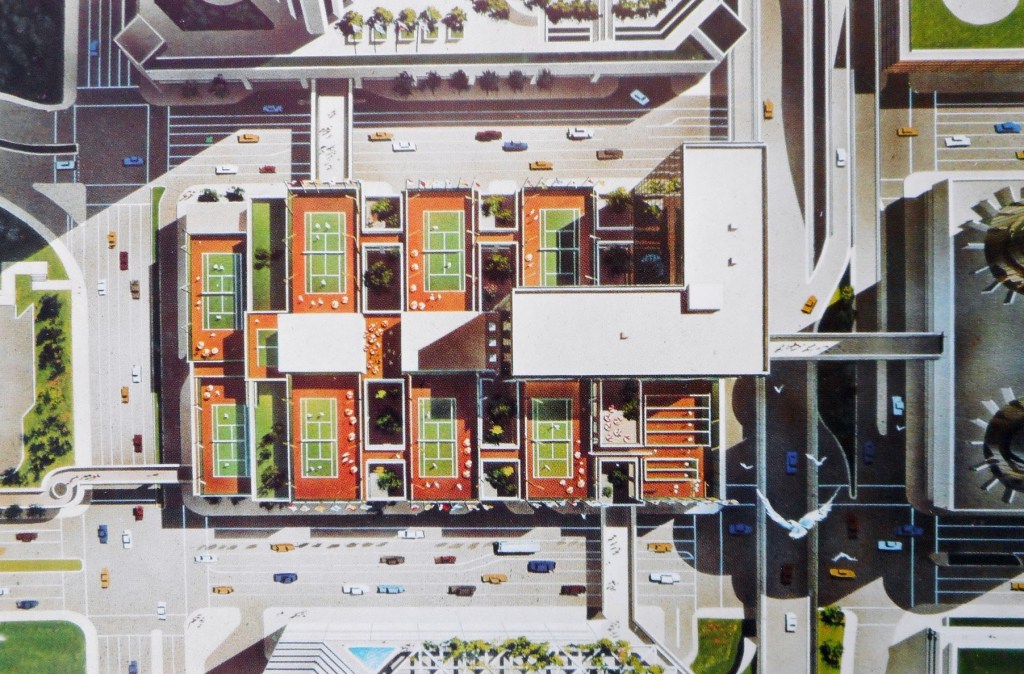
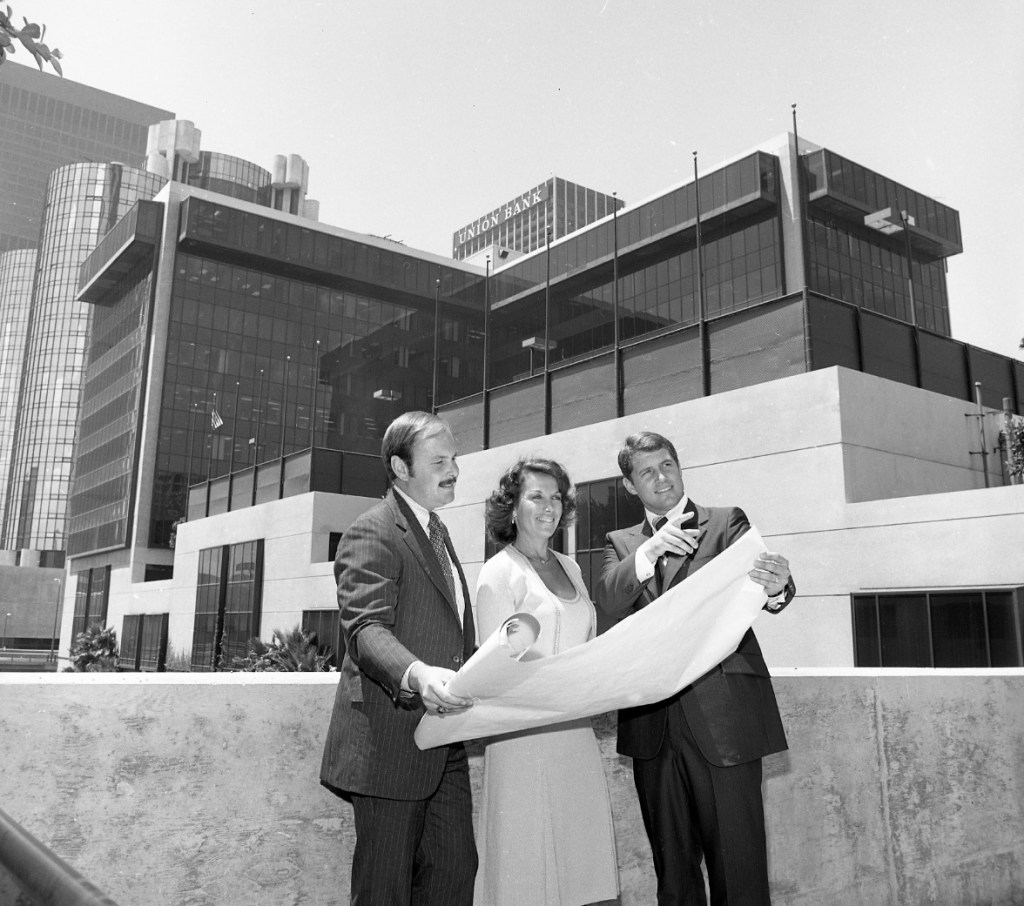
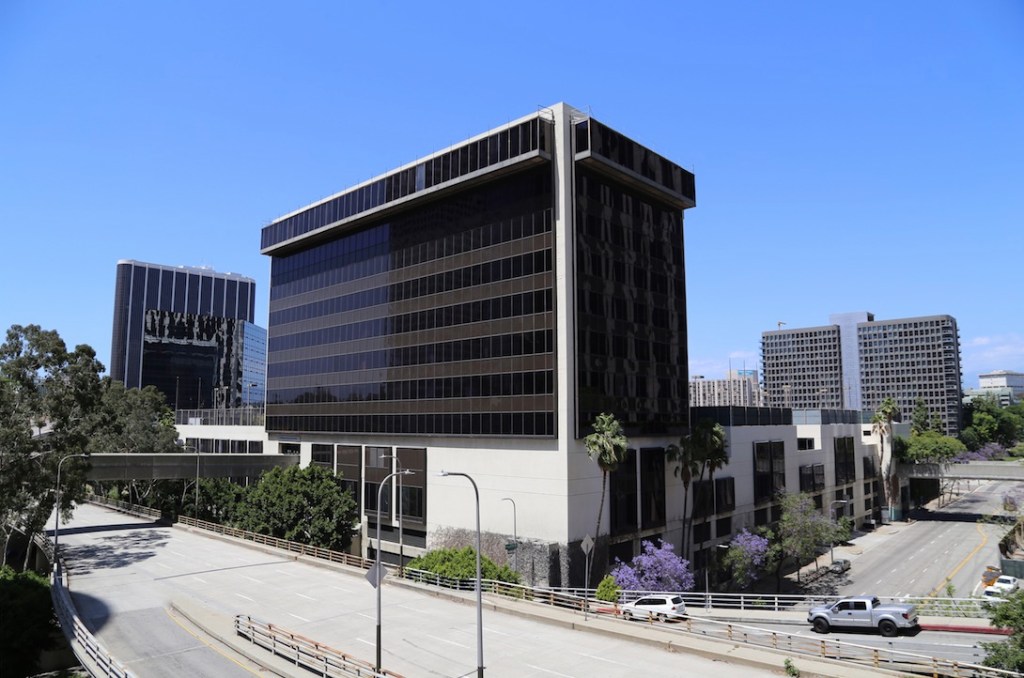
Ok, maybe you’re not wowed by Late-Modern Sculpturist glass skin towers. Fine. Let’s go inside then:
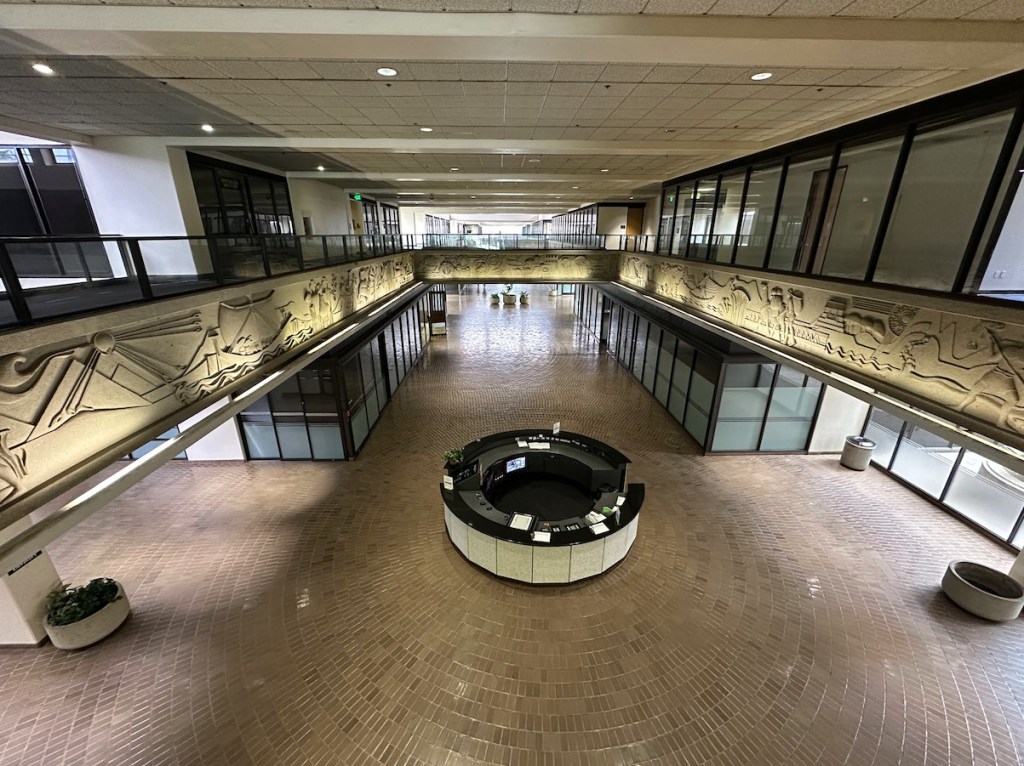
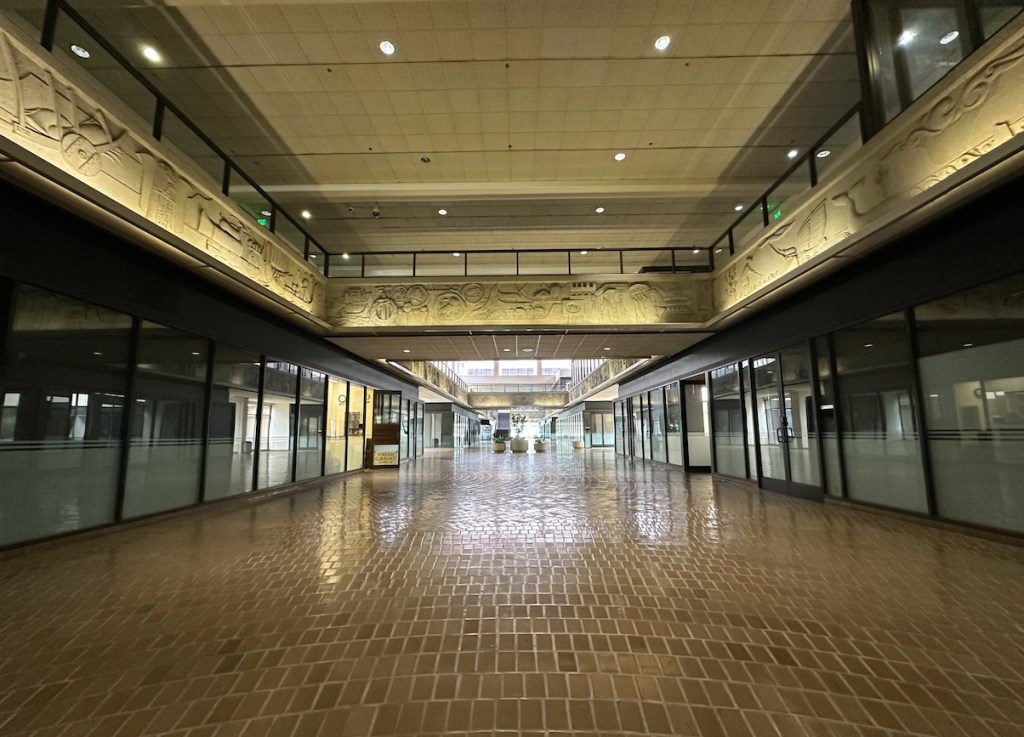
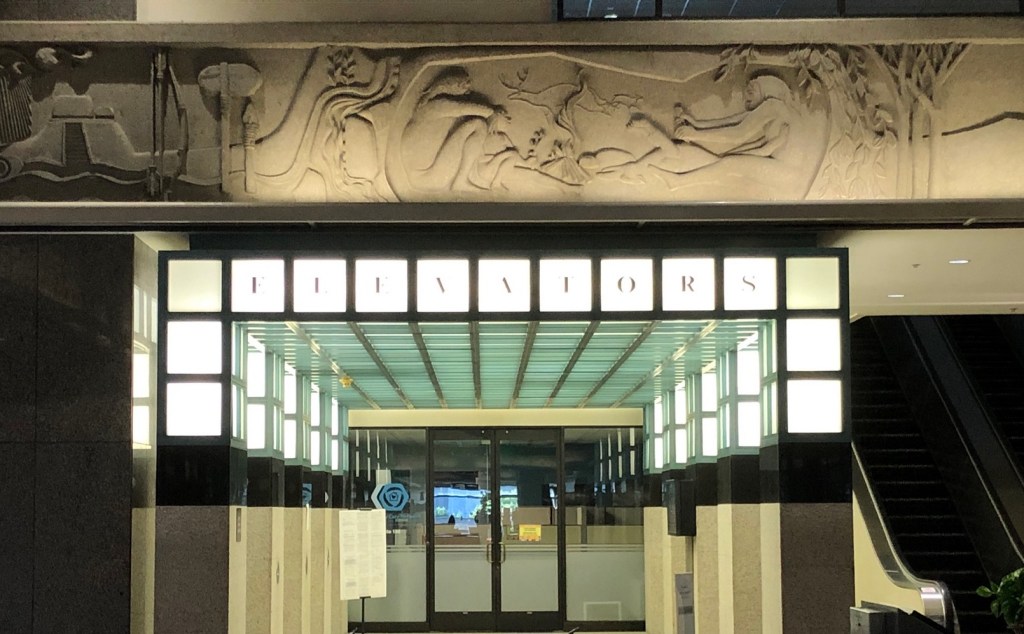
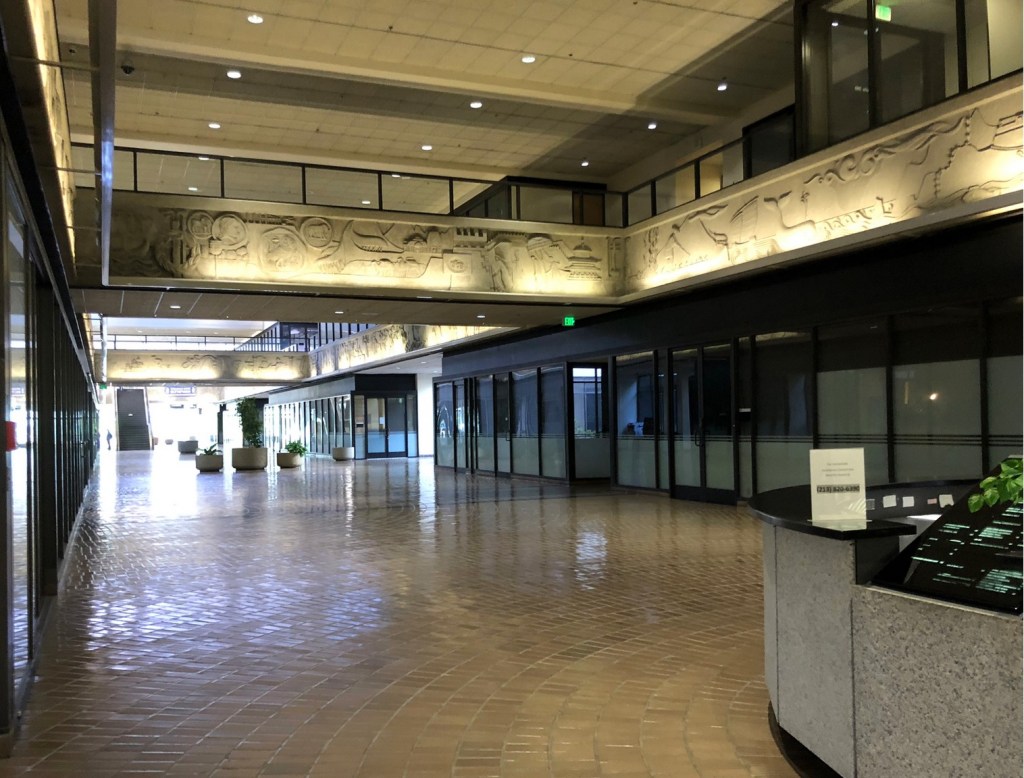
It’s an absolutely transcendent space, one of the great intact 1970s lobbies. I know, people my age might scoff at the prospect that 1970s architecture is cool, but the kids (can we still call Millennials kids?) love the stuff. The WTC lobby is within spitting distance (or, in this case, pedway distance) of 1970s interiors found in the Bonaventure Hotel and Bank of America (née Security Pacific), truly some of the best in the world. But this one has Tony Sheets:
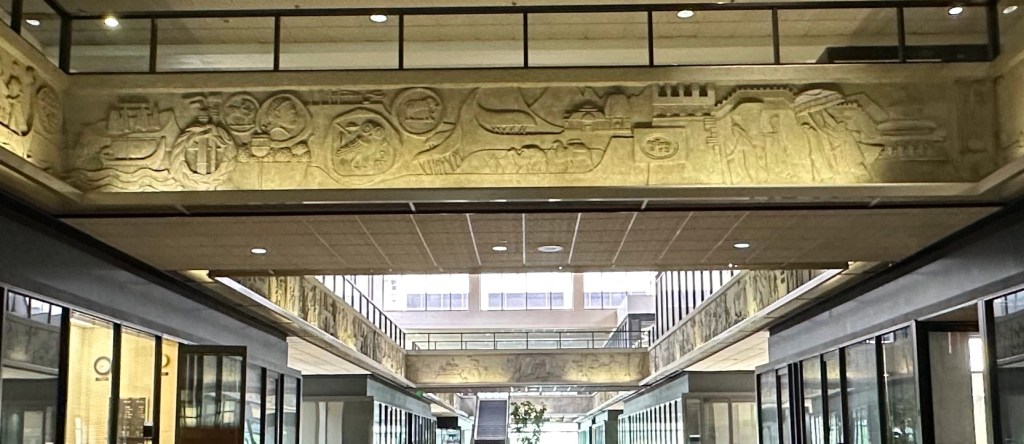
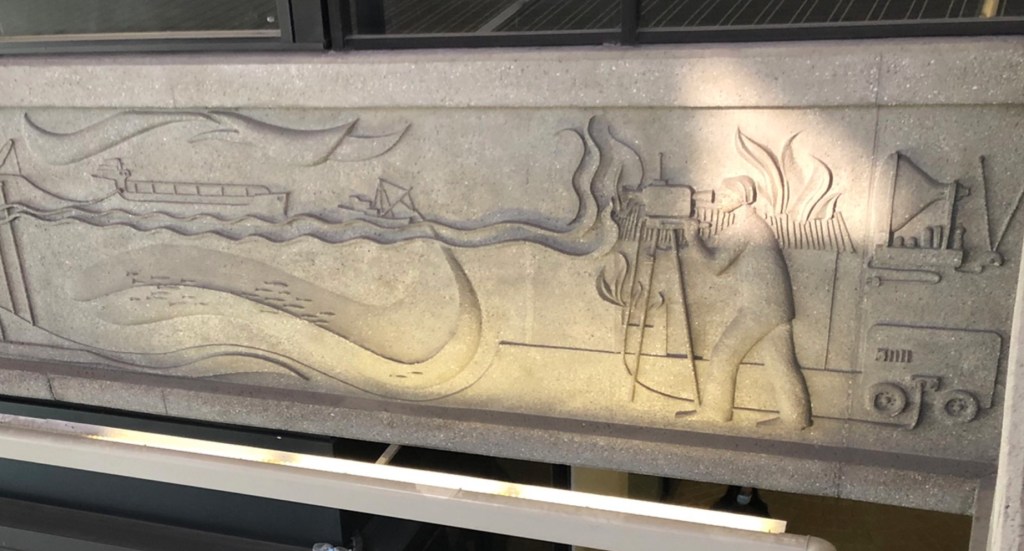
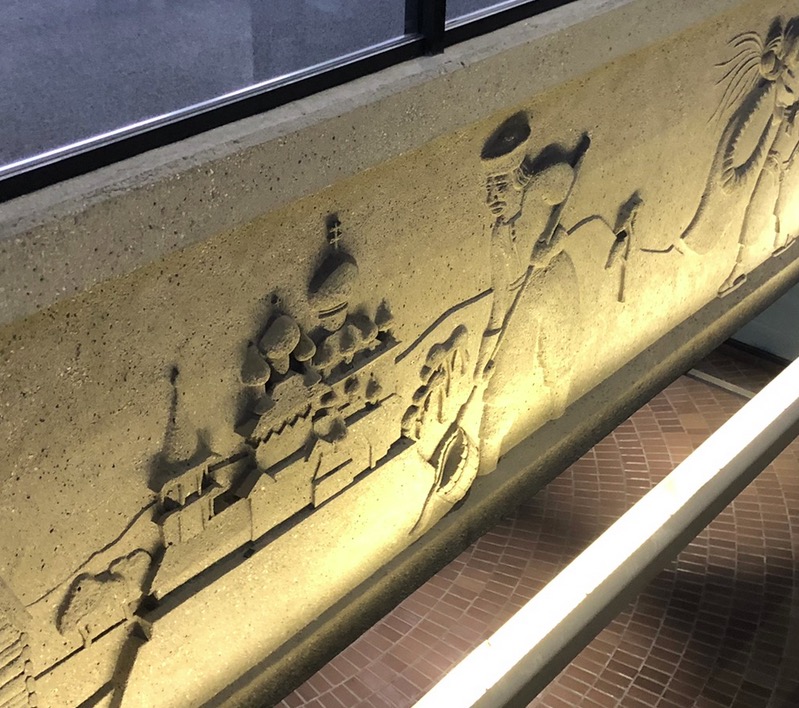
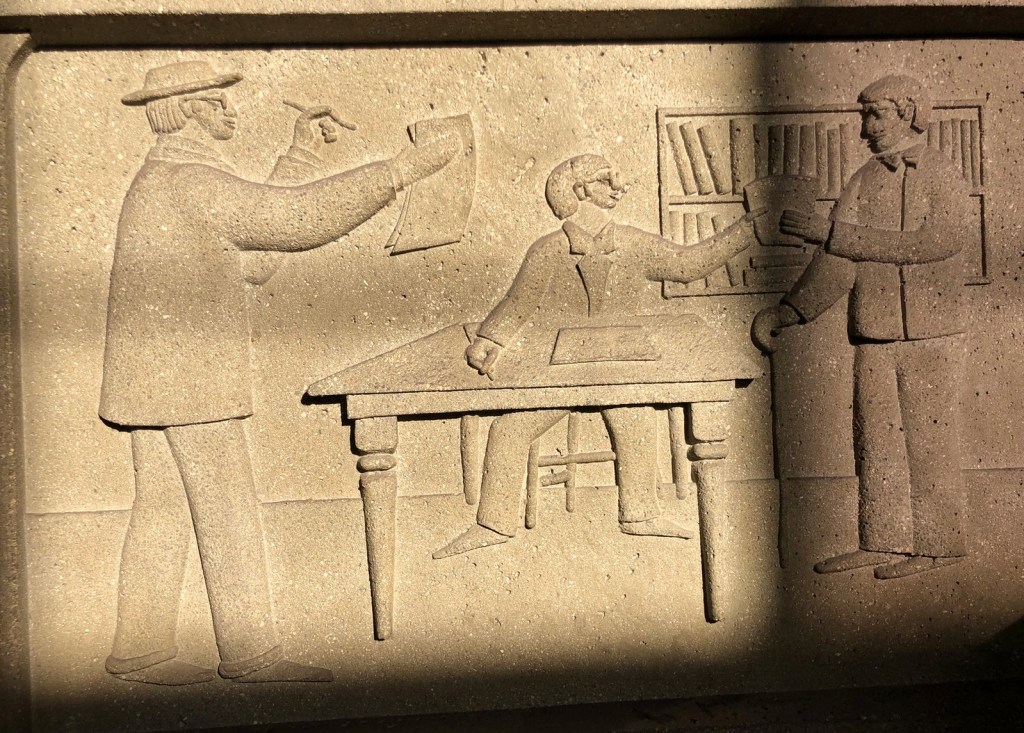
This is a five-foot-high, 1000-foot-long poured-in-place concrete mural about the development of mercantile trade, called The History of World Commerce. This is Sheets’ masterpiece. In 2019, back when Jamison was going to build a residential tower on the site, an assessment was made of the building: it stated that because the artwork wasn’t fifty years old, and the artist was still alive, it wasn’t eligible to be considered for…anything. Of course, now the artwork is fifty years old, and Tony Sheets is deceased. But someone may read the report and descriptions of History of World Commerce featuring lines like “it does not articulate a particular, unique concept of design that would lead it to express an aesthetic ideal or high artistic value” which is embarrassingly stupid. In fact, the report goes on to say that post-redevelopment Bunker Hill is not a significant or distinguishable entity, and its components lack individual distinction. Which resets the bar for embarrassingly stupid.
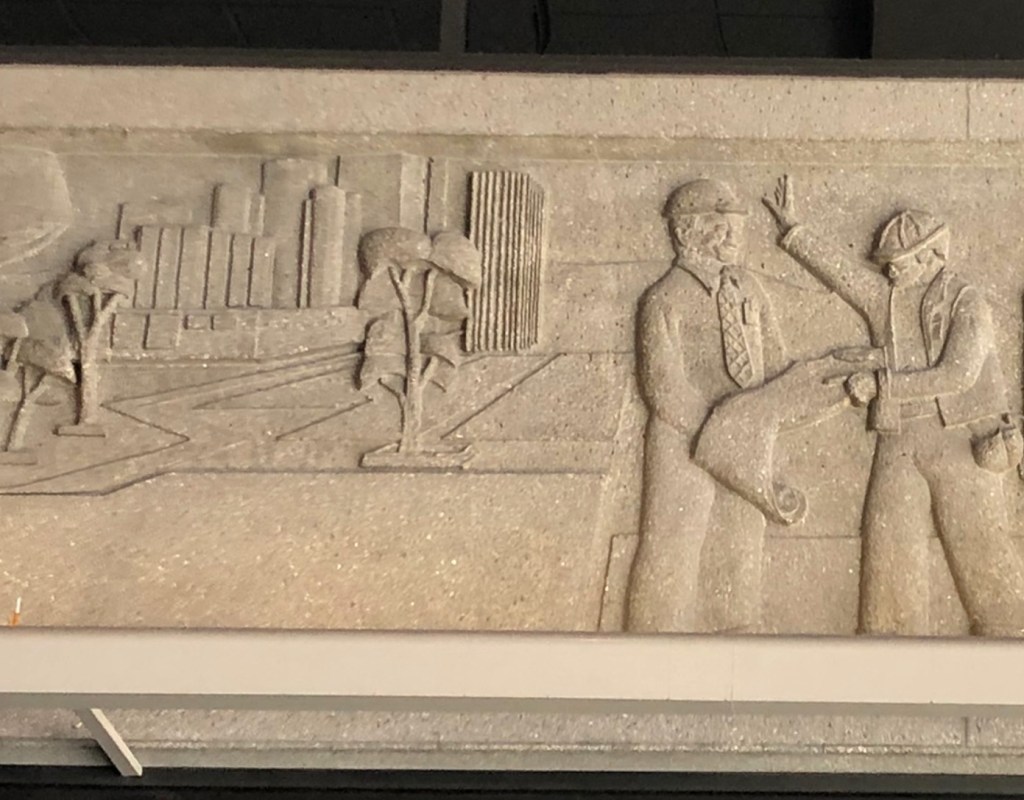
Flash forward to today. 2019’s residential tower is dead, but the City (despite Los Angeles leading the nation in numeric population loss) says we need housing! So, they’re turning it into a public housing project: 512 subsidized units to the tune of $104million ($203,000 a unit). The effort, according to Mayor Bass, is to “continue decreasing homelessness,” but this sort of project has been difficult, because “city regulations stood in the way.” As subsidized housing projects go — 512 units — this one is massive. Consider: Pueblo del Rio was 400 units, but across 18 acres; Rancho San Pedro was 285 units, across 13 acres; William Mead was 449 units, 15 acres; Estrada Courts, 214 units, 10 acres; Avalon Gardens, 164 units, 15 acres; Hacienda Village, 184 units, 18 acres; Imperial Courts, 498 units, across 36 acres; there’s another half-dozen examples but you get the idea. Consider the densest projects: Jordan Downs, with 700 units on 50 acres, therefore provided each unit 3,111 square feet of land, and it had to be torn down in part because it was too dense. The WTC project makes Jordan Downs look like freakin’ Alpine County.
So, removal of amenity spaces, without those pesky regulations…makes one wonder. Now, it seems that the Sheets mural will remain:
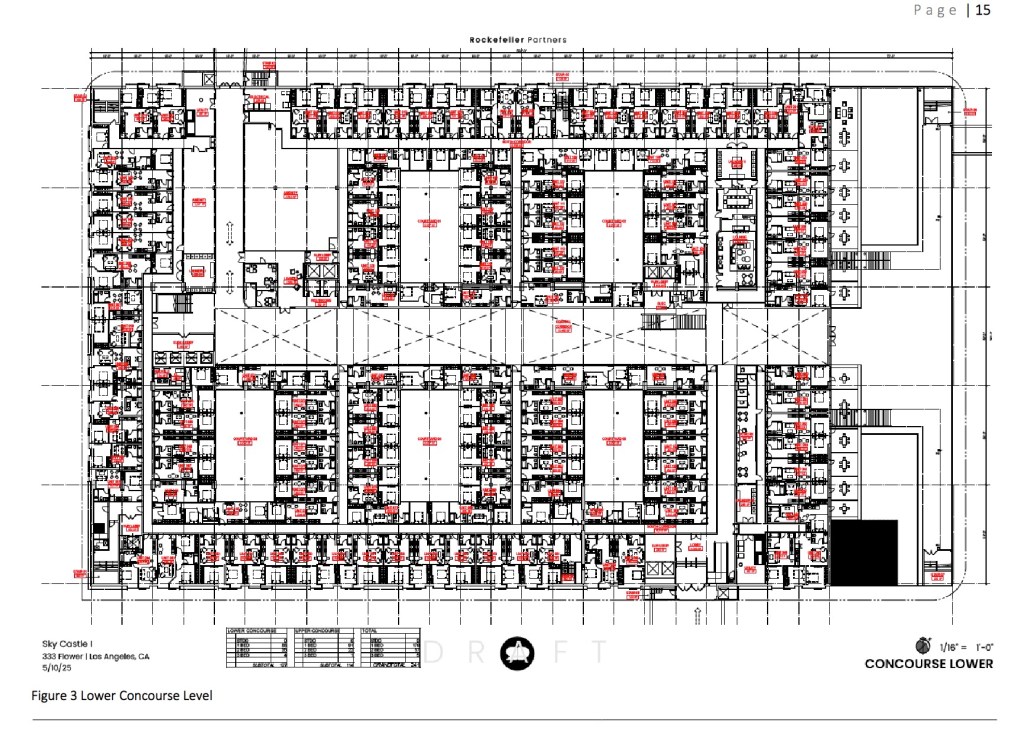
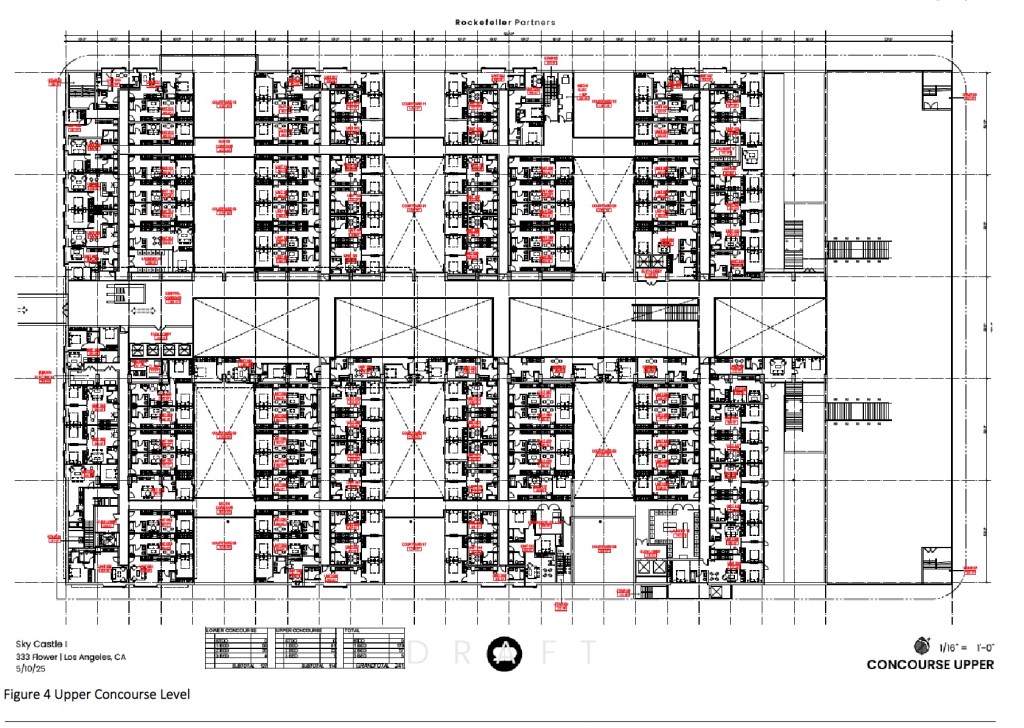
Now that brings us to today. They’re ramping up to begin Phase One, which is 241 units, located wholly in the area seen in the image immediately above. (What about the other 271 units? Because DBS clearly says it’s 512 units, but, this only mentions 241, which would mean the cost per unit —and remember, they’re not buying the building! — is not $203,000 as mentioned above, but $435,000…what, we can’t buy ’em a house?)
I worry that completion of the 241 units, access to the lobby will be limited, as will access to the pedways (and the pedways are both historic and awesome).
Of course, the Powers That Be have stated that this project will have “no significant impact on the human environment.” Which again redefines “embarrassingly stupid,” but it’s a statement straight outta Sacramento, so what else do you expect. Plus, they have a big fat 96-page report called a FONSI (Finding of No Significant Impact) and since my tax dollars paid for it, who would I be to disagree with…me?
Anyway:
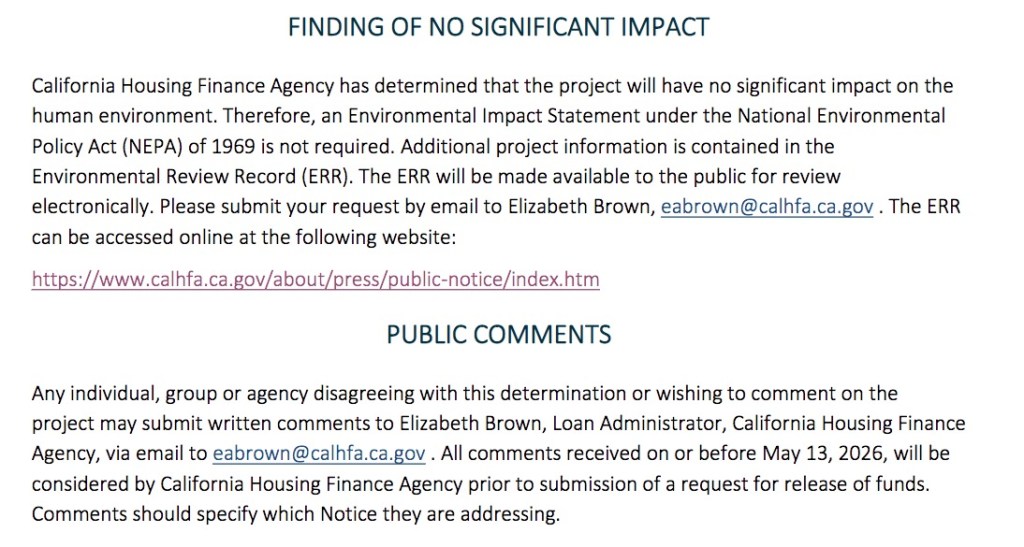
Comments received on or before May 13 (basically tomorrow) “will be considered” even though the works is a done deal. Yep, that’s the one thing you can do: tell Elizabeth Brown, Loan Administrator, California Housing Finance Agency — eabrown@calhfa.ca.gov — that the mural and pedways should stay open and accessible. Now, Elizabeth Brown might be the nicest person in the world, but I doubt very much a Sacramento loan administrator for CalFHA will have much say in how the people of Los Angeles might enjoy a shared cultural resource. But it’s literally the only crumb they’ve tossed us, so, you never know! Get emailing!
Well that’s ↑ over, of course, but I’ll keep you abreast of developments!
 Bunker Hill, Los Angeles
Consider it done. Thanks for letting us know.
LikeLiked by 1 person