I’ve been hearing for ten years that Loyola Marymount University was at work on a Chavez Ravine archive project, and last Thursday, the internet lit up with this press release. Lo and behold, it had been released to the public, and you may see it for yourself by clicking here.
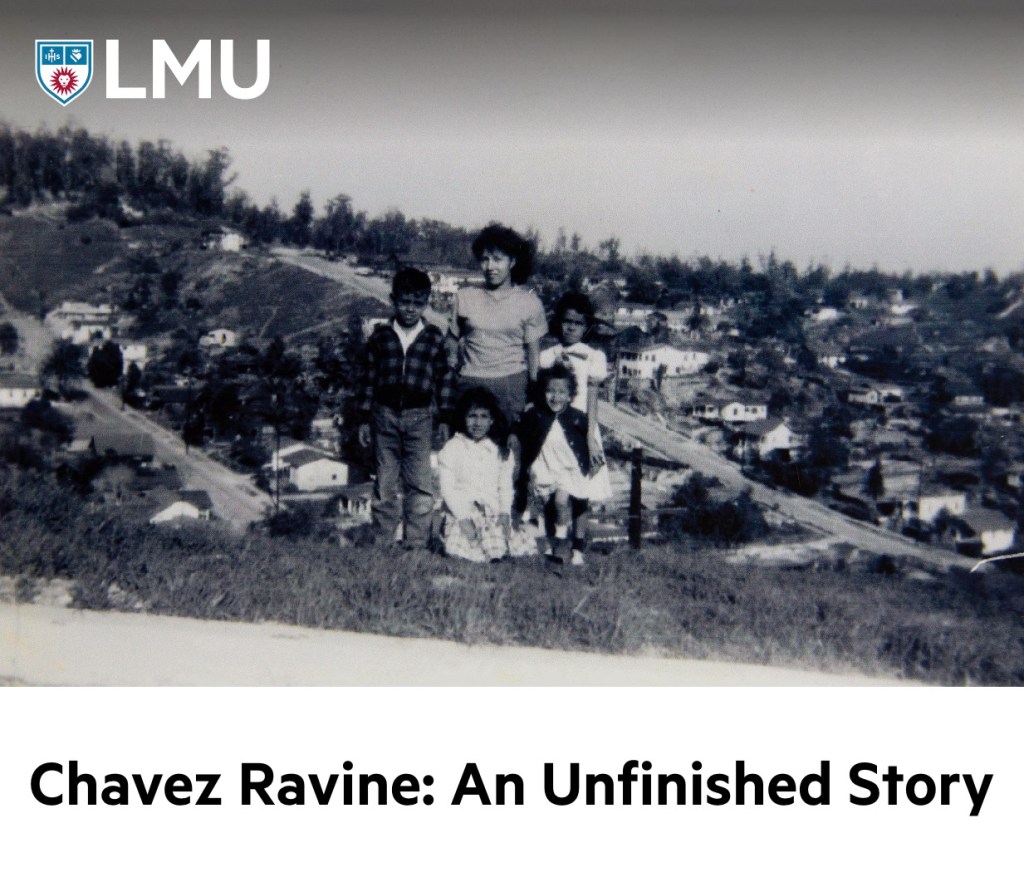
Esther Molano and family members stand on Shoreland Drive, just east of Boylston. Behind, them, Reposa Street heads north; Gabriel Avenue is a left.
It is a fascinating collection — 222 documents in total — containing some incredible material. I encourage you to wade through all of it and discover its many facets yourself, but just for fun, I’m going to share a dozen of my favorites. (And, because I found LMU’s metadata a trifle thin, and cannot help but nitpick where there is nitpicking to be done, I shall do that as well.)
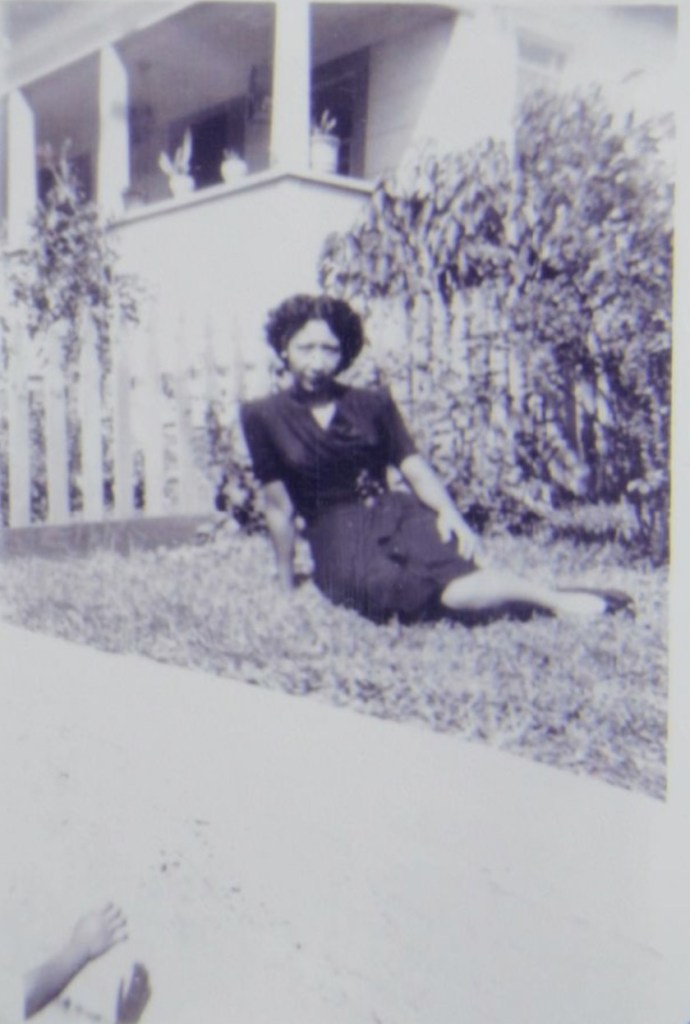
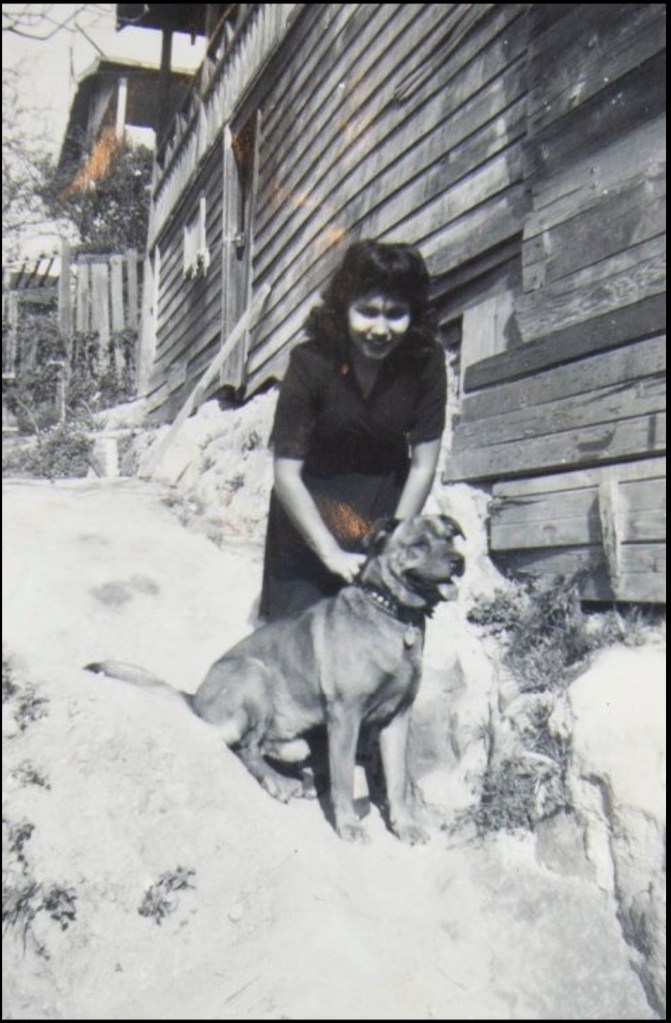
The metadata reads “Ruth Aguilar-Suarez sits on the raised lawn at her mother’s home” but it is worth noting that pictured is 1723 Paducah Street. Her mother was named Alejandra, and the house at 1723 was built by Ramon Aguilar in 1922.
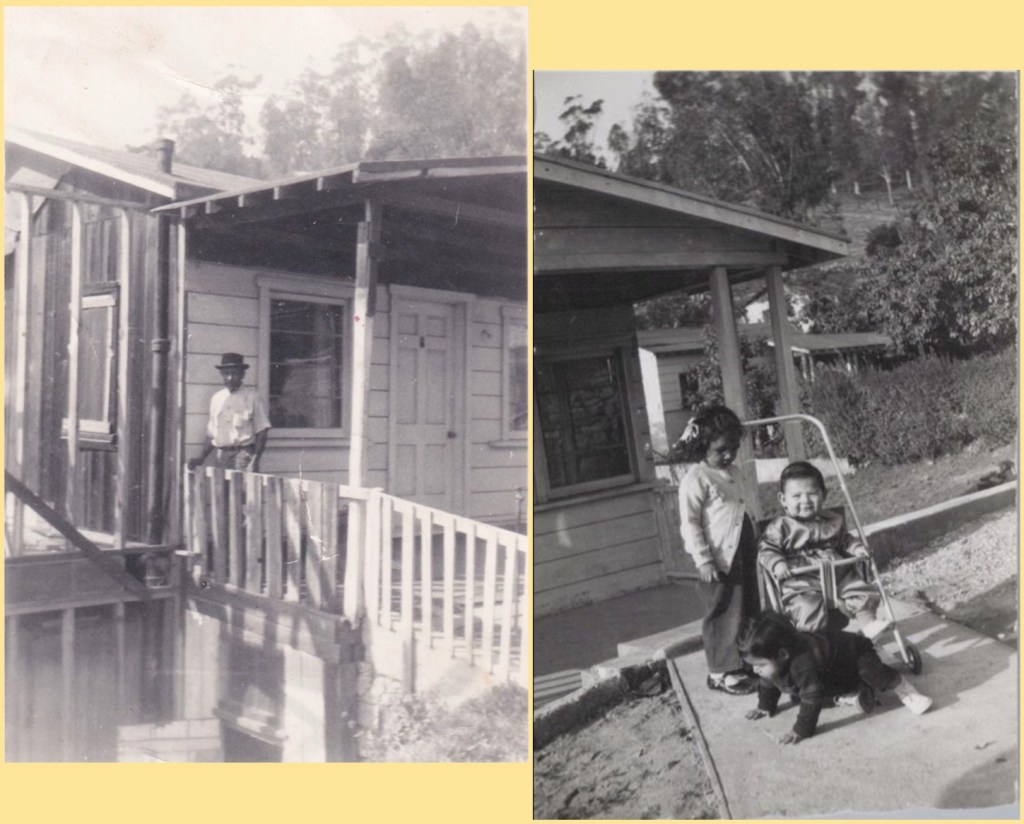
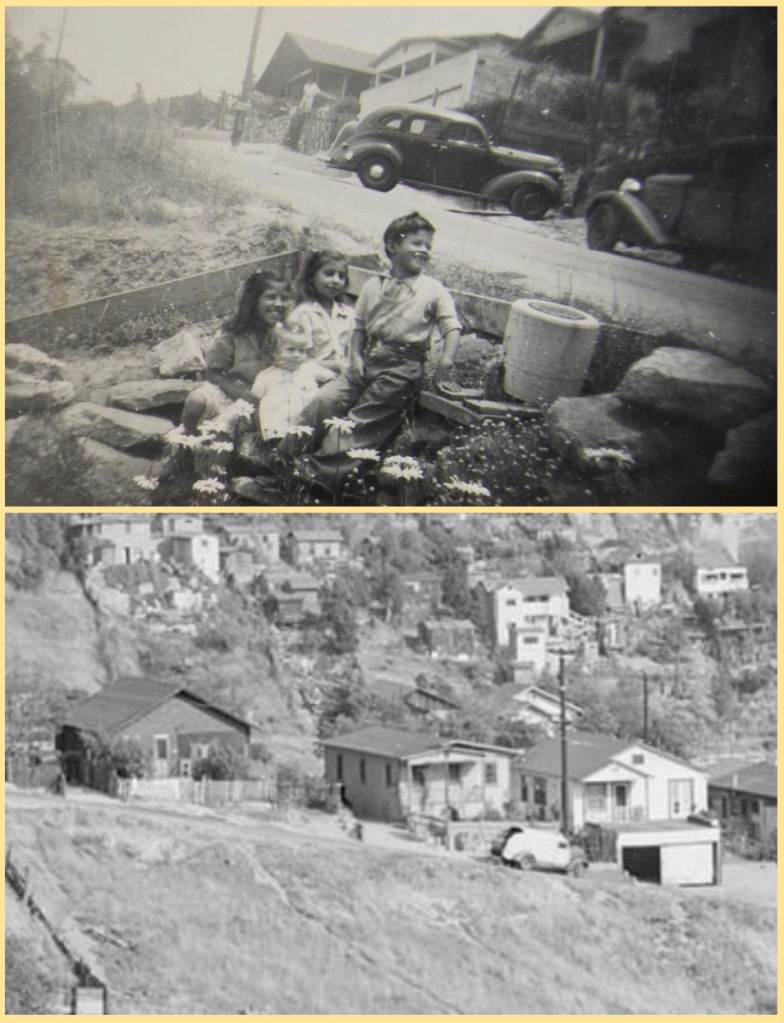
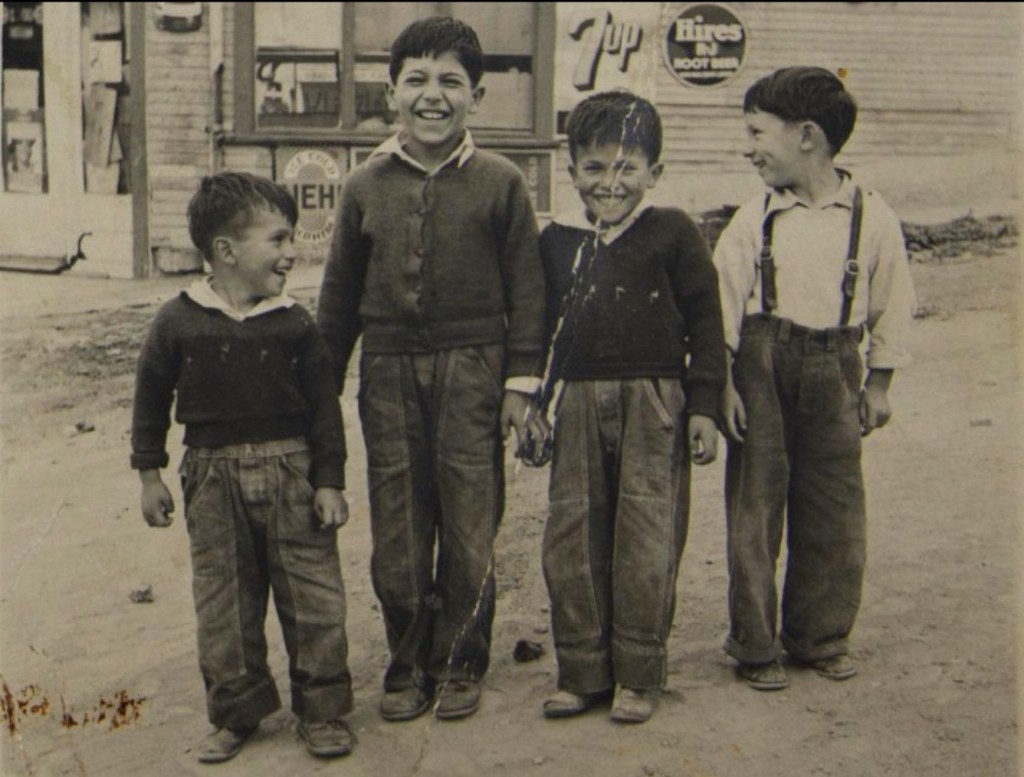
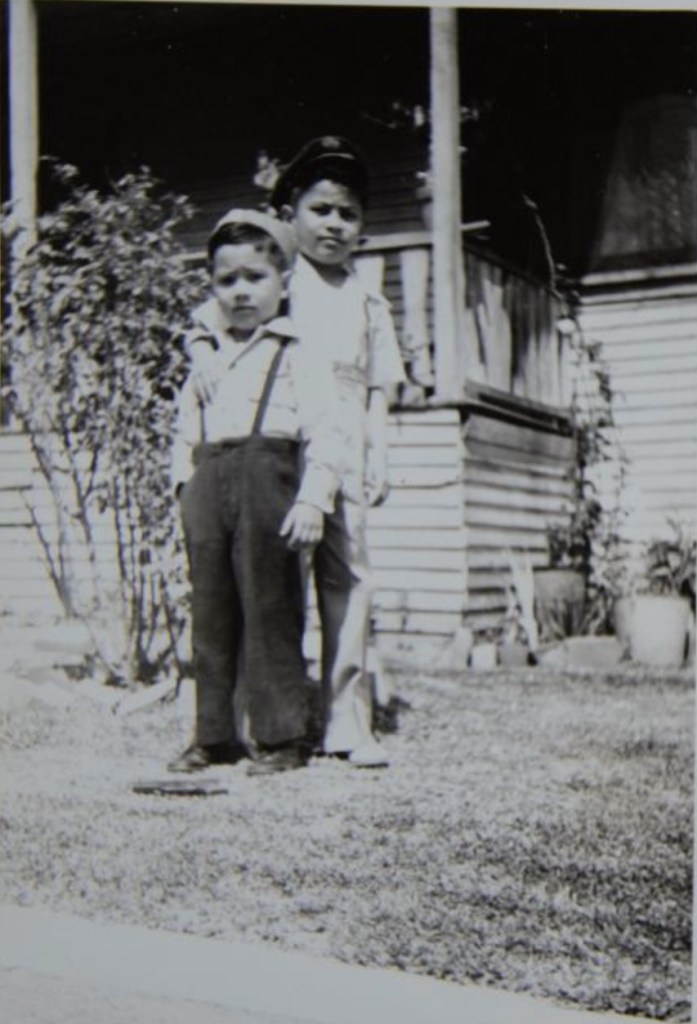
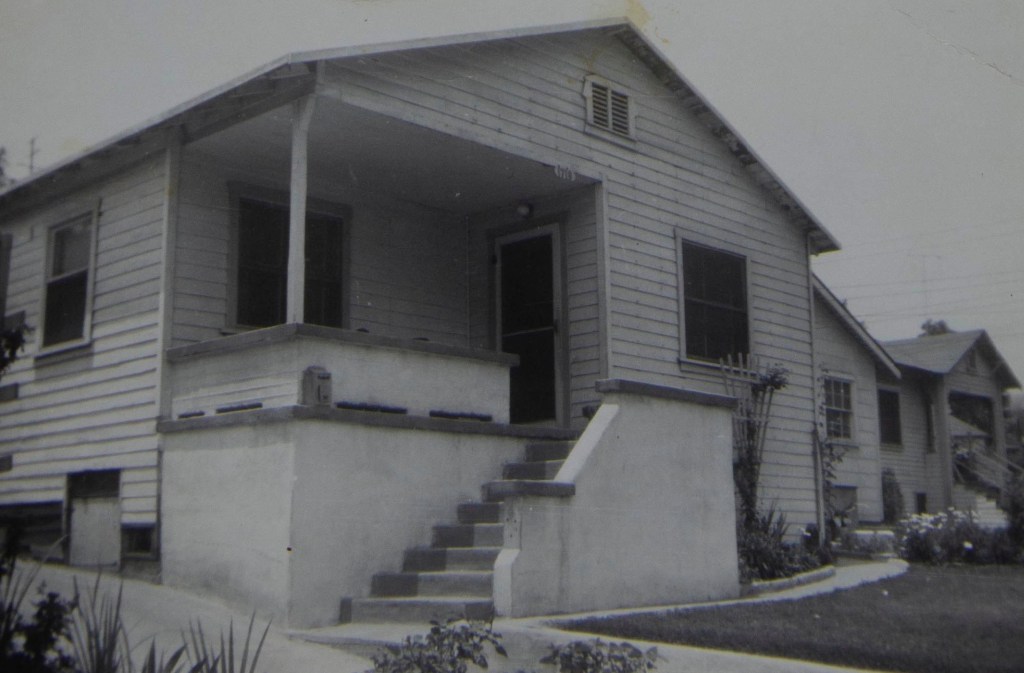
Left, Julio Cabrera “in front of his home on Paducah Street” which I stitched together with another shot, of some Cabrera cousins. This is 1819 Paducah, built by Seberro Nabarro in mid-1923. It was relocated in 1951 to 640-42 Westminster Avenue in Venice, only to be demolished in 1965.A wonderful shot of the Rodriquez kids and their Esquivel cousins on Reposa, but the metadata doesn’t tell you where, exactly — so, FYI, that’s (left to right) 1802, 1776, and 1770 behind them. 1776 Reposa, center, is especially interesting in that it is where Adela Montalvo (of Buried Under the Blue fame) claimed she grew up, although she, in fact, did not (see paragraph 5 of this post).Another absolutely incredible slice-of-life shot! The metadata says these kids are in front of “the corner store” but it should really read “a corner store” — because you can’t say “the” corner store unless you know where it is. And, here’s the thing: this isn’t de Leon’s market at 1146 Effie, and it isn’t the Ayala market at 851 Effie, and it isn’t the Gennaro market at 1760 Brooks, and it’s not even the Mazzarini store that still stands at 728 Amador in neighboring Solano Canyon. Point being, it absolutely looks like Chavez Ravine, but, if you’re gonna attribute this to Chavez Ravine…
Esther Molano, age 16. Geez guys, you could have mentioned that when this was shot, Esther lived with her parents Ignacio and Carlotta at 1740 Reposa. It would appear, in this image, we’re looking up 1740 toward 1744 (where Ignacio’s brother Julian Molano lived with his family). Fernando Molano built 1740 in early 1925.
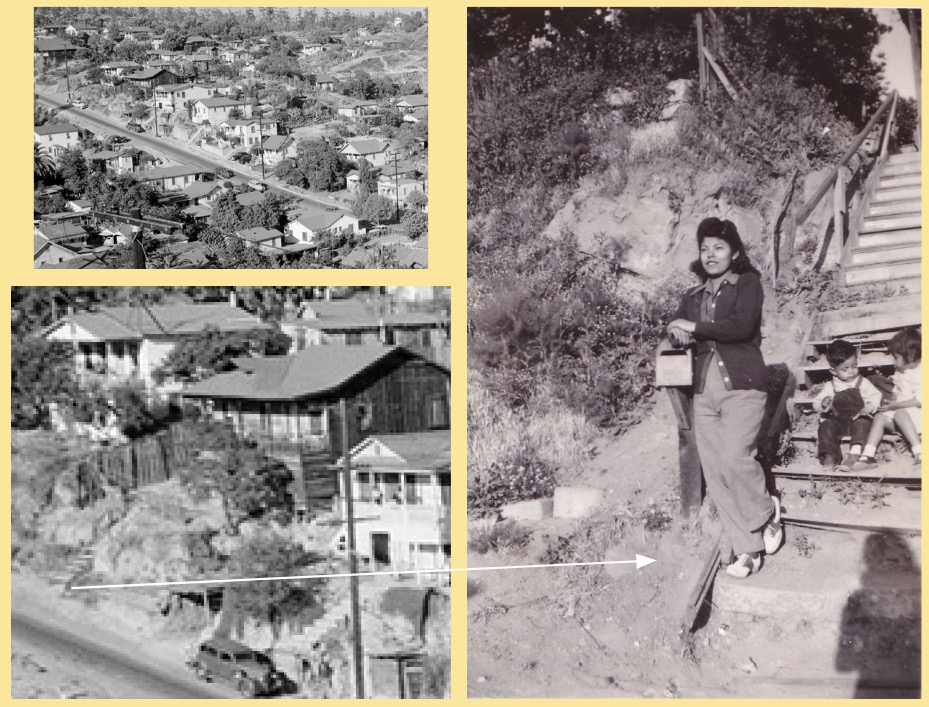
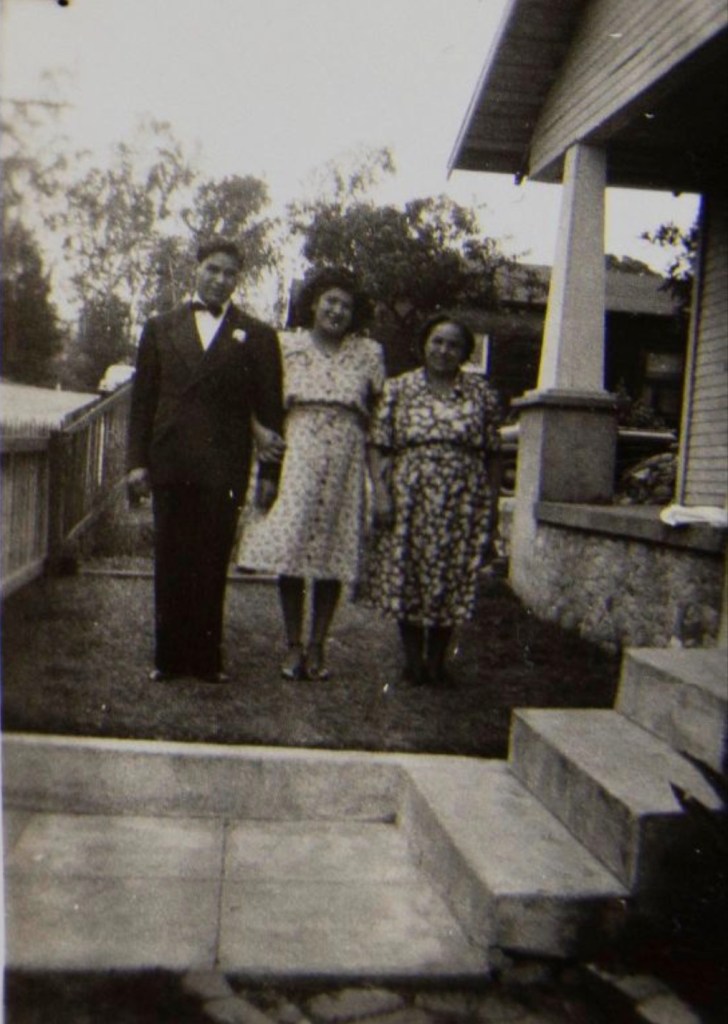
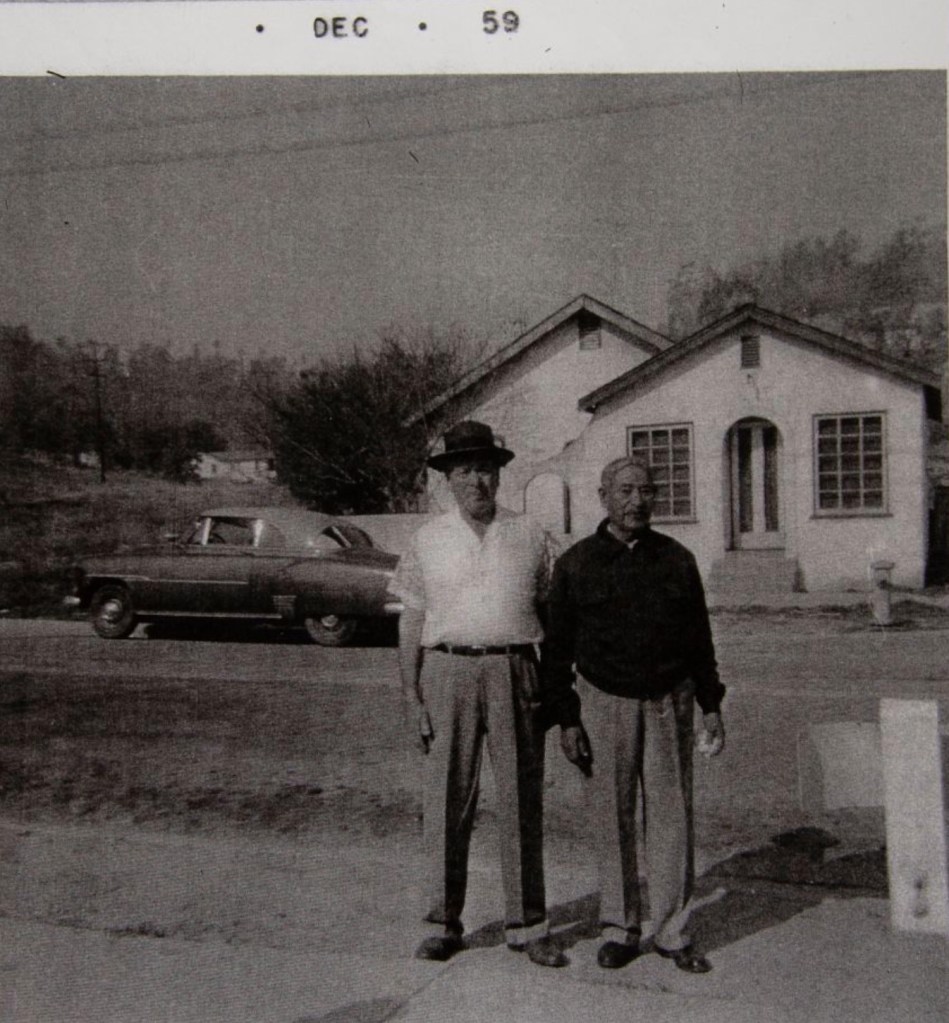
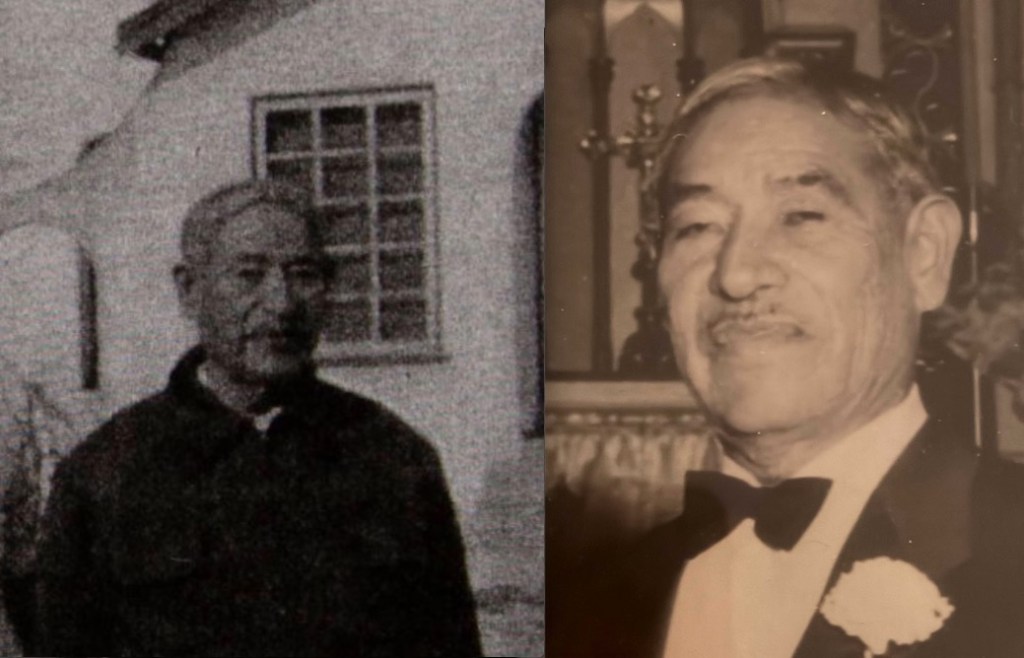
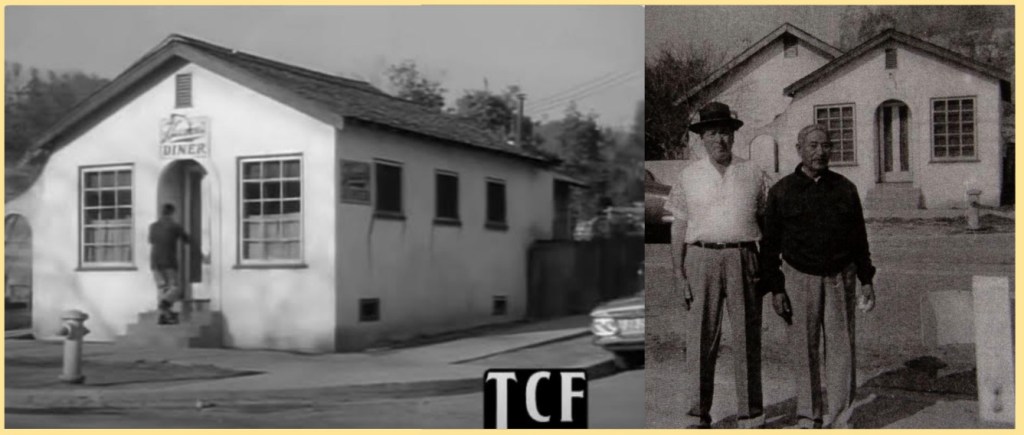
Nora Molano on the steps of her home, 1740 Reposa, in 1946An incredible shot of the Martinez family “on Paducah Street” which was at 1834 Paducah (with 1842 behind). Shots of 1834 are as rare as they come — here is the closest I’ve found.The Reyna home, which has a keyword of “Bishop Neighborhood.” This was 1734 Bishop, built by Benny McKelon in 1923. This was on Bishop north of Effie. I used to believe that Bishop was, basically, the area south of Effie. But I have changed my mind about that: another researcher, who has spent time talking to the Desterrados, has convinced me that “Bishop” was in fact the area between Palo Verde and La Loma, along Bishop Road. Hence, the Reyna home, north of Effie, being correctly placed in BIshop. Live and learn!Well this is perplexing. LMU’s metadata states this is 1826 Bishop Road, the home of Joseph Rodriguez — and 1826 is where the Rodriguez family in fact lived. But this image isn’t of that house: this is 1718 Bishop, the residence of Simon and Tomassa Veas. There is another photo of ten children in front of this house, 1718, purportedly the Rodriguez clan, but it remains a mystery as to why they were photographed in front of the Veas’ property. Furthermore, LMU’s metadata states that 1826 Bishop “was sold to the city by Jose and Maria Rodriguez who then relocated their family. This home was eventually sold by the city to a new family.” That may be family lore, but it does not appear supported by evidence: while the house was auctioned, in June 1951, as “moveable,” there’s nothing in Department of Building and Safety records to indicate it was ever relocated.LMU’s caption reads “Don Pancho (right) and an unidentified man (left) stand on a sidewalk. Behind them sits a home with a vehicle parked out front.” You had seven people working for ten years and that’s the extent of the description? Jeez guys, would it have killed you to shoot me an email? The man you refer to as Don Pancho is Francisco de Leon, and this is his home, at 1151 Effie. 1151 was one of the earliest homes in the area, built by Gabriel Castro, one of Marshall Stimson’s early placements, in mid-1913; read about Marshall (my distant cousin) Stimson here.Another shot of Francisco de Leon (image from here).Here is 1151 as a “diner” in a May 1959 episode of Highway Patrol (S4E31 “Dan Hostage”). The diner signage is something the TV crew art department slapped on (although 1151 did have a commercial history — Francisco’s daughter Josephine de Leon ran a beauty parlor out of the house in the 1930s). In the HP episode this house features prominently in the first few minutes, see it by clicking here; it’s also in the last segment, click here. Want more? Check out January 1958’s S3E14 episode “The Hideout” most notably here and here, and special guest star de Leon’s Market, across the street at 1146 Effie, is seen here — an image of de Leon standing front and center at his market, here, and see a fantastic interior of de Leon’s market on the LMU site here. (I am indebted to television historian James Bowie for steering me to Chavez Ravine’s appearance in Highway Patrol episodes — thanks Jim!)
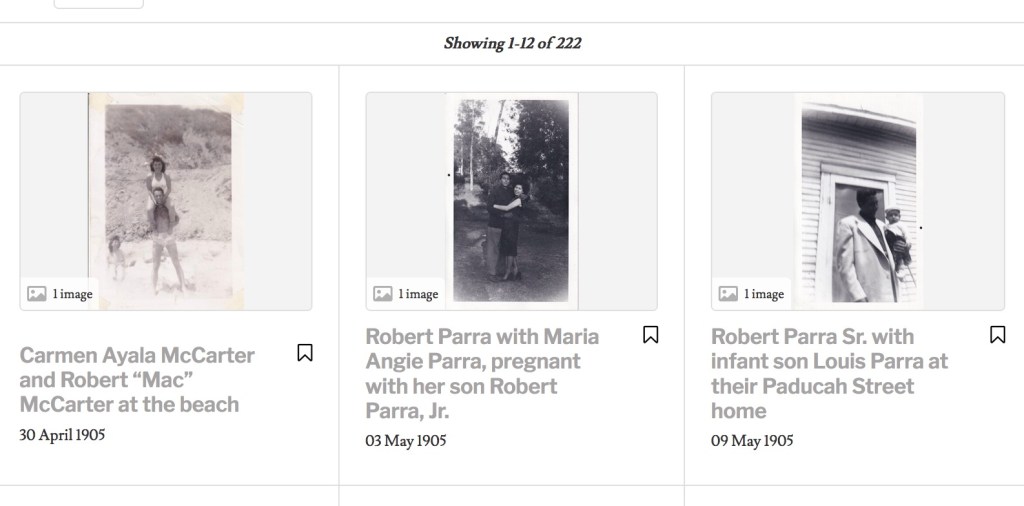
I realize my penchant for precision may border on pedantic nitpickery. I understand that this is a new project and that there are kinks to iron out—for instance, when images clearly captured in the late 1940s are dated to the spring of 1905:
Beyond those occasional quirks, I am mystified by LMU’s omission of basic data. One wonders whether they possessed location information and opted to withhold it, or if it simply slipped through the cracks. But I’m not here to disparage the work — it’s outrageously important to share these rare images, and we not only delight in them, but, I intend to put them to good use:
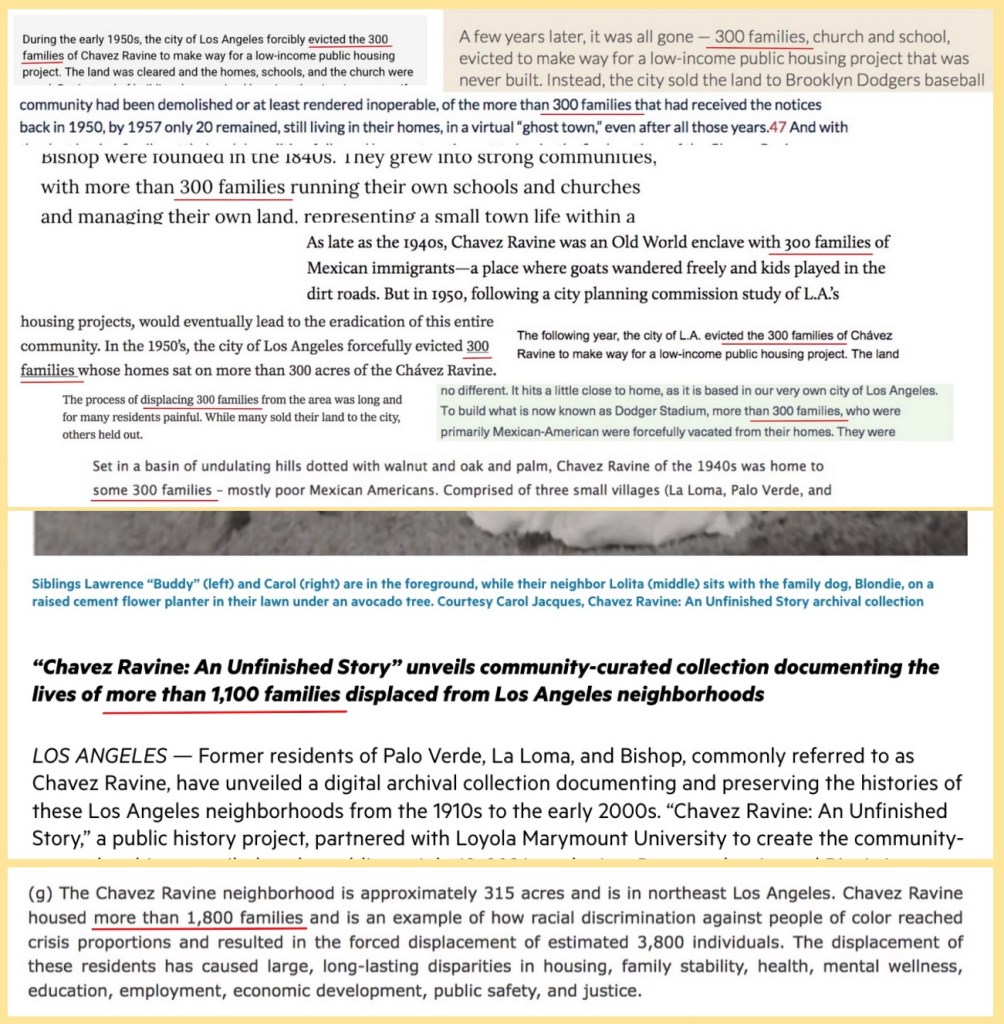
The history of Chavez Ravine is, on numerous fronts, fiercely contested, up to and including the size of its population. The prevailing statistic cites CR contained 300 families, but —
While most sources say 300 families, LMU’s Chavez Ravine: An Unfinished Story states the area harbored “more than 1,100.” Still, not as wacky as Assemblywoman Wendy Carrillo’s (AB1950) Chavez Ravine reparation bill, which claimed the number was “more than 1,800.”
Fact is, nobody knows how many people lived in Chavez Ravine, because nobody has actually counted. Though there has yet to be a rigorous house-by-house count, it is my professional estimation that the total stood at approximately 275 families—totaling around 1,100 individuals—a calculation based on structure counts, square footage, and average occupancy. We will not have a definitive answer until every residence is mapped against the 1950 census. I have already begun this project in Scrivener, mapping every available facade image to its corresponding address, attaching every resident, etc.
Another element of this being, while I love the idea of keeping the memories of these displaced families alive — I am primarily an architectural historian, and it’s long past time for a systematic survey of interbellum working-class vernacular residential typologies in Chavez Ravine! The tales of topographic adaptation, material salvage, growth patterns, and communal spaces endemic to this particular landscape of autoconstrucción interplay with incremental architecture as it applies to traditional massing vs. organic construction integrating structure into a verdant terrain! Sorry, I get excited.
So that’s what I’m working on. In the meantime, I will always deconstruct the mainstream narrative when I see fit. No surprises, but LMU’s “historical background” concerning the subject is not without its issues—beyond simple flubs like the date of the famous 1950 letter or the persistent myth regarding Aurora Vargas (who was never a resident of the house from which she was removed and, in fact, lived ten miles away at the time). Suffice it to say I’ll just say it has issues (rather than pick it apart as I did to John Laslett) and leave it at that.
Ultimately, this project is a monumental achievement. I offer my heartfelt congratulations and gratitude to the team behind it. I, and the rest of the community, look forward to the continued expansion of this collection.
********
If you’re interested in Chavez Ravine, and haven’t read my other work on the subject, see here:
Good thing I read your blog, because I attended the annual picnic last week, sat there with Carol Jacques for about half an hour talking about Frank McCourt, Hilda Solis and Los Tres Barrios, but the archive release never came up. Go figure. Well, I forgot to bring my hearing aid and there was a live band so maybe that’s what happened. Also, the Facebook page for Chavez Ravine: An Unfinished Story looks abandoned, so I think you’re doing a better job with this archive than LMU…as usual.
My mom and her family lived in La Loma and were thrown out from there. My grandpa never forgave them and he didn’t trust any government, etc. Sadly, I don’t have a load of photos, so I’ll look through the photo archive. I have a few photos of her there-one is her first communion photo. Thank you for all the wonderful posts and information!


Thank you for this news. I appreciate your work on our neighborhoods. Important and most interesting.
Best
Rhett beavers
LikeLiked by 1 person
Keep up the good work and keep us informed. We appreciate it.
LikeLiked by 1 person
Good thing I read your blog, because I attended the annual picnic last week, sat there with Carol Jacques for about half an hour talking about Frank McCourt, Hilda Solis and Los Tres Barrios, but the archive release never came up. Go figure. Well, I forgot to bring my hearing aid and there was a live band so maybe that’s what happened. Also, the Facebook page for Chavez Ravine: An Unfinished Story looks abandoned, so I think you’re doing a better job with this archive than LMU…as usual.
LikeLiked by 1 person
Where do you supposed LMU got all those photos?
LikeLike
My mom and her family lived in La Loma and were thrown out from there. My grandpa never forgave them and he didn’t trust any government, etc. Sadly, I don’t have a load of photos, so I’ll look through the photo archive. I have a few photos of her there-one is her first communion photo. Thank you for all the wonderful posts and information!
LikeLike