I moved to Los Angeles in 1993. I spent most of my time downtown, looking at buildings. I managed to get a job downtown, after which I spent all my time downtown looking at buildings.
The Beaux-Arts buildings, in particular, enthralled me. Their symmetry, hierarchy, and proportion stressed order and control. They expressed an age (whether such an age truly existed, or not) that was elegant, civilized, and morally coherent. Counting columns and cataloging entablatures gave me succor, in the era of Rodney King, Northridge, gang violence, the Rampart scandal, industrial evisceration, capital flight, and so forth. I was hooked.
Too hooked, said some, in that I spent an inordinate amount of time transfixed by these beauties, willingly giving myself over to the paralysis of Stendahl syndrome. A friend studying psychology said I suffered from “compulsive hyperfixation,” or something equally awesome, which only made me dive more pointedly into Beaux-Arts scopophilia.
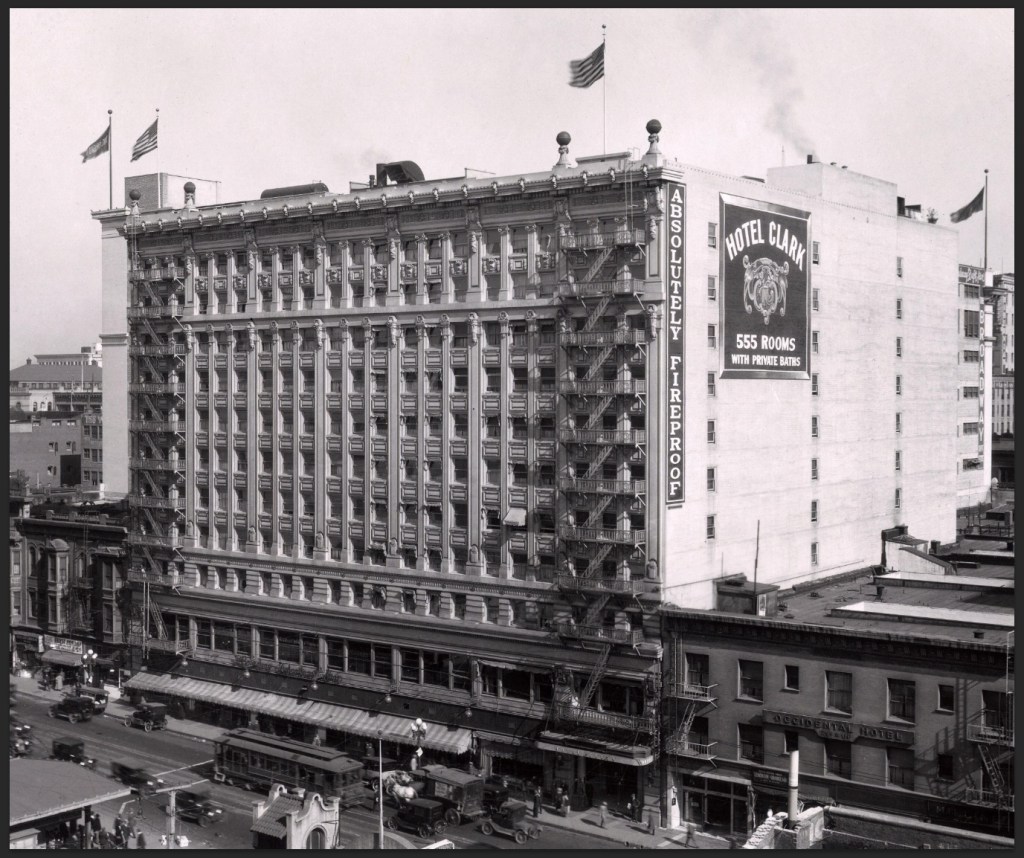
I gazed, in particular, at the grand abandoned structures. An abandoned structure exists outside the normal rhythms of life, suspended between what it was and what it might still become; its patina becomes a form of authorship. And none thrilled and enthralled like the Hotel Clark, the great grey monument to grinding attrition.
Strictly speaking, she was owned (albeit by indifferent and negligent absentee owners) and was therefore not abandoned, but the old dowager stood nevertheless, for years on end, padlocked and groaning under strata of guano. Ever steadfast, though, her eleven stories of soot-blackened granite held vigil against the encroaching dark. The empress had outlived her empire, but I still pledged fealty to her.
When I moved to L.A. in 1993, the Clark had only been empty for a year or so. She had been purchased in 1988 by May Wah International, a Taiwanese investment group/hotel development company run by the Chinese government (unresolved issues regarding who they were: contemporary accounts say they’re headquartered in Guangdong Province, which would make them PRC, while other sources say they’re Taiwanese, which would make them ROC). May Wah had spent the previous four years battling, and finally evicting, the last few elderly residents. May Wah then sat on the property and let it rot until 1998, when it was sold to New York’s Chetrit Group. At which point we all exclaimed huzzah! The Chetrits will know what to do! The mighty Clark should be up and running in time for the 21st century!
Except, no. “Reopening” notices came and went.

In December 2011, Brigham Yen announced: “Breaking News: Hotel Clark to be Reborn as King & Grove Hotel in Downtown LA” — and come April 2013, Curbed LA announced the Clark could open “by June“; in 2018, Eater said the Clark could open “this year,” and in 2019 Urbanize said it would open in September, while Commercial Observer claimed it was set to open in November, etc. etc.
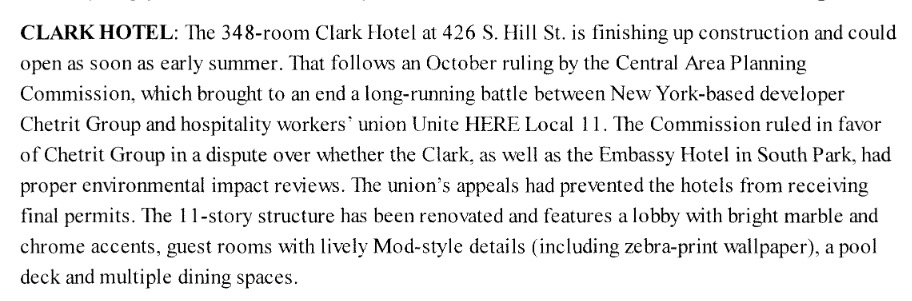
Somewhere around mid-2023, there was motion and movement at the Clark. Occasional lights on at night. Then, dumpsters stuffed with old furniture shared the curb with trucks full of new mattresses. Still, after thirty-some years of talk, I was ready to believe nothing and trust less.
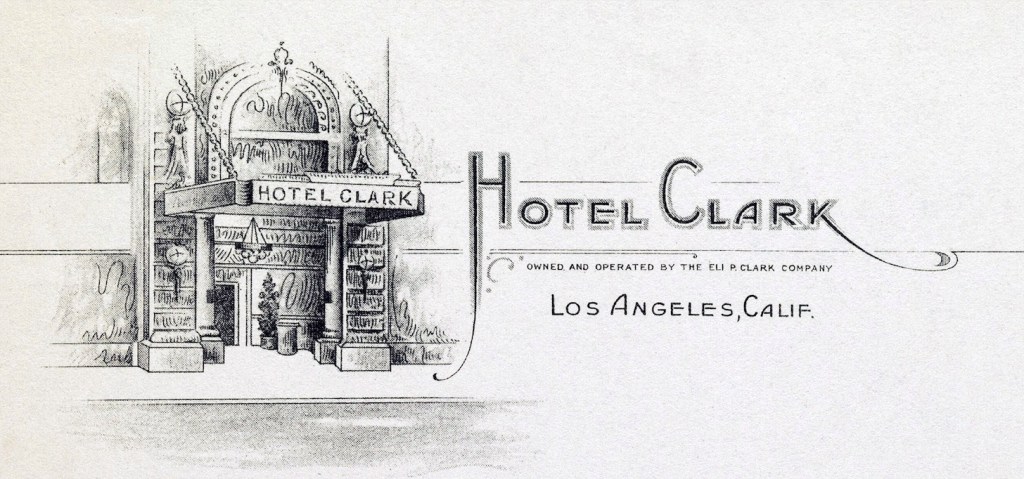
So for the last three years I’d kept my eyes and ears open for a big Grand Opening announcement, only to discover they’d had a “soft launch” a couple weeks ago in mid-September. I’m running the trains at Angels Flight, and one of my regulars staggers up. “Guess where I just had cocktails!” “Where?” “The CLARK!” “The hell you did.” At that he pulled out his credit card receipt and slapped it down on the counter. There it was. Clark Hotel, 426 South Hill Street.
At that moment the whole world shifted. The gravity I’d spent three decades propped against had been turned off. The lack of the Clark had been my roomate for thirty years. Its arrival demolished the architecture of my life, or at least a supporting beam. In any event, I made my way over, took photos, and began percolating a blog post for this here Bunker Hill blog.
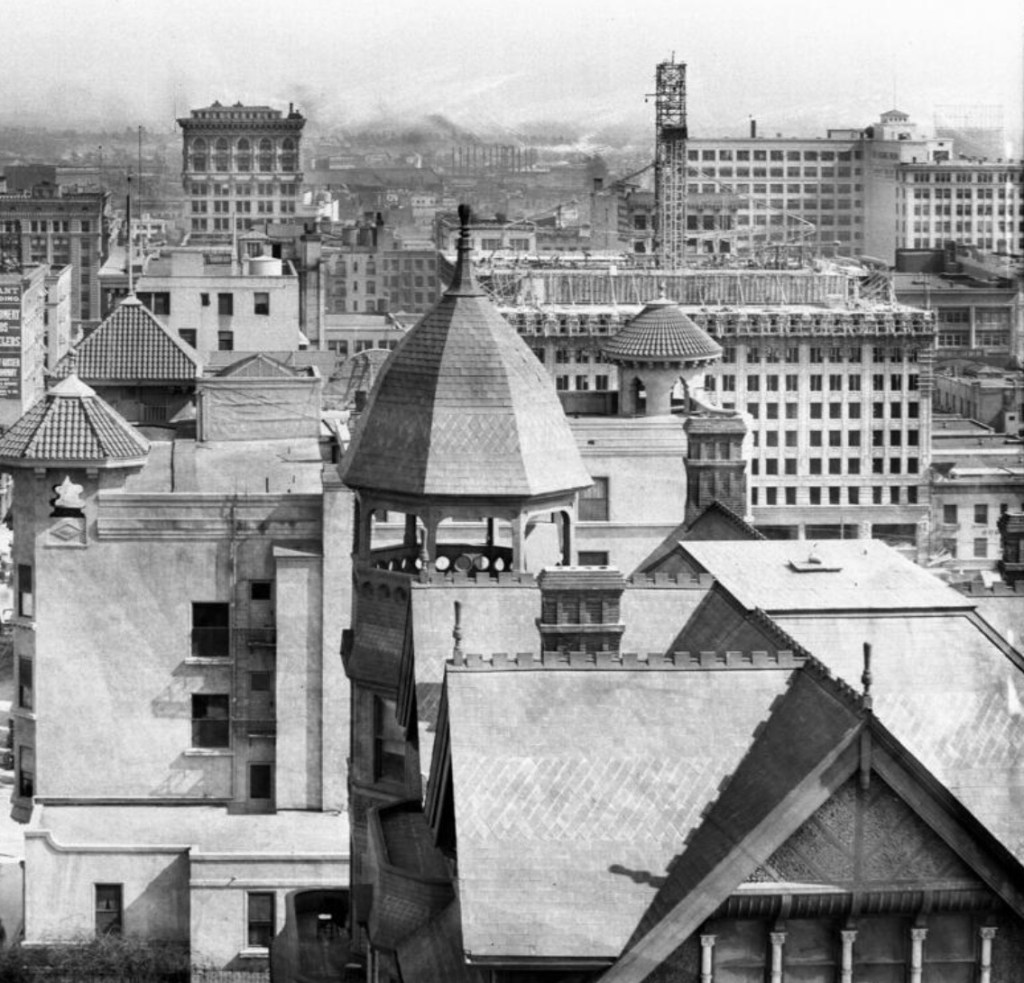
While the Clark may not be, strictly speaking, Bunker Hill, it is certainly part of the local landscape. A decade after Eli Payson Clark built his eponymous hotel, he built Bunker Hill’s Subway Terminal Building across the street (as seen in Marsak’s Guide to Bunker Hill). Bunker Hill faced the Clark and vice versa; here’s the Clark under construction in 1913, shot from the roof of the Zelda at Fourth and Grand:
And, more importantly, the Clark is a fetish of mine, and it’s my blog, and I’ve waited three decades to write this very post, so there you go. To the Clark!
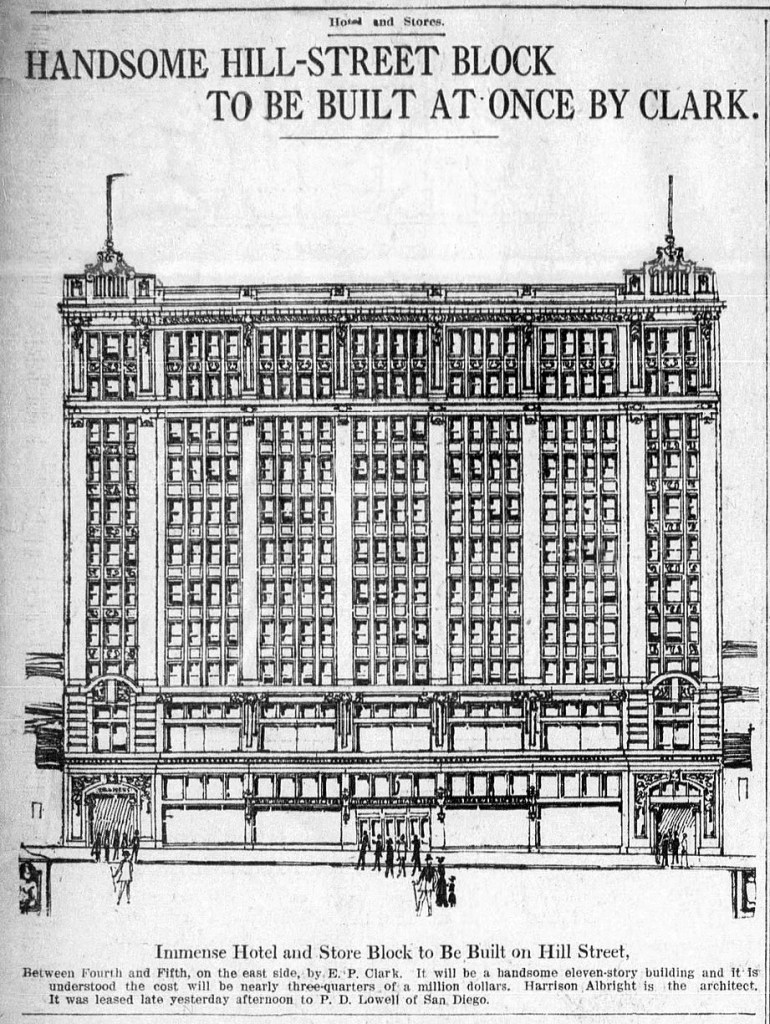
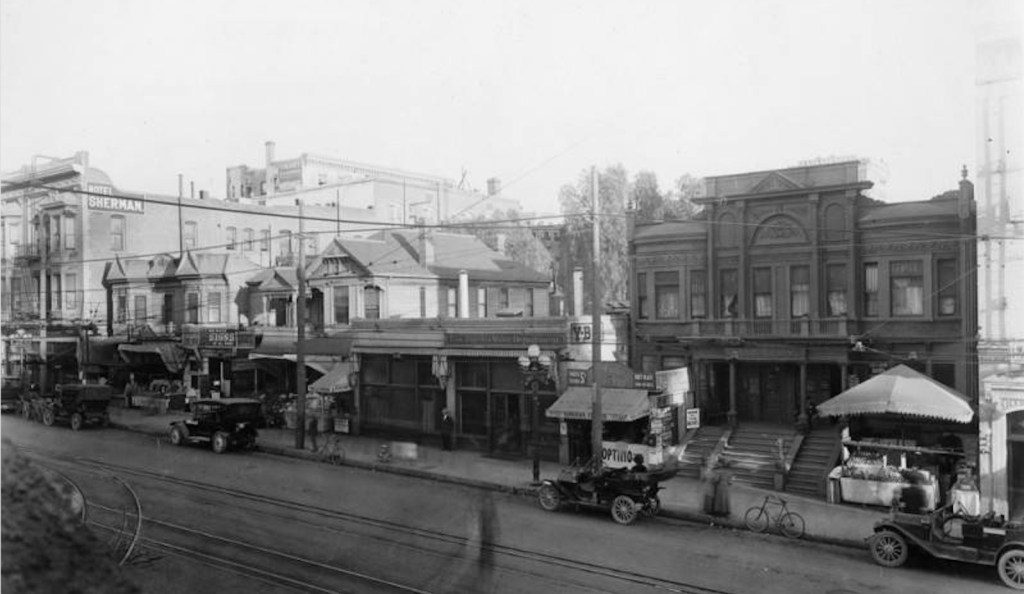
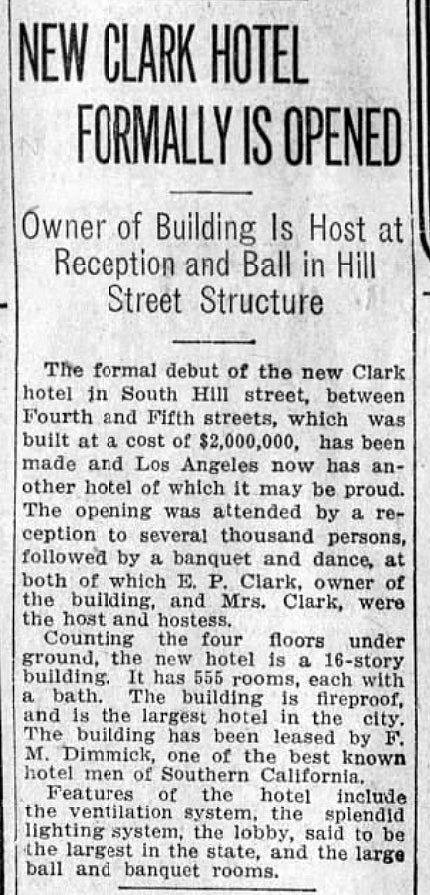
Eli P. Clark hired Harrison Albright to design his eponymous hotel. It opens in early 1914.
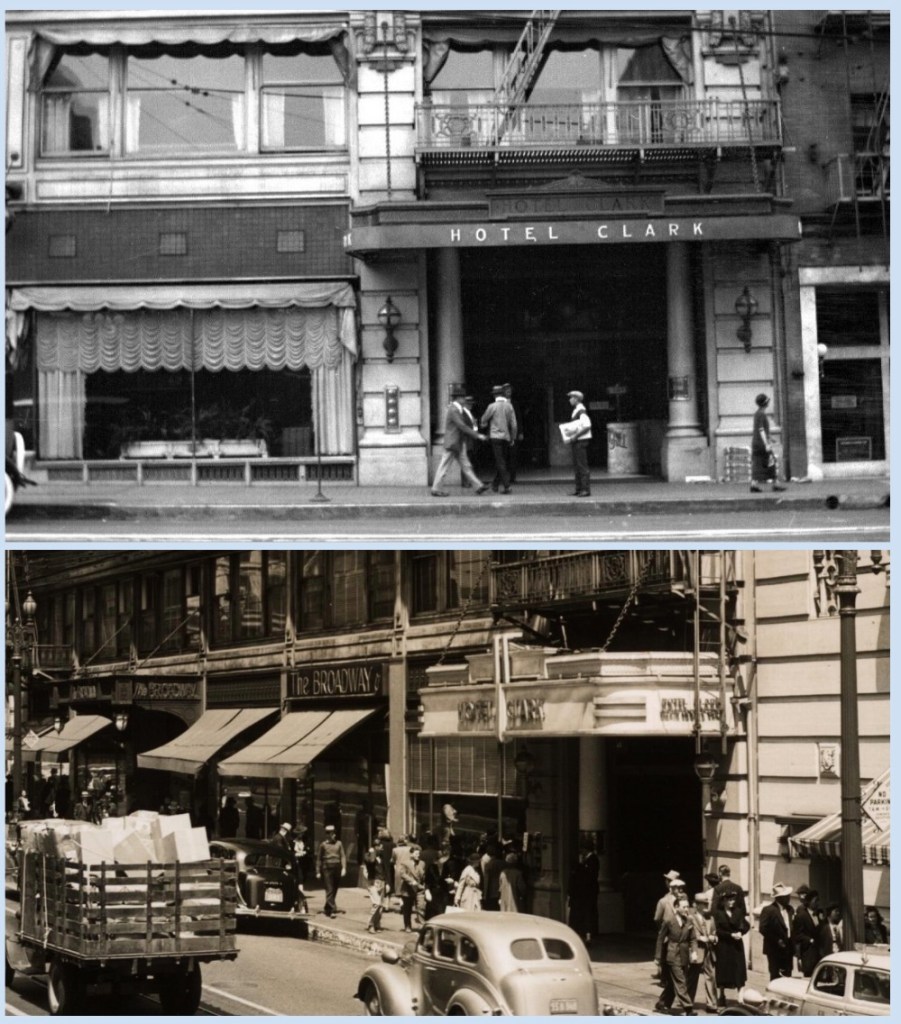
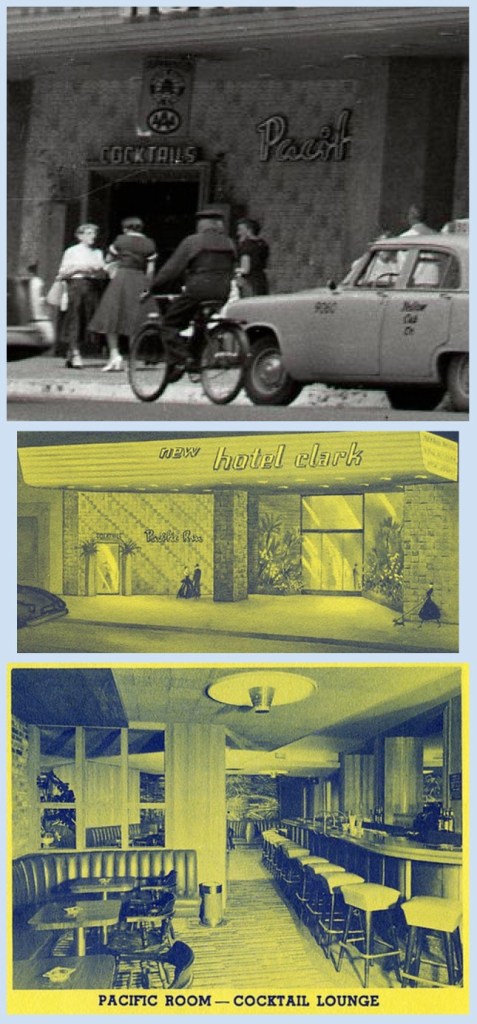
Some entrance evolution:
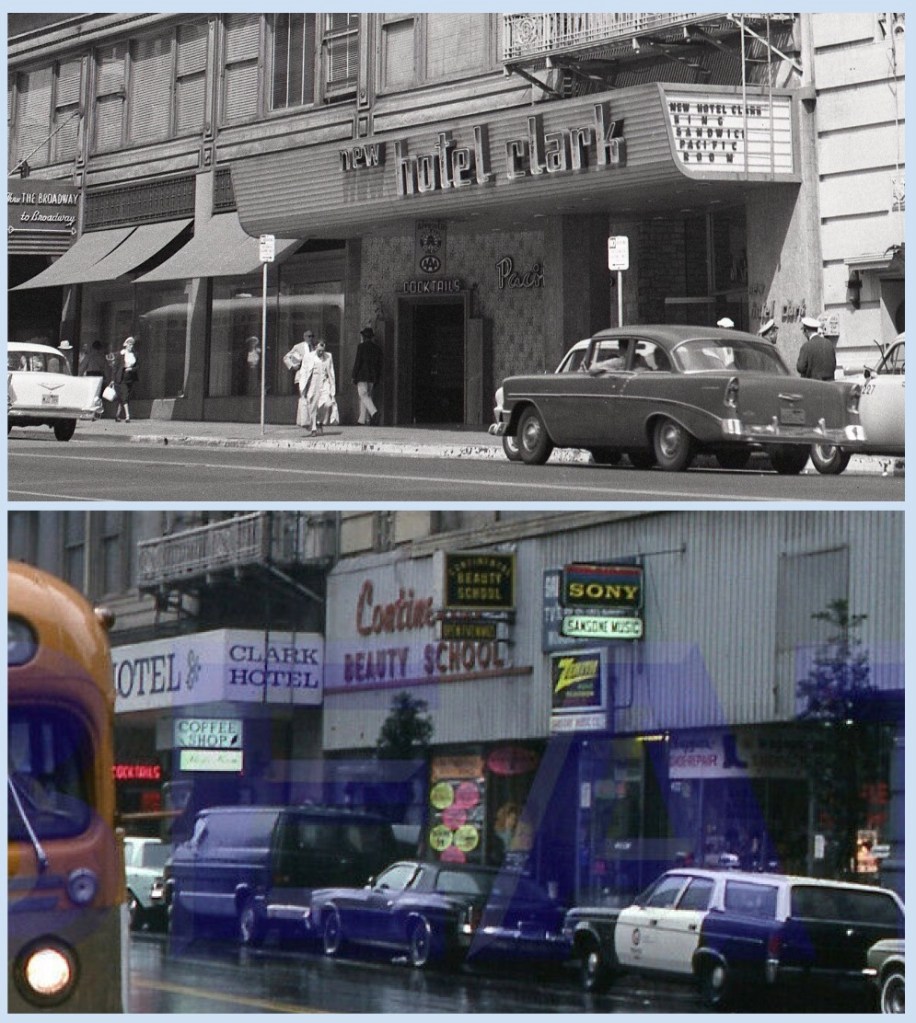
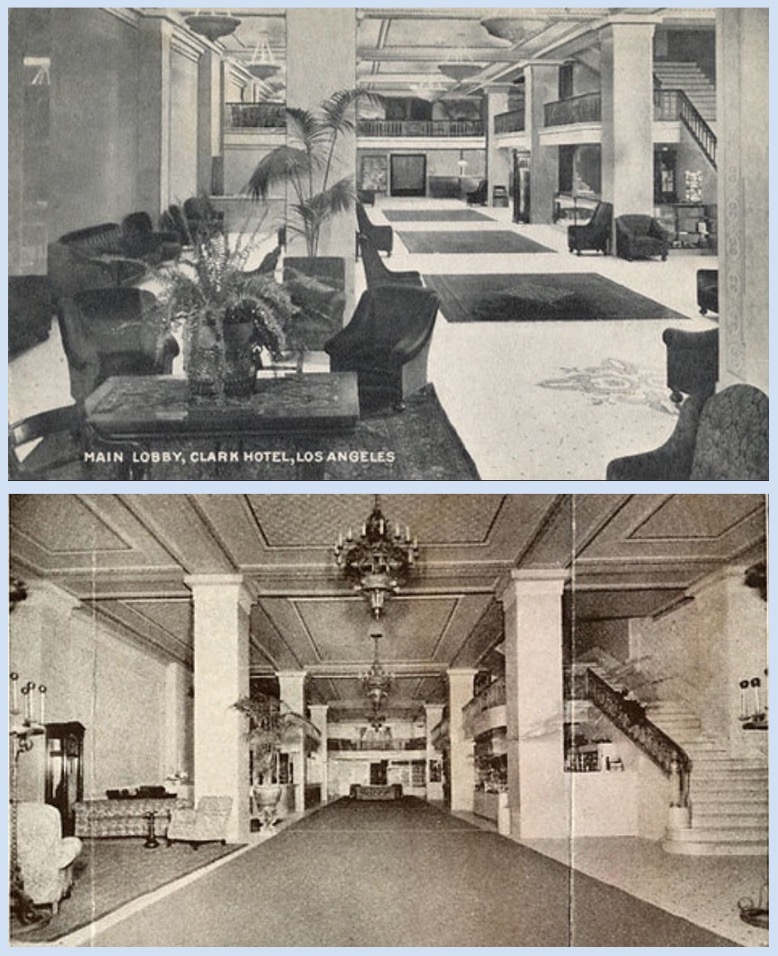
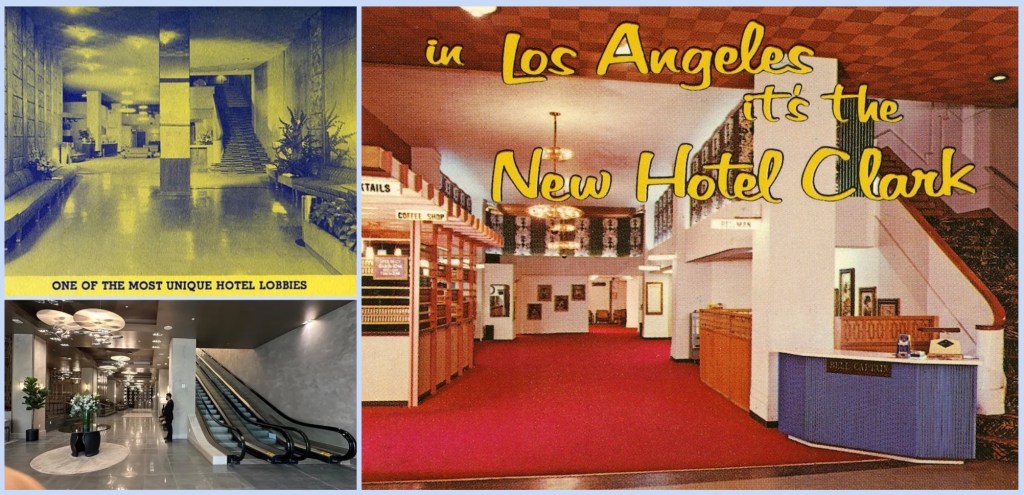
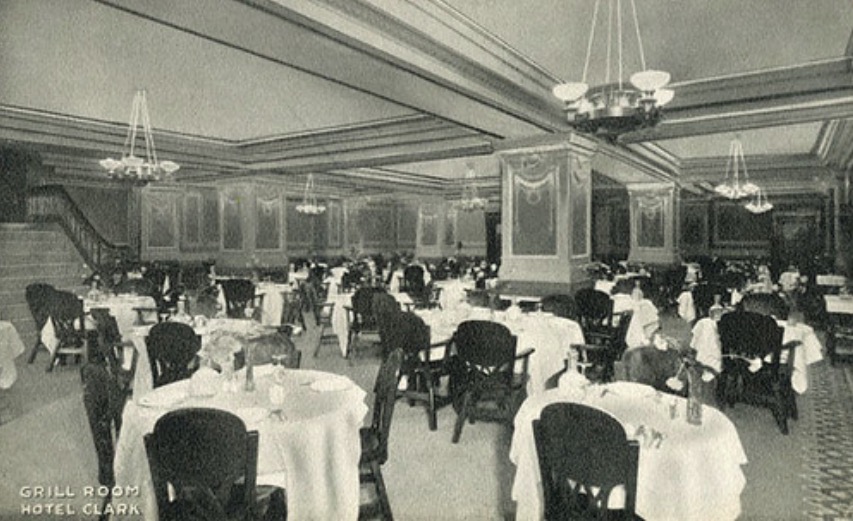
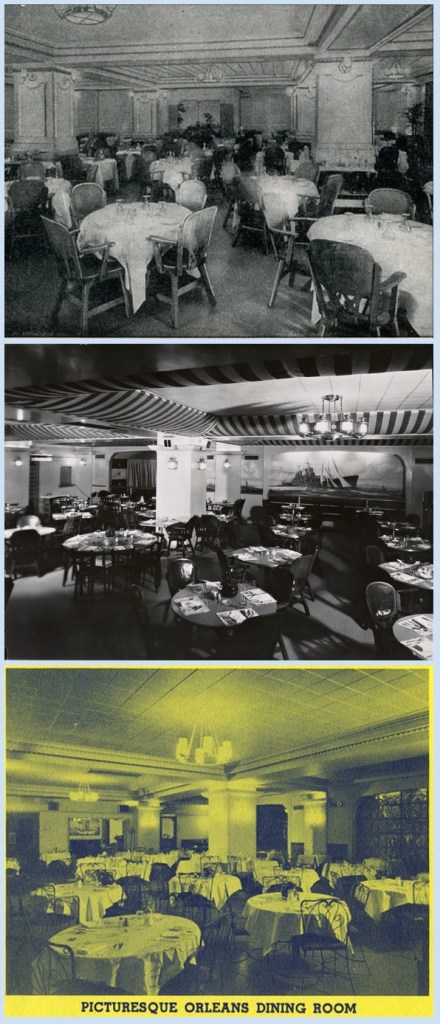
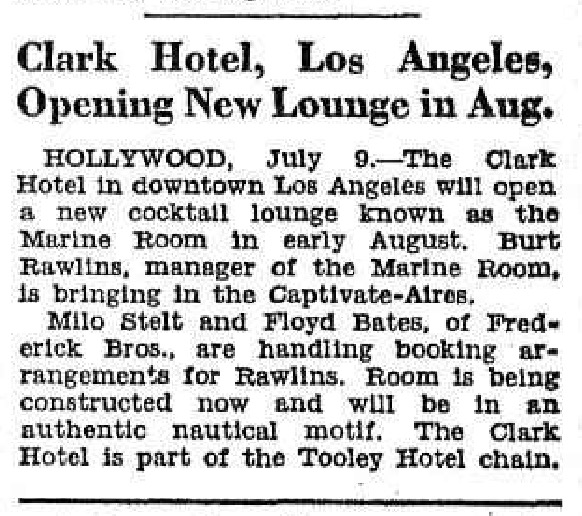
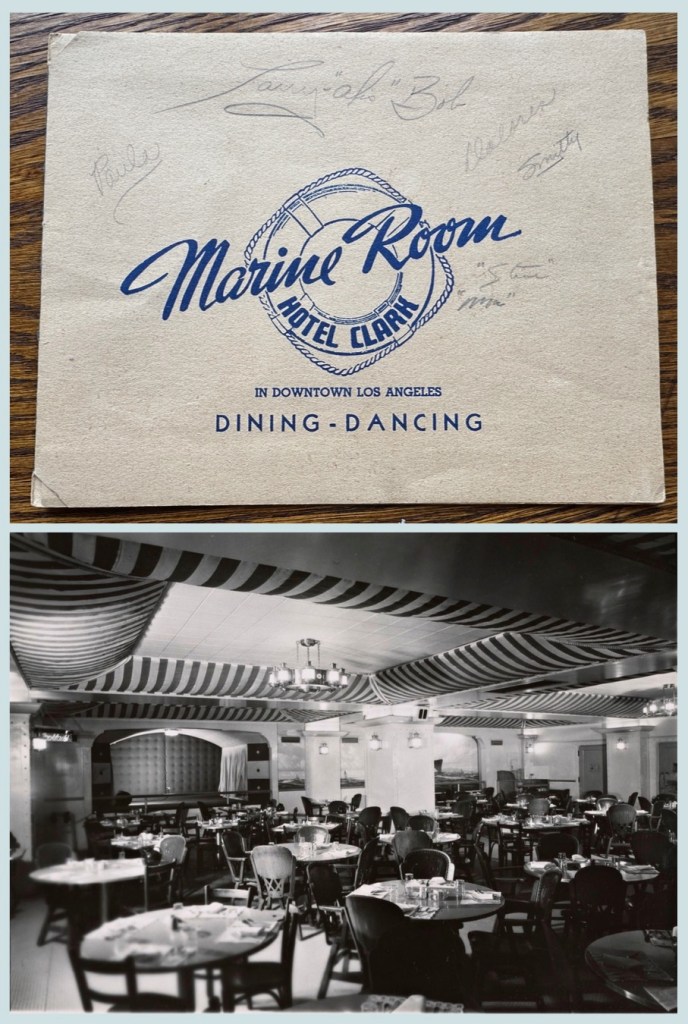
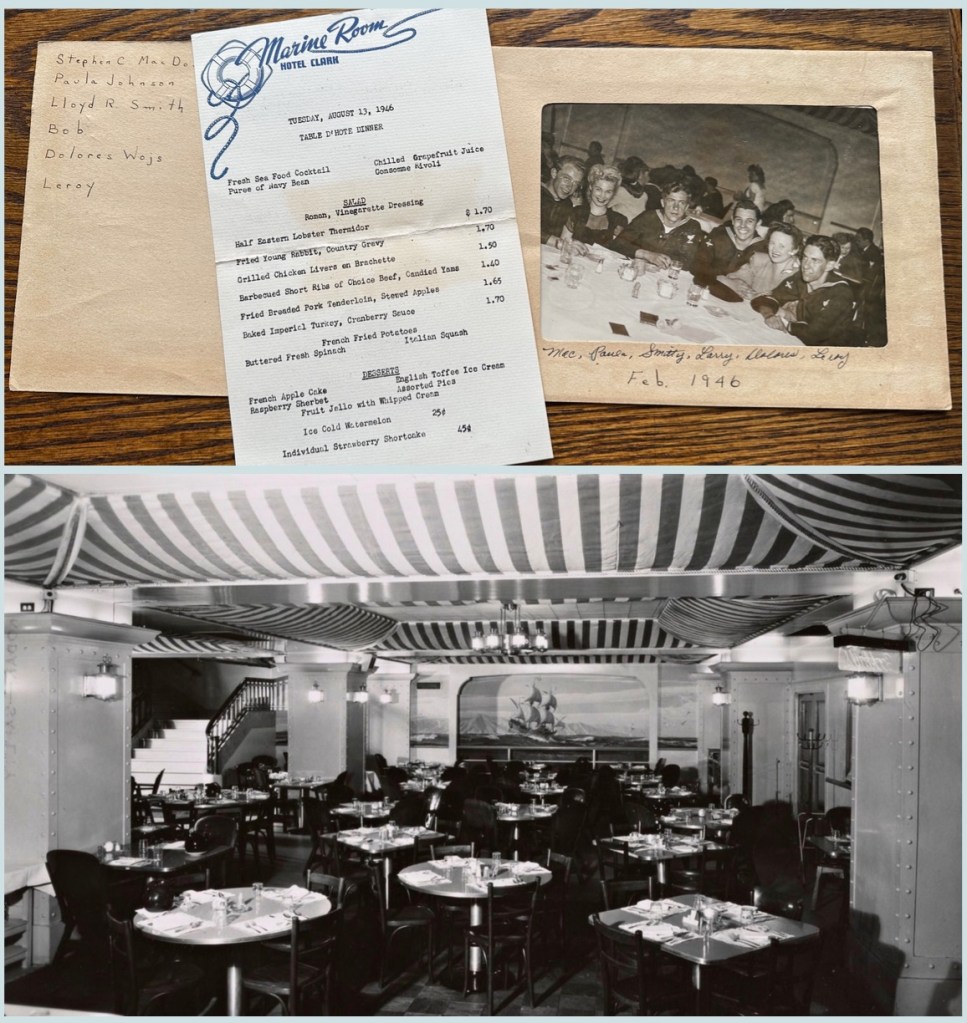
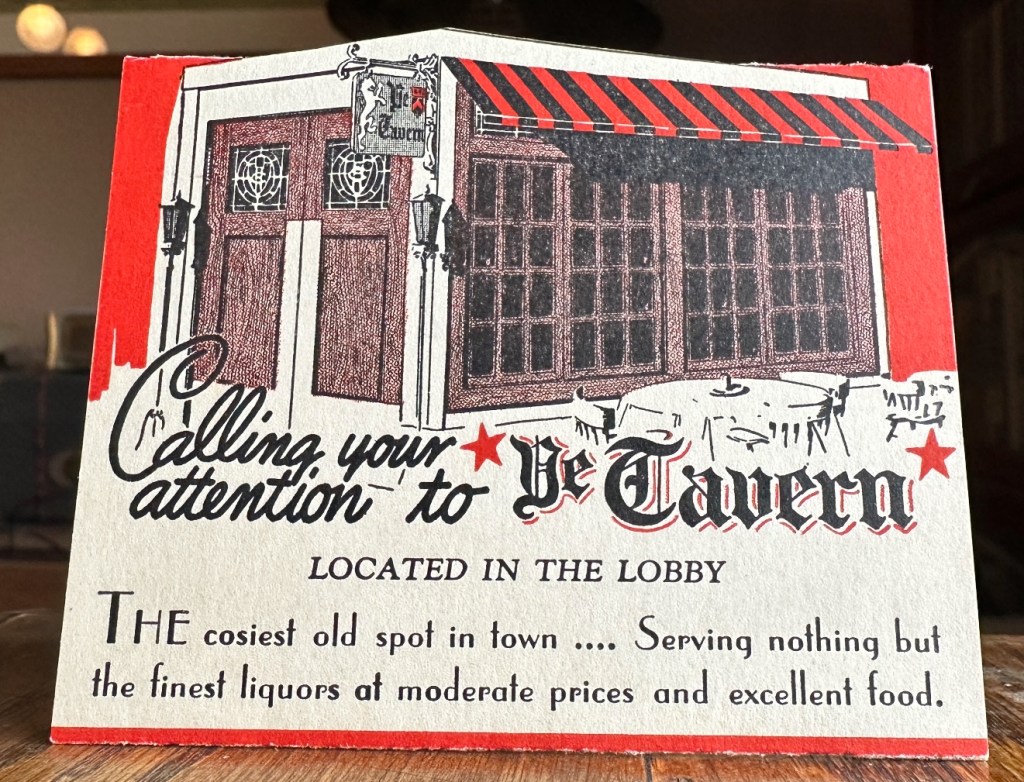
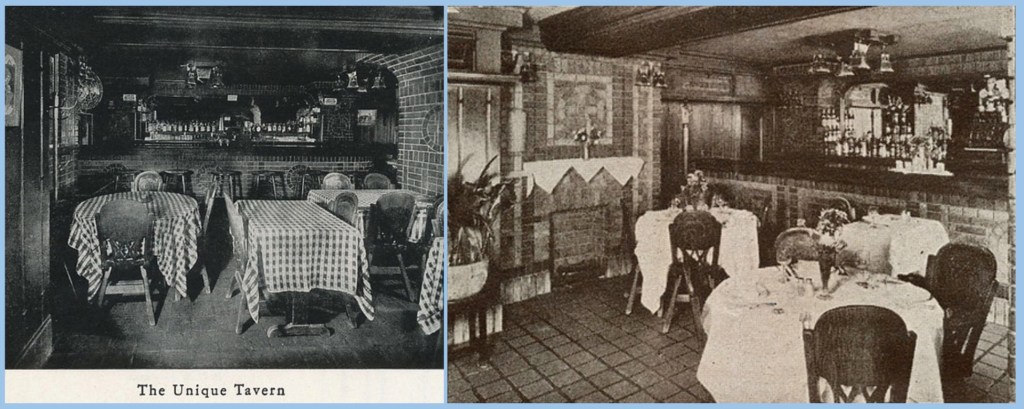
There was also a cozy English tavern off the lobby:
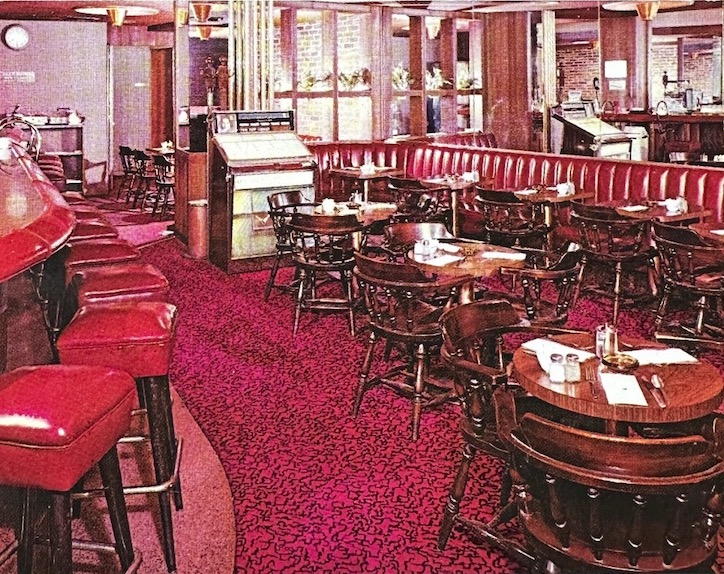
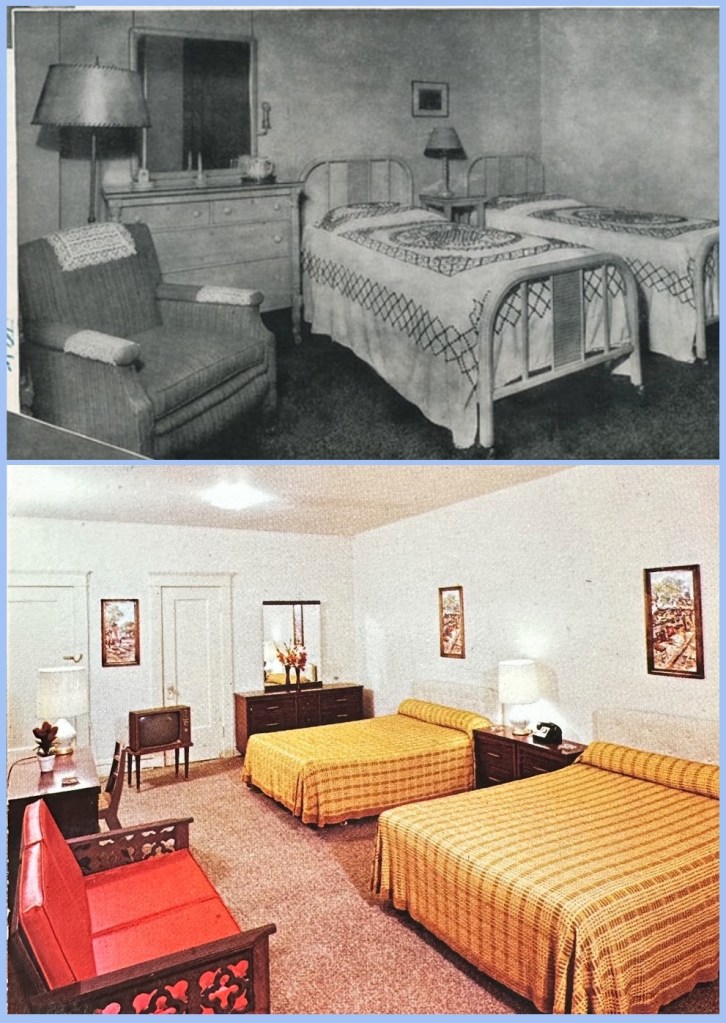
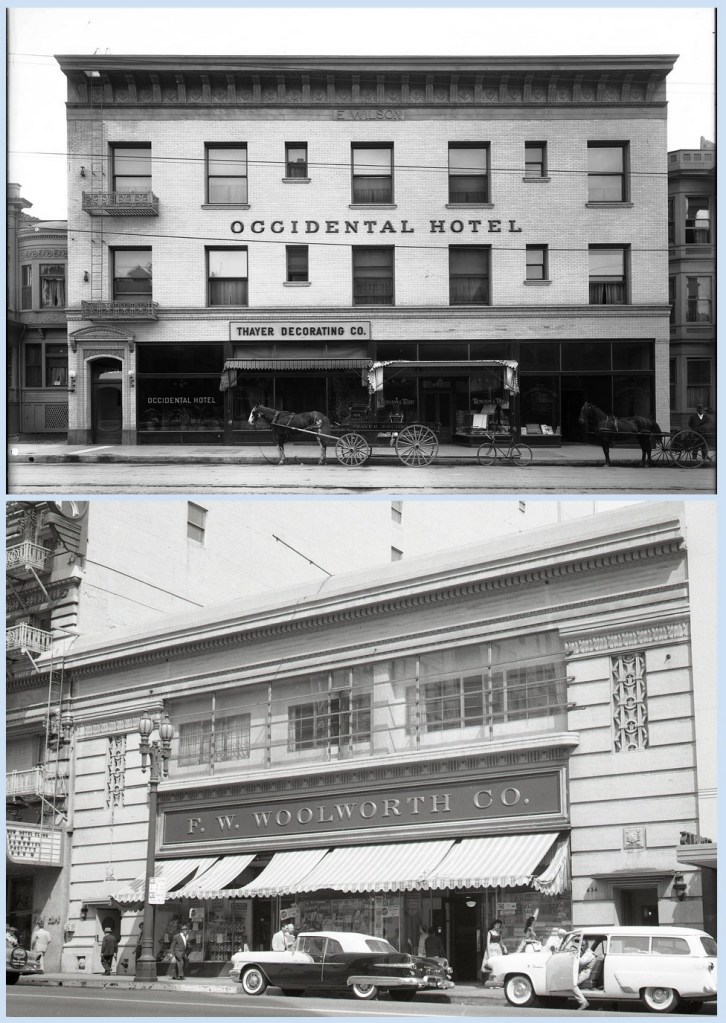
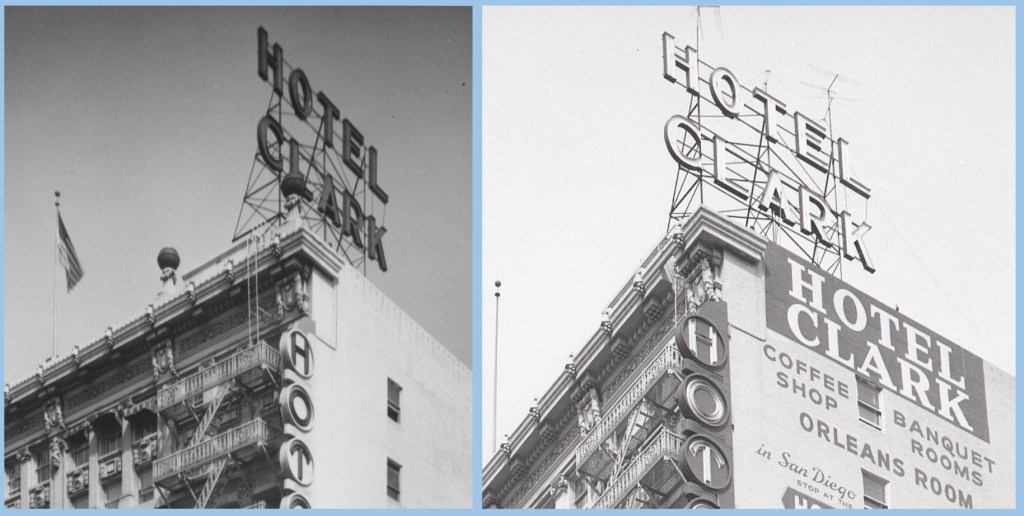
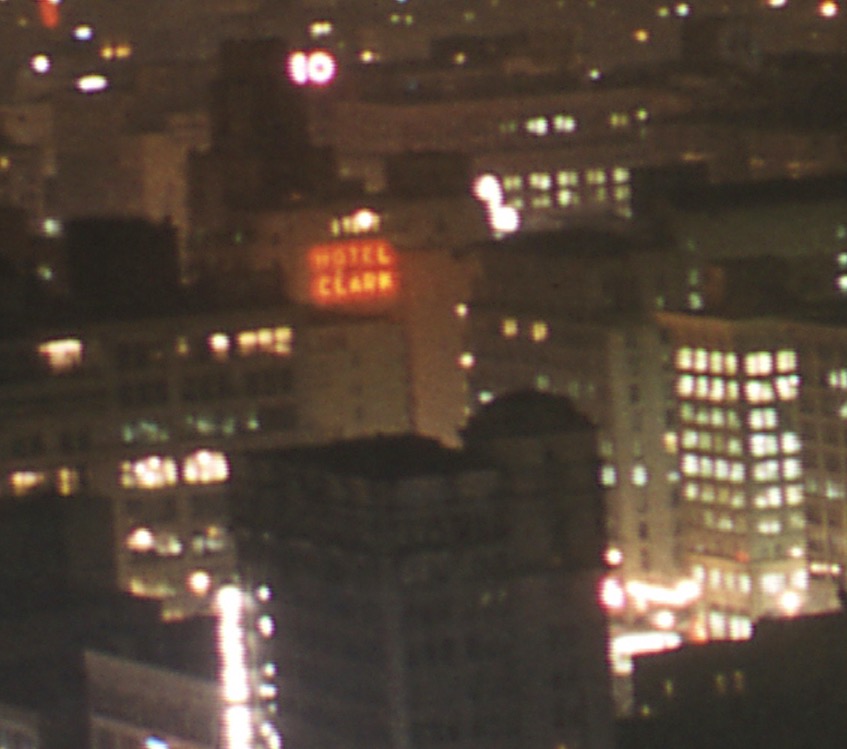
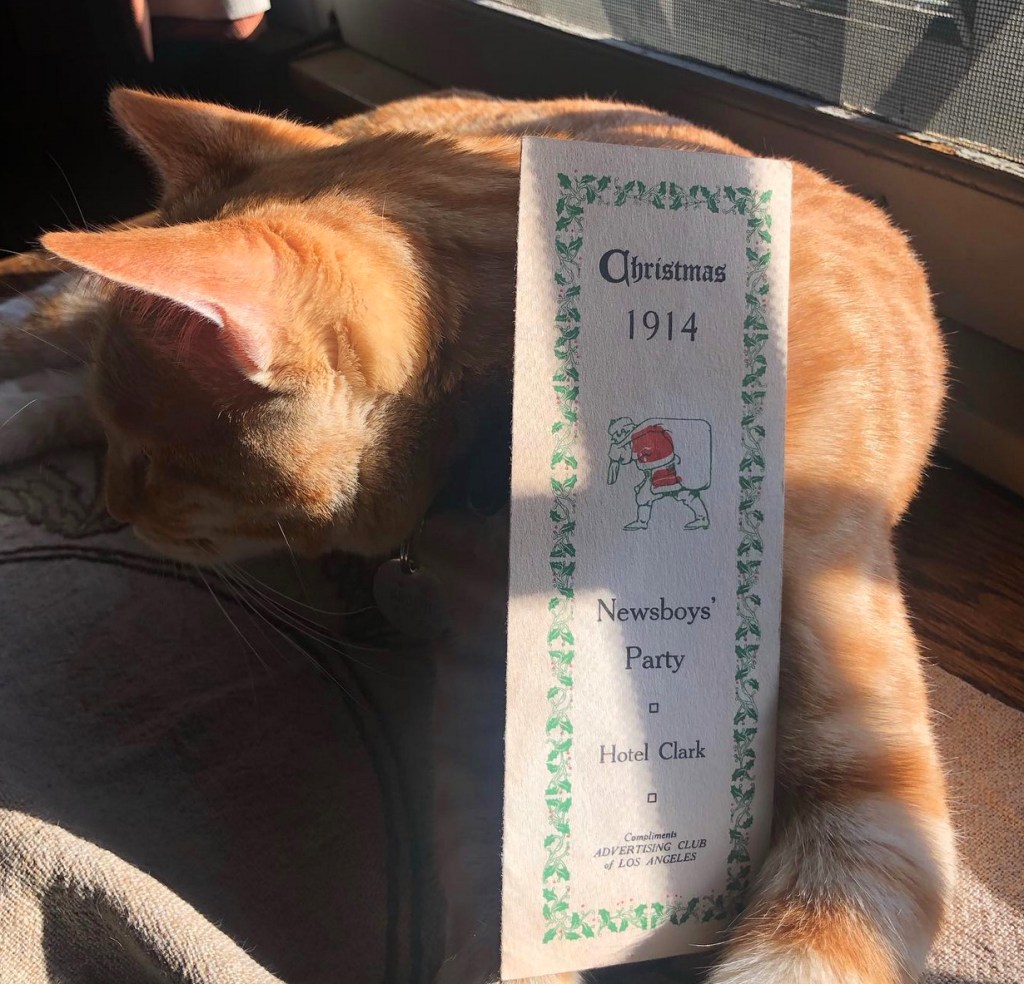
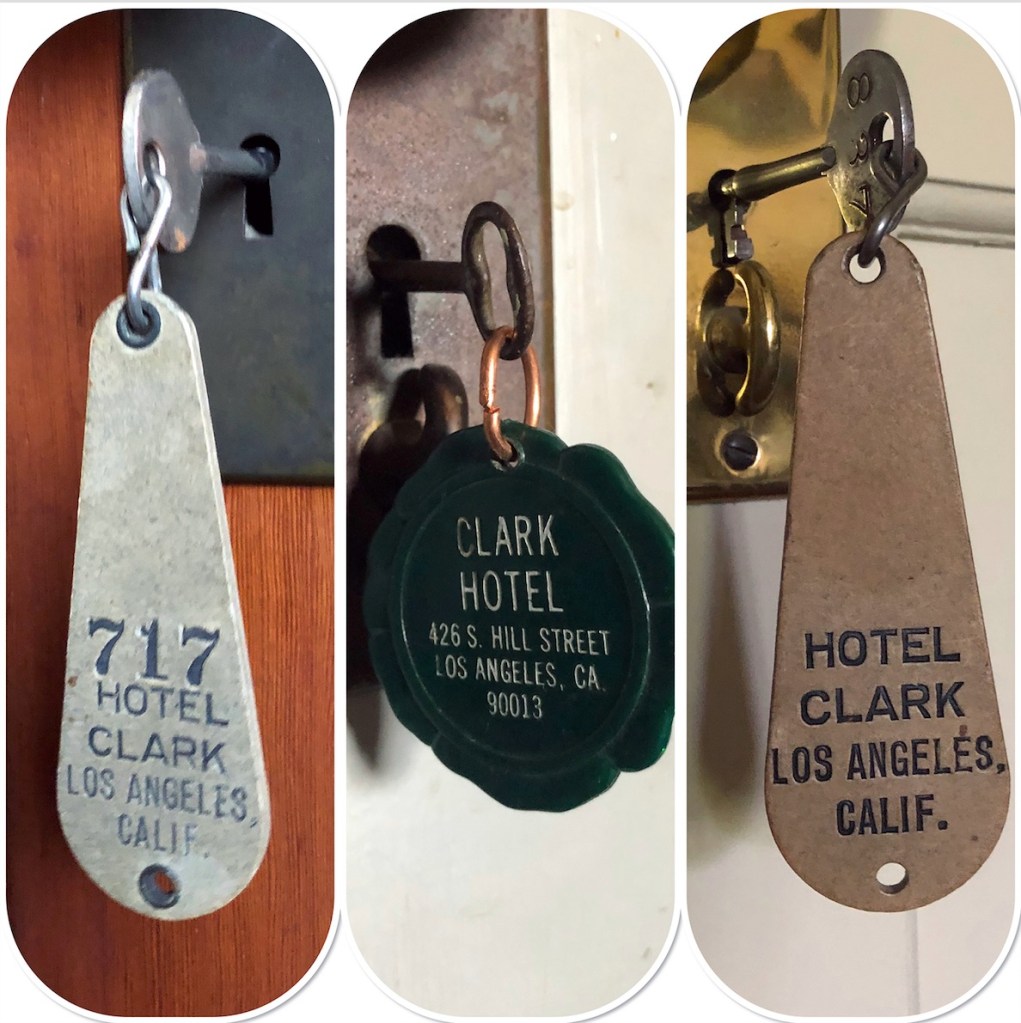
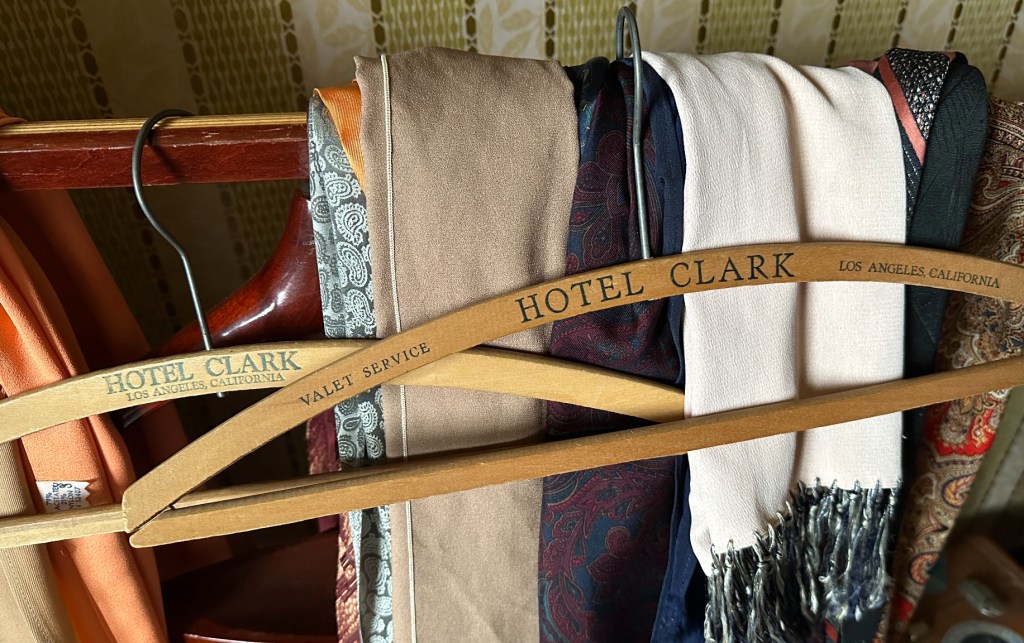
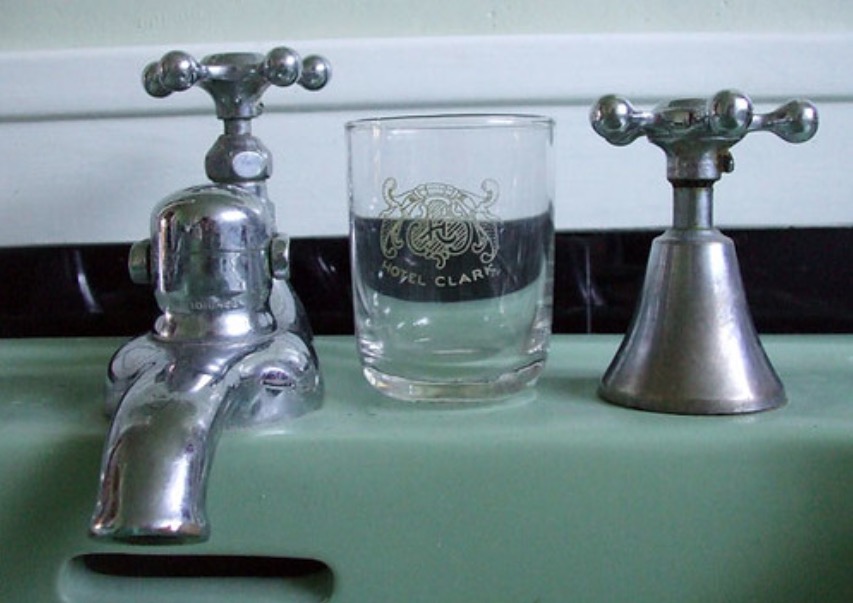
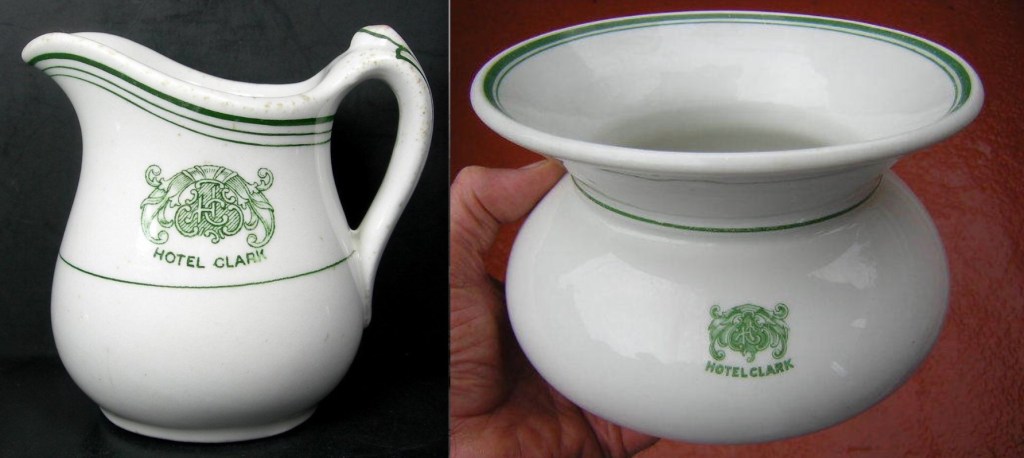
May I regale you with some objets d’art from my collection?
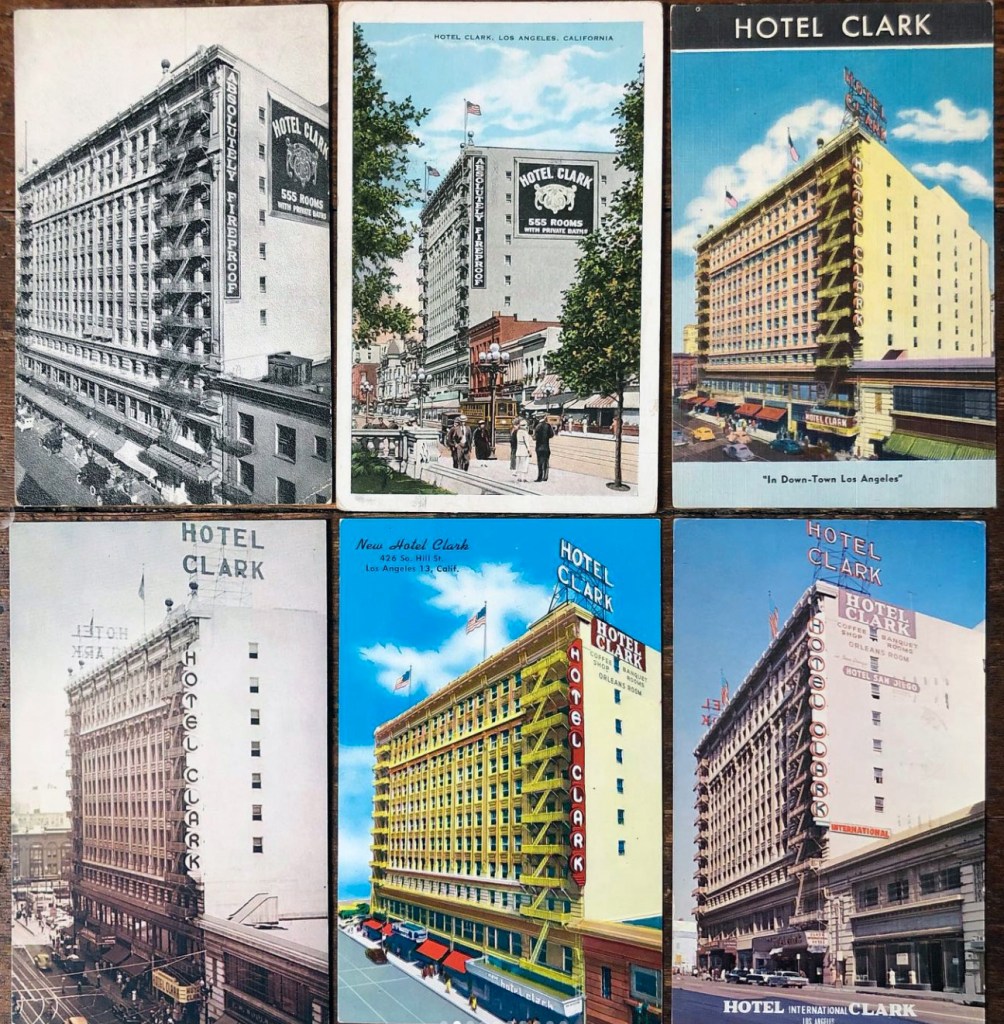
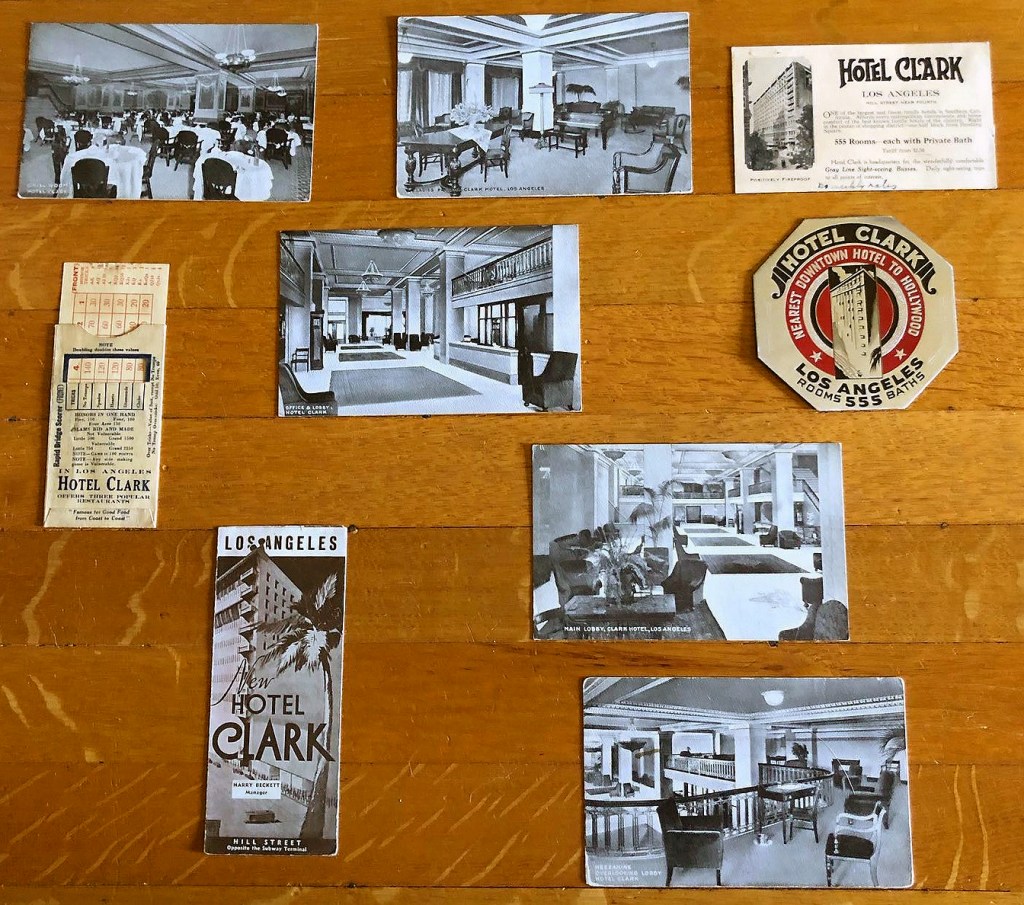
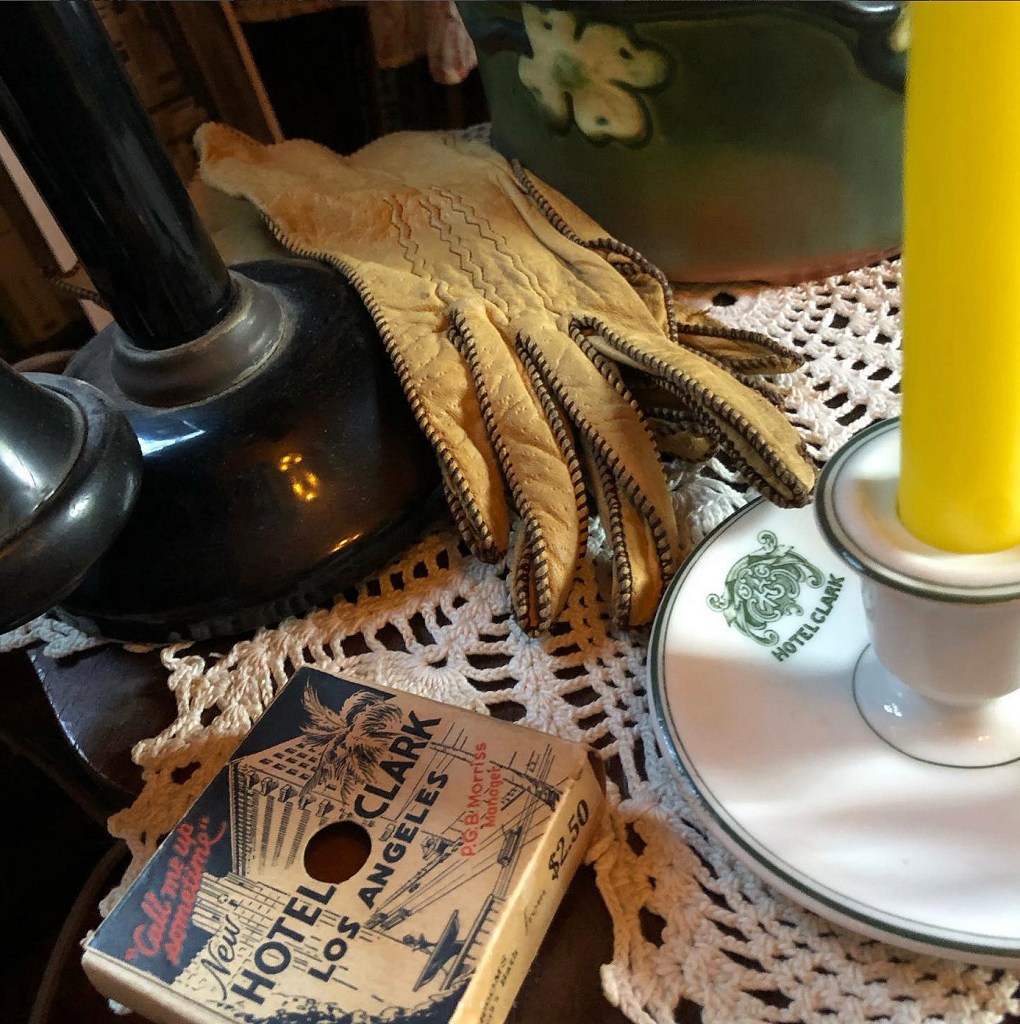
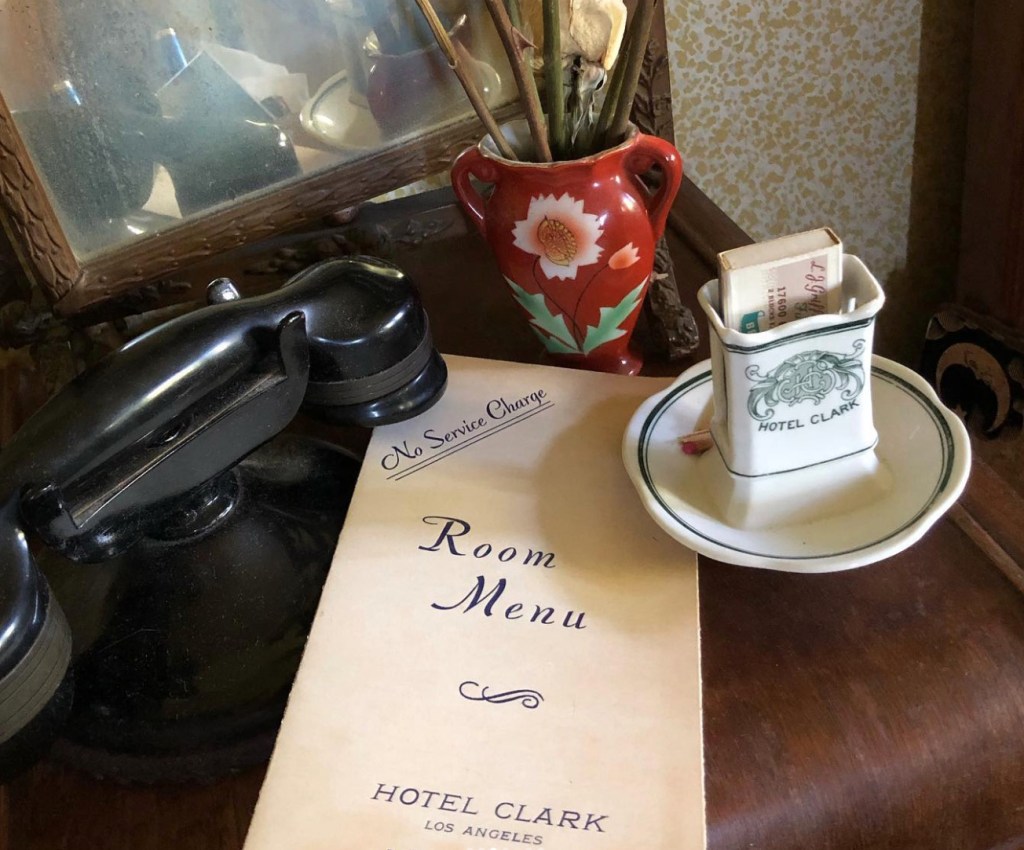
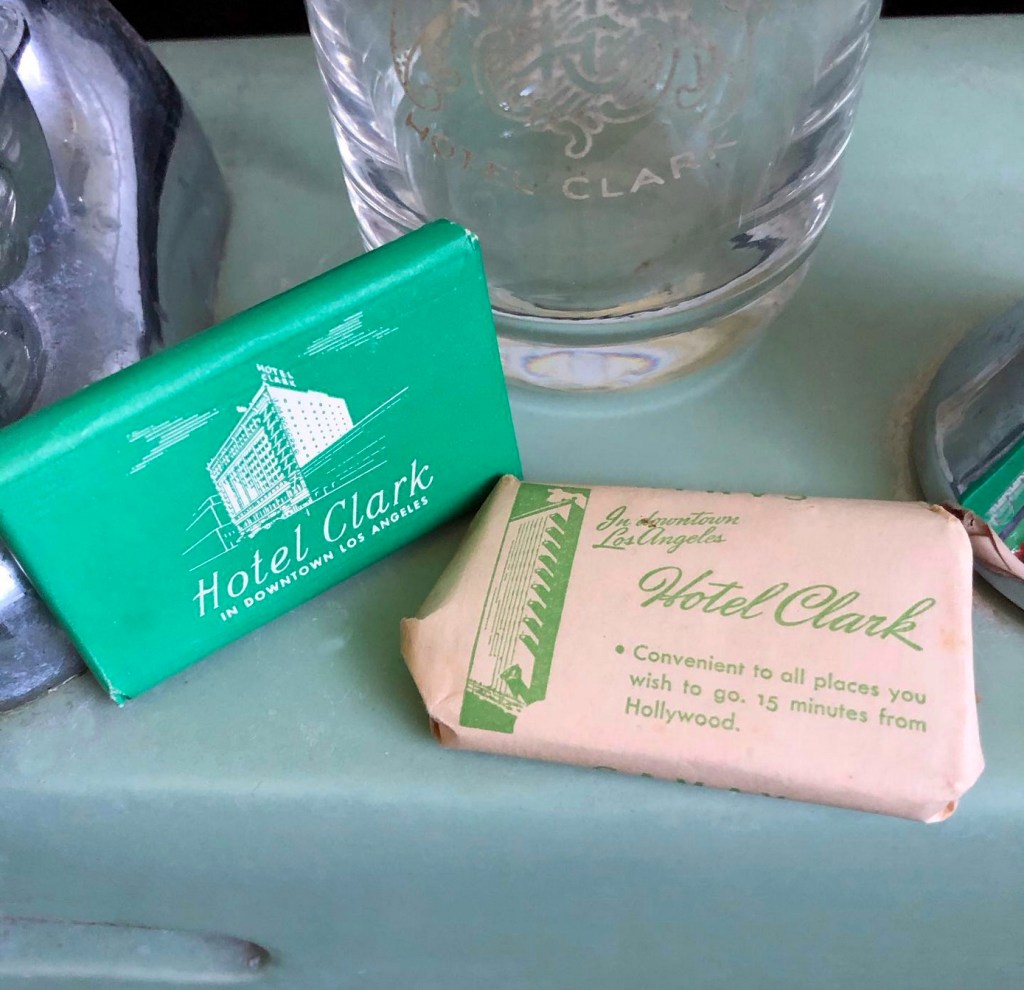
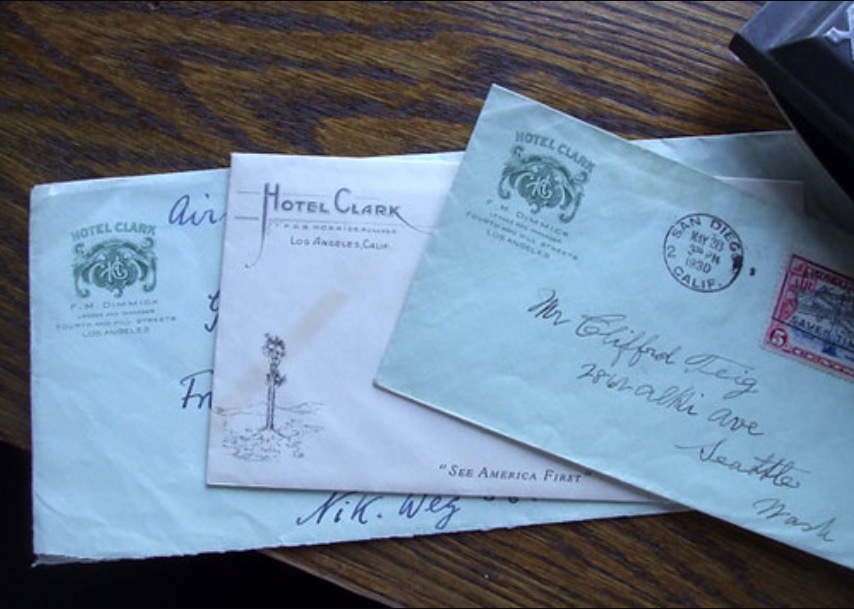
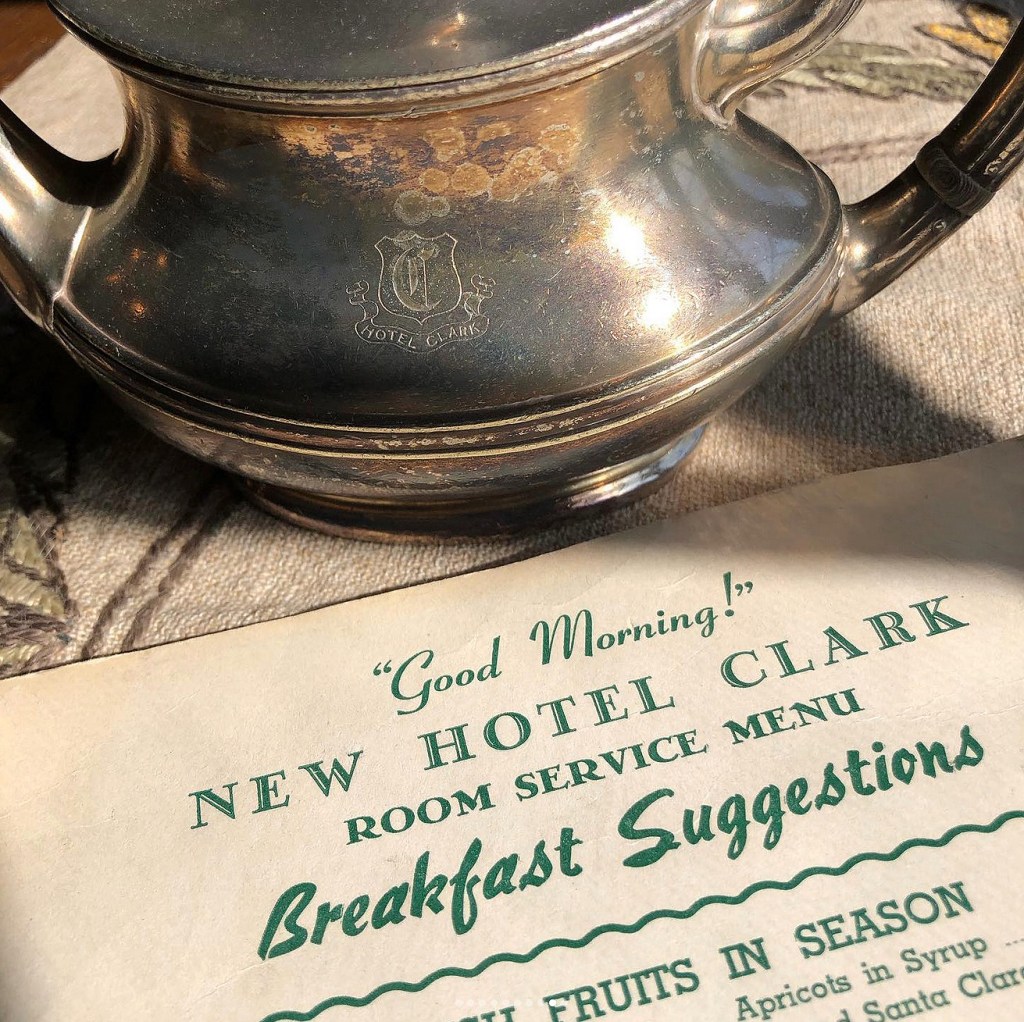
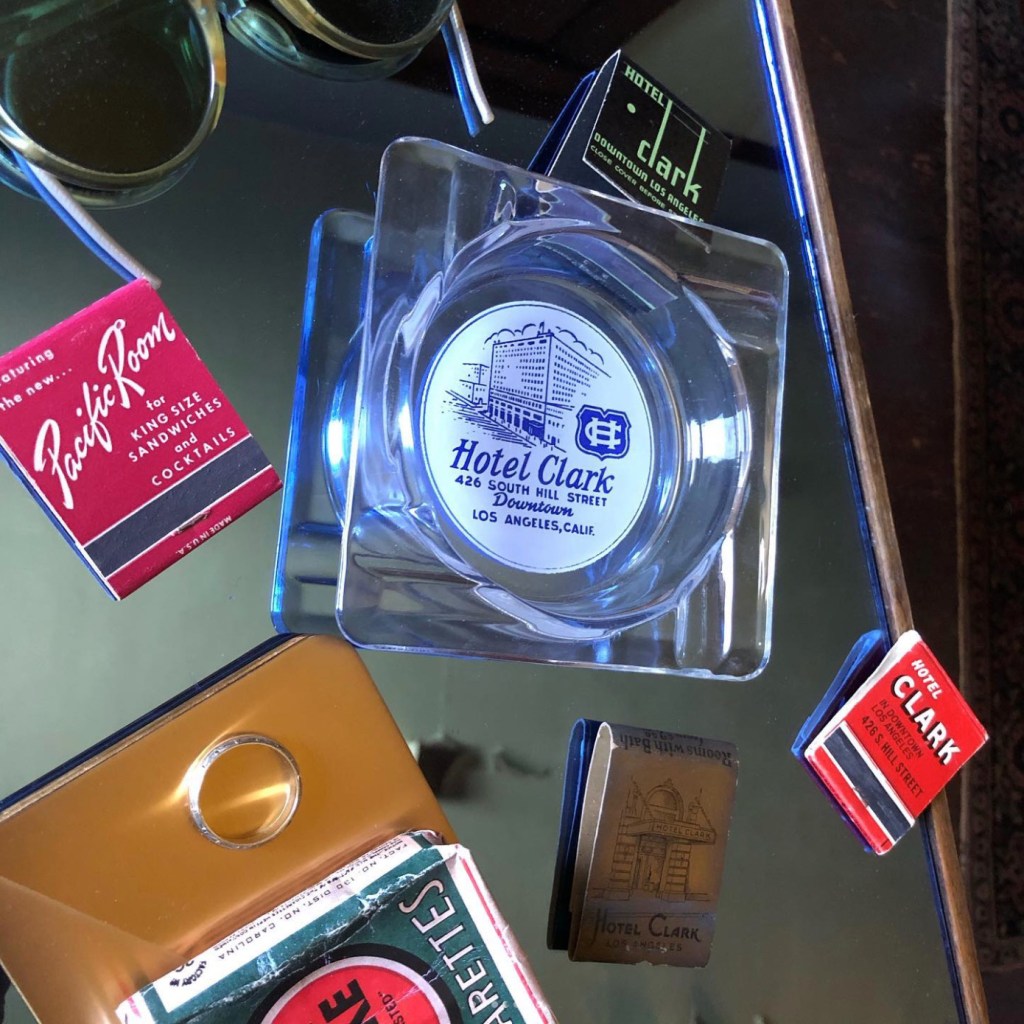
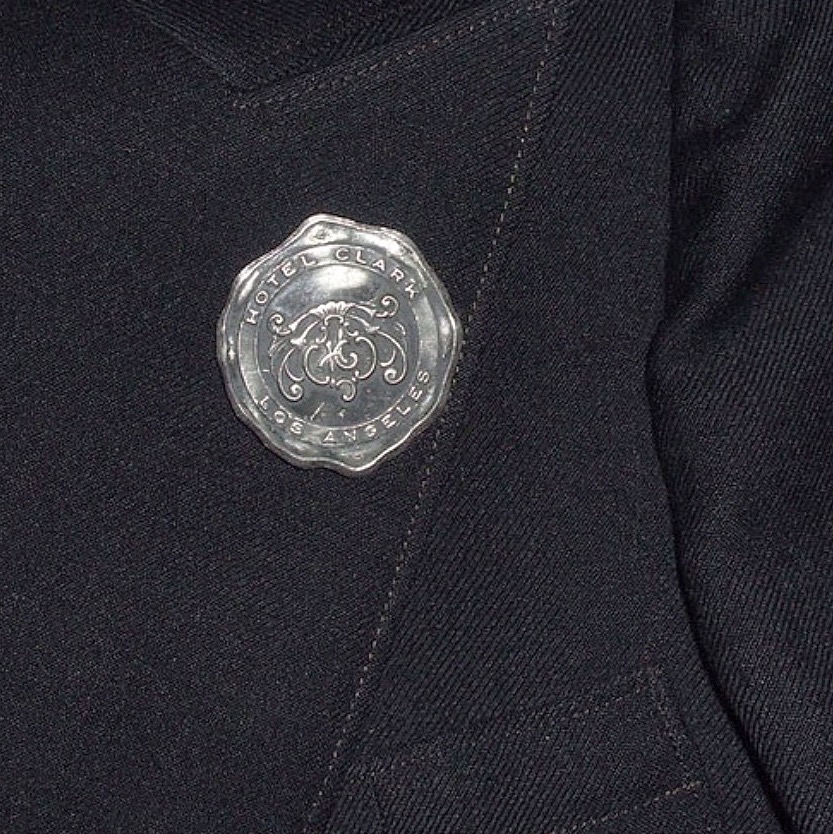
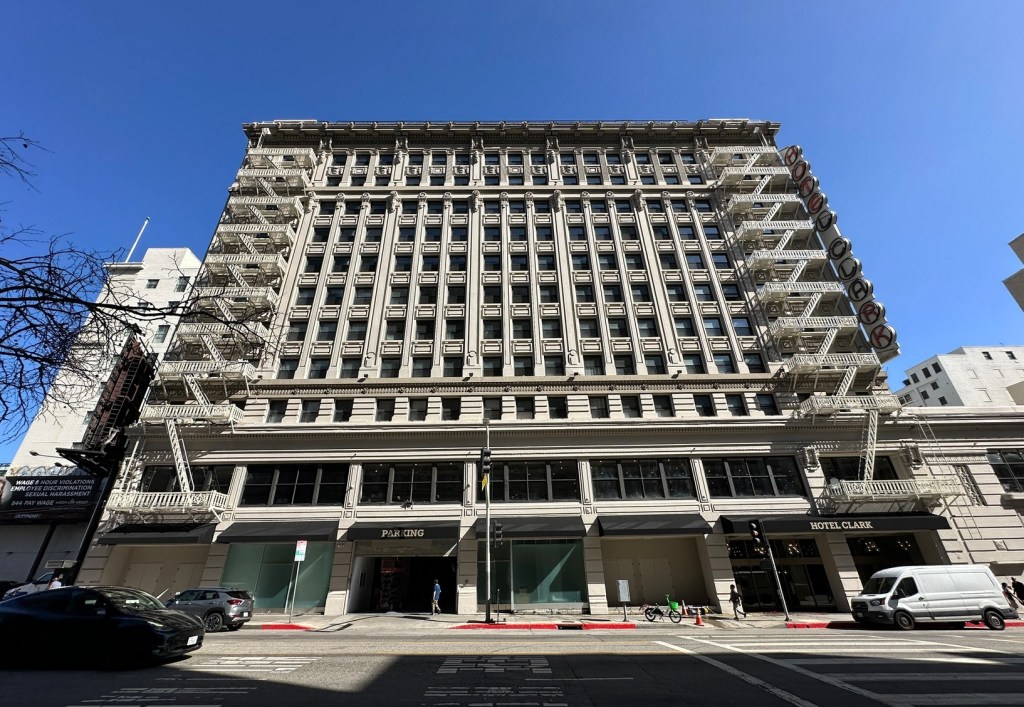
Your next question being, what did I see on my journey to the newly-reopened Hotel Clark (which is being managed by OTH Hotels Resorts)? Let’s take a look:
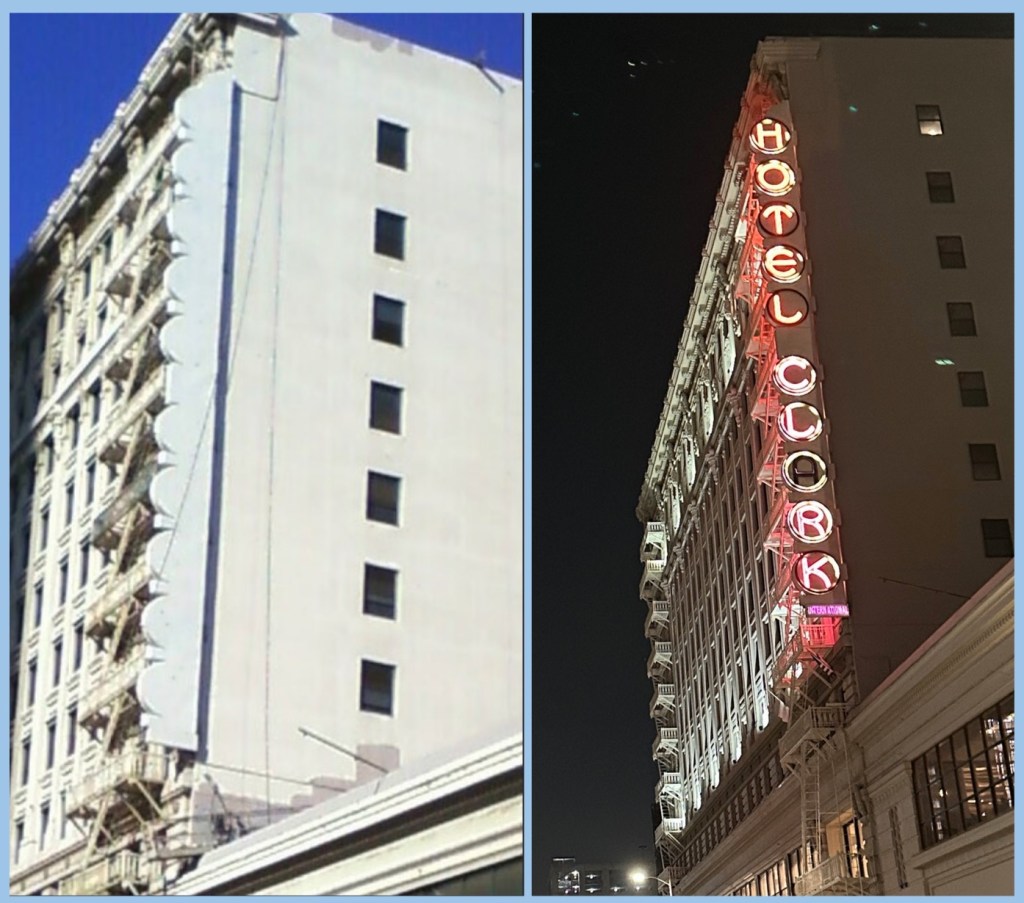
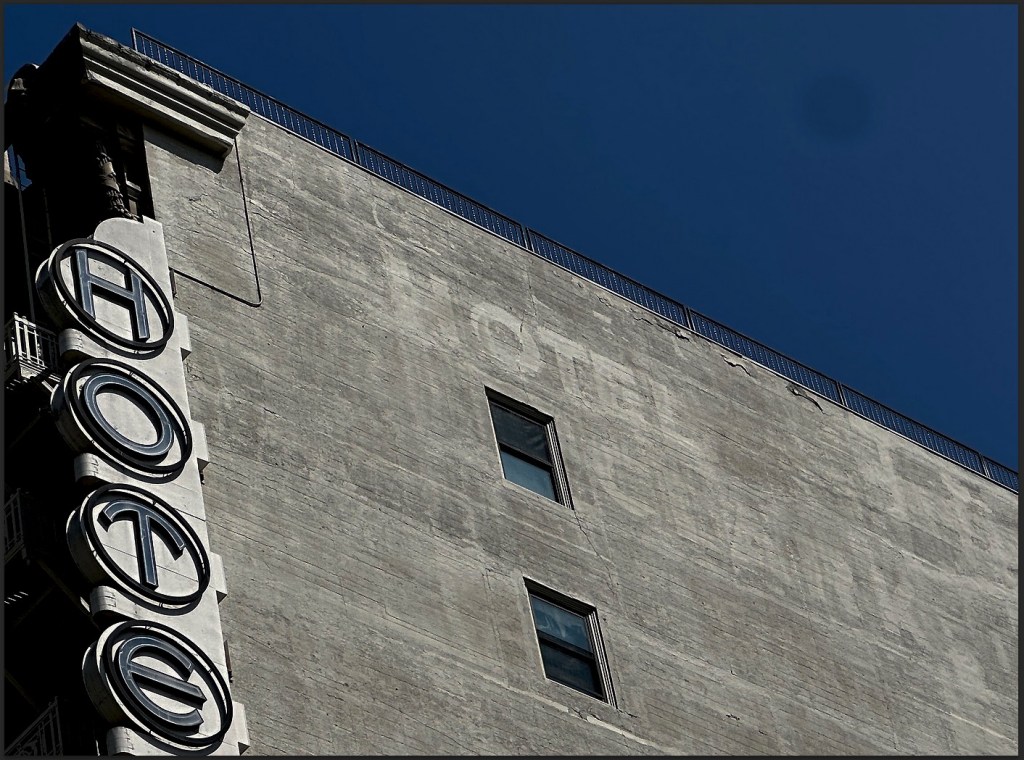
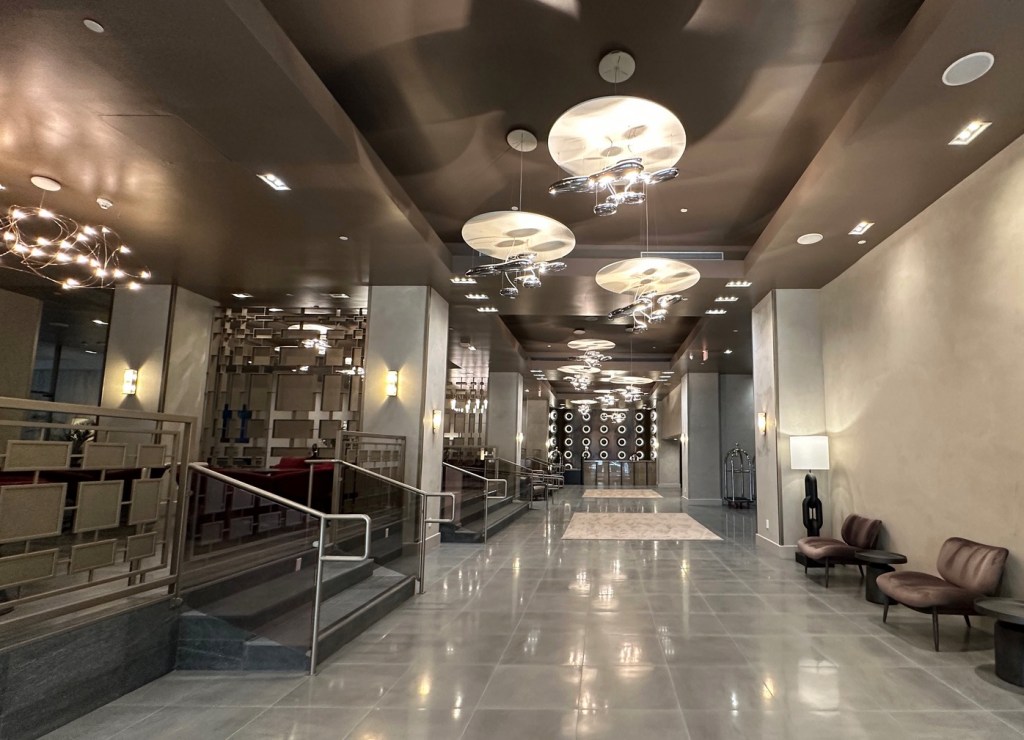
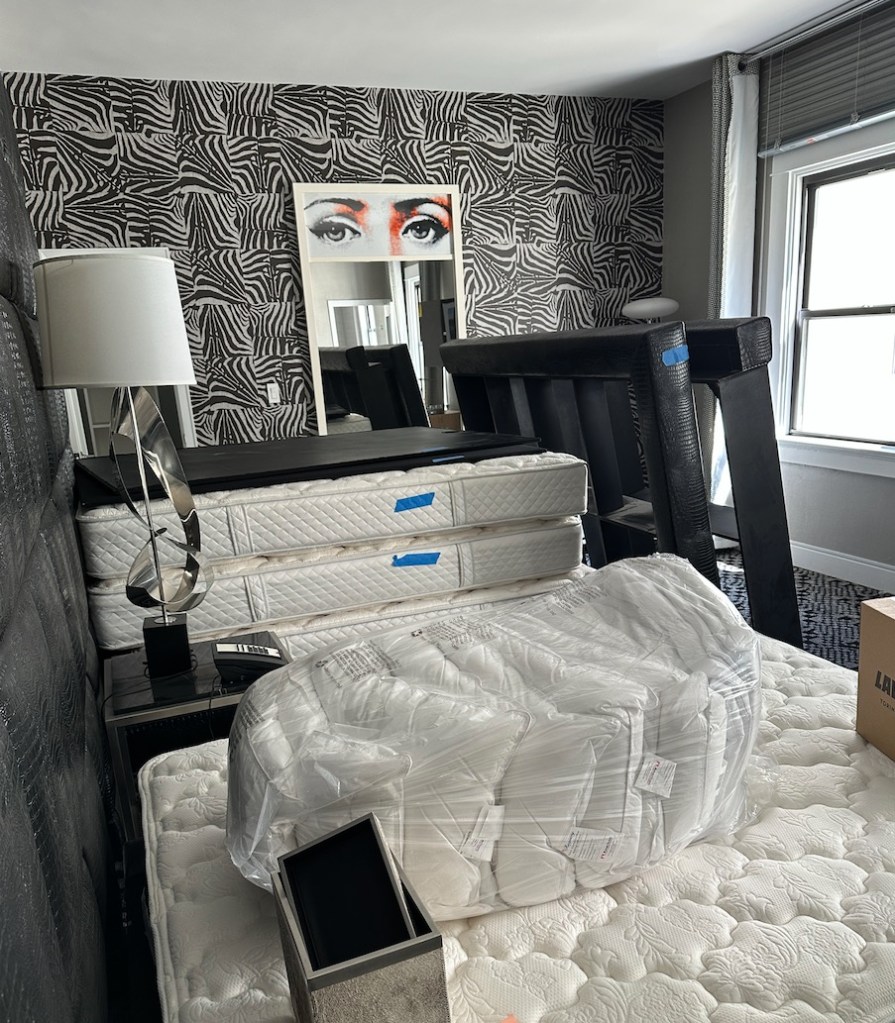
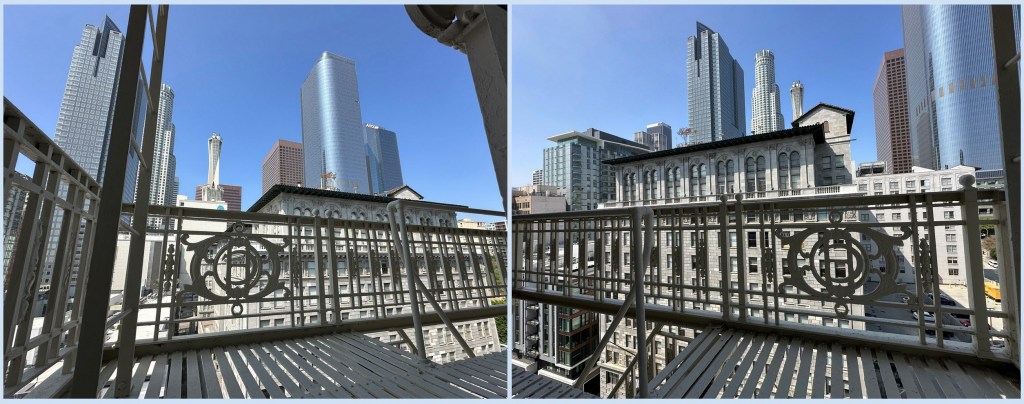
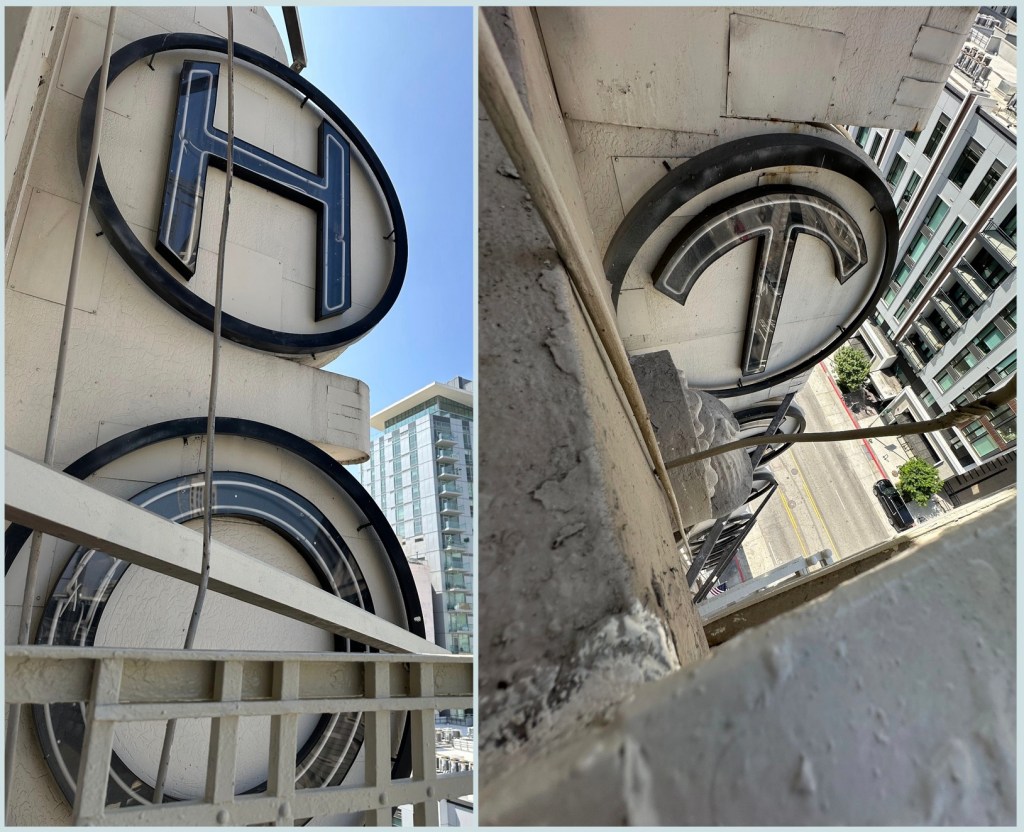
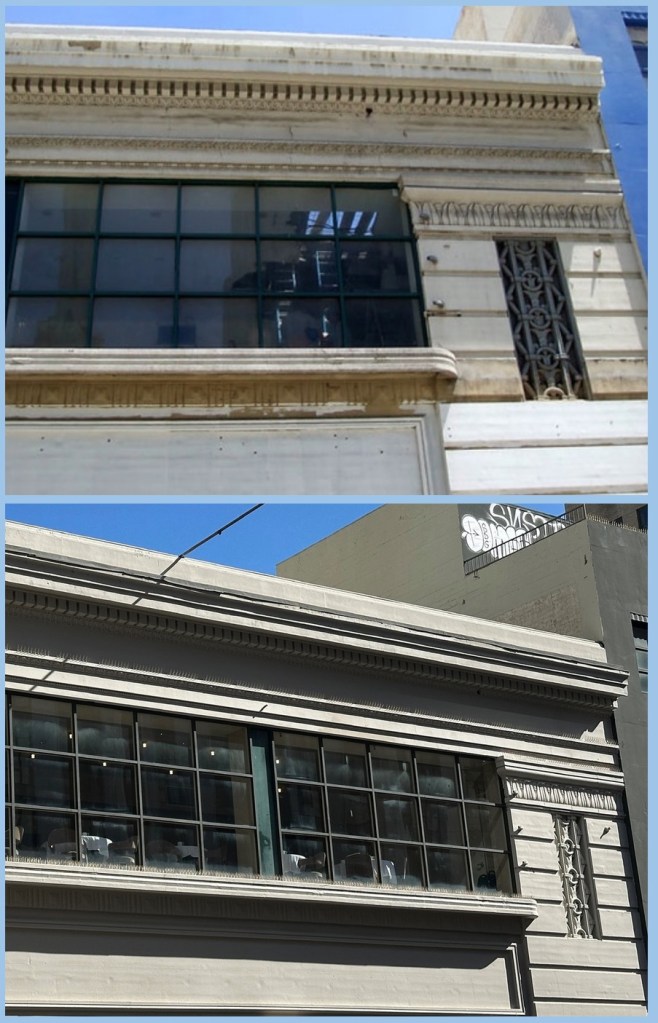
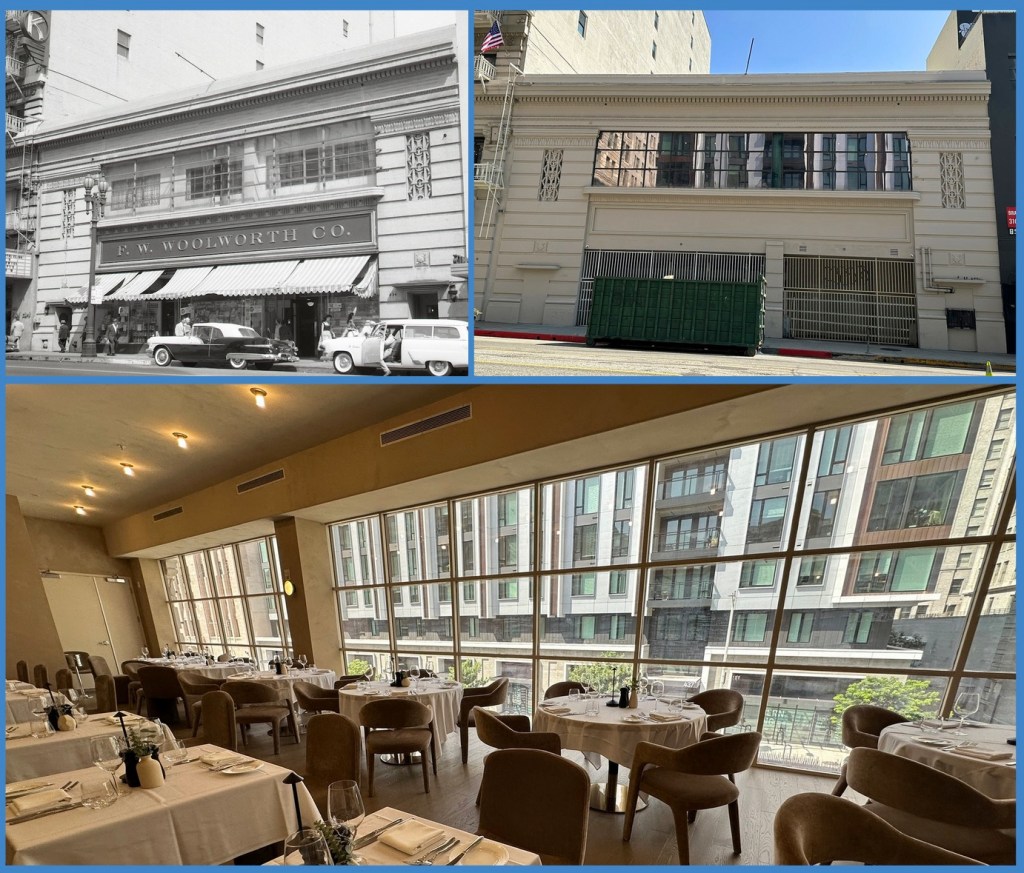
And that, ladies and gentlemen, is my quick little post about the now-opened Hotel Clark … which somehow managed to contain sixty-some images (but could have contained sixty more). There’s a lot more Clark history to be uncovered, of course.
And, naturally, we’ll keep watchful eyes on another long-delayed Chetrit property, our beloved Trinity Auditorium. One does wonder how the Chetrits pulled off the opening of the Clark, given their current financial straits.
In the meantime, I suggest you check out the Clark yourself — and I’ll see you at Ye Tavern!


YES! More of this citywide, please.
LikeLiked by 1 person